This article contains data applicable to Allegro™ 2D biocontainer single-use systems (SUS) and filling sets which have been tested by a helium integrity test (using HIT™ technology) to increase assurance of integrity. The purpose of this report is to demonstrate comparable performance of Allegro 2D SUS with and without a helium integrity test, through test data and manufacturer risk assessment. This report should be used to assist end user risk assessments for processes incorporating helium integrity tested Allegro 2D biocontainer systems or filling sets.
Allegro biocontainers
Allegro biocontainers have been developed to replace stainless steel tanks and carboys in process applications, to reduce the risk of cross-contamination and eliminate cleaning and cleaning validation.
The Allegro biocontainer is made of a low density polyethylene (LDPE) film that meets the rigorous quality requirements of the biotechnology and pharmaceutical industry. The Allegro biocontainer includes unique design features that significantly improve the ease of use and robustness of single-use systems while enabling high product recovery. The ports of Allegro biocontainers have been configured so that maximum choice is offered for inlet and outlet connections. There is the choice for tubing of ¼, ⅜ and ½ inch diameter. A sampling port is available for all options. We have designed Allegro biocontainers with a robust, flexible connection capability by utilizing a boat-shaped injection molded multiple port system. The boat connector allows for various size tubing connections but always maintains the same outer size and shape; thus creating consistency and robustness when sealed to the Allegro biocontainer film. Allegro biocontainers of 5 L or larger capacity allow the use of a ½ inch port for the inclusion of sensors for process-monitoring.
Helium integrity test (using HIT technology)
We constantly strives to meet the drug manufacturer needs. Although Quality by Design (QbD) principles, junction tests, quality control tests and validated processes are used for all our manufacturing procedures, when extra risk mitigation is required, we can meet that need. Our high sensitivity helium integrity test system (using HIT technology), is implemented at our Medemblik (Netherlands) single-use systems (SUS) manufacturing site. The HIT system was specifically designed to set the highest integrity test standard for biocontainers and the joints of the transfer tubes to the biocontainer, capable of detecting defects as small as 2 μm. For customers needing a very high level of assurance for integrity of their SUS, the helium integrity test can be performed upon request for single-use assemblies. The HIT system is designed to provide the highest level of sensitivity for SUS incorporated in process steps that incorporate SUS, especially important for the most critical step of bulk drug substance or drug product storage.
We offer the helium integrity test for Allegro SUS only upon specific customer requests, and after verification that their actual design is compatible with the HIT system and test procedures. The test occurs at our site during the manufacturing of the Allegro SUS.
Summary of conclusions
A risk assessment has been conducted and concludes that the application of the HIT process does not impact the critical performance of Allegro 2D biocontainer systems and filling sets. The following elements have been considered:
- Mechanical strength.
- Resistance to gamma sterilization.
- Robustness during filling and transport.
- Resistance to freezing.
- Connection strength.
- Shelf life.
- Extractables/leachables.
- Biological safety.
- Physicochemical suitability.
For verification of the consistent performance of Allegro 2D biocontainer systems and filling sets processed with the HIT system, the following tests were performed on biocontainer systems manufactured with and without the HIT process:
- Quantitative tensile testing of biocontainers film and film welds.
- Quantitative tensile testing of biocontainer connector welds.
- Endotoxin content testing.
- Particulate cleanliness analysis.
All verification tests were carried out with Allegro 2D biocontainer systems. The results are considered applicable to Allegro 2D filling sets due to the same Allegro 2D biocontainers from Allegro 2D biocontainer systems being used in the filling sets and the fact that they are both processed in the same HIT system.
All verification tests passed for all biocontainer systems tested, made with or without the HIT process. No significant impact of the HIT process was observed for all tests. Based on the risk assessments, complemented by the above verification tests, it is confirmed that:
- The HIT process step has no impact on properties or performance of Allegro 2D biocontainer systems or filling sets.
Risk assessment
Exposure to helium gas under a limited and controlled pressure differential, as per the HIT process, poses a minimal increase in risk of a change in biocontainer performance. The inert nature of the helium gas ensures that a chemical change to materials does not occur, and that the potential remaining traces of helium remaining in the biocontainer will not present a risk of interaction with the pharmaceutical product. The use of pure, filtered gas in the manufacturing cleanroom minimizes any risk of impacting physicochemical suitability. The low differential pressures controlled during the cycle ensure excess stress on the biocontainers is avoided. Also, handling procedures and safeguards are in place as per the full manufacturing process. Table 1 shows a qualitative summary of the risk assessment for existing biocontainer properties and details the additional testing selected to demonstrate that the key claims are not affected by the HIT process.
Table 1. Risk assessment summary for the impact of the manufacturing HIT process step on properties of Allegro 2D biocontainer systems and filling sets
| Potential failure mode | Biocontainer properties impacted | Existing control measures |
Additional testing required |
|---|---|---|---|
| Mechanical strength of biocontainer film and film welds reduced due to exposure to a HIT cycle or damage during the HIT process | Mechanical strength, resistance to gamma irradiation, robustness, resistance to freezing, shelf life | Controlled test with low pressure differential, detailed standard operating procedures (SOPs) for biocontainer handling |
Compare biocontainer film tensile strength for biocontainers manufactured with and without the HIT process |
| Mechanical strength of connection welds reduced due to exposure to HIT cycle or damage during the HIT process | Mechanical strength, resistance to gamma irradiation, robustness, resistance to freezing, connection strength, shelf life | Controlled test with low pressure differential, detailed SOPs for biocontainer handling |
Compare connector tensile strength for biocontainers manufactured with and without the HIT process |
| Mechanical strength of tubing and connectors reduced due to exposure to HIT cycle or damage during the HIT process | Mechanical strength, resistance to gamma irradiation, robustness, resistance to freezing, connection strength, shelf life | Controlled test with very low pressure differential compared to the maximum operating pressure of all standard components, detailed SOPs for biocontainer system and filling set handling |
No additional tests required |
| Change in chemical properties of the biocontainer plastic parts due to reaction or degradation during exposure to an HIT cycle | Shelf life, extractables / leachables, biological safety, physicochemical suitability | Pure, filtered, inert gas |
No additional tests required |
| Endotoxin content in the biocontainer increases due to contamination during the HIT process | Physicochemical suitability | Operation in clean room; pure, inert, filtered gas |
Compare endotoxin content for biocontainers manufactured with and without the HIT process |
| Additional trace impurities are added to the biocontainer during exposure to a HIT cycle | Extractables / leachables, physicochemical suitability | Operation in clean room; pure, inert, filtered gas |
Compare particulate counts for biocontainers manufactured with and without the HIT process |
Quantitative tensile testing of biocontainer films and welds
Introduction
Tensile testing of films and welds is a standard approach to verify the absence of an impact of a processing step on a biocontainer's physical performance. Based on risk assessment, the chance of significantly reducing the tensile strength of the biocontainers is minimal due to the use of a controlled test with low pressure differential and detailed SOPs for biocontainer handling. A significantly lower tensile strength could impact claims such as mechanical strength, resistance to gamma irradiation, resistance to freezing, and shelf life. A small tensile strength study was carried out in order to verify the risk assessment.
Summary of methods
Ten samples of a 5 L Allegro 2D biocontainer were manufactured for these tests. Five biocontainers were processed through an HIT cycle and successfully passed. The remaining biocontainers were processed as standard. All biocontainers were gamma irradiated at 25 to 50 kGy.
The tensile strength of the welded seal of each biocontainer was checked using a tensometer. The sample strip was 25 mm wide and the tensile force was applied at an elongation rate of 200 mm/min. During this test, the force at which the film broke was recorded. The strength of the weld at break must exceed 70 Newtons (N) to meet our internal specification.
Results
For each biocontainer, five individual test samples were cut from the welded seal and their tensile strength was measured. The minimum, maximum, and average result for each biocontainer is shown in Table 2.
Among all the samples that were tested, the polymer film material broke before any breakage of the welded seal. This is as expected, and therefore any variation in the data relates to the film tensile strength. All the values found during tensile testing were > 70 N, confirming that every weld exceeded the specification.
A t-test (one tailed, α = 0.05) was carried out comparing the individual tensile strength results (n = 25 for both with and without the HIT system process) and confirmed that the tensile strength of the biocontainer film is not statistically significantly lower after undergoing the HIT system process step. A one-tailed t-test was selected because this gives a greater chance of detecting a difference and only a reduction in tensile strength was considered to negatively impact the biocontainer physical properties.
Table 2. Tensile test on film-to-film welding for biocontainers with and without the HIT process1
| Biocontainer test number | HIT process step | Minimum tensile strength (N) |
Maximum tensile strength (N) |
Average tensile strength (N) |
|---|---|---|---|---|
| 1 | Yes | 89.8 |
110.6 |
101.7 |
| 2 | Yes | 96.4 |
113.6 |
109.6 |
| 3 | Yes | 93.3 |
107.5 |
100.2 |
| 4 | Yes | 99.8 |
105.3 |
102.7 |
| 5 | Yes | 94.8 |
114.3 |
102.6 |
| 6 | No | 97.8 |
118.7 |
106.9 |
| 7 | No | 94.5 |
120.8 |
104.3 |
| 8 | No | 93.1 |
109.1 |
99.2 |
| 9 | No | 98.9 |
117.0 |
111.4 |
| 10 | No | 96.2 |
114.1 |
104.7 |
1 Force in Newtons to break a sample strip of 25 mm width.
Conclusion
The polymer film and welds used to manufacture Allegro 2D biocontainers that undergo the HIT process have a tensile strength exceeding the acceptance criteria. No significant differences in tensile strength at break have been observed between samples that have been through the HIT process and control samples. Absence of any impact of the HIT process step is therefore confirmed for tensile testing characteristics of the Allegro 2D biocontainer film and its seam welds.
Quantitative tensile testing of biocontainer connectors
Introduction
In addition to the general film and seam weld testing, tensile testing of connectors welded onto the biocontainer is another standard approach to verify the absence of an impact of a processing step on a biocontainer's physical performance. Based on risk assessment, the chance of significantly reducing the tensile strength of the weld between the biocontainers and the multiport boat connector is minimal due to the use of a controlled test with low pressure differential and detailed SOPs for biocontainer handling. A significantly lower tensile strength could impact claims such as mechanical strength, resistance to gamma irradiation, resistance to freezing, connector suitability and shelf life. A small tensile strength study of the boat connector weld was carried out in order to verify the risk assessment.
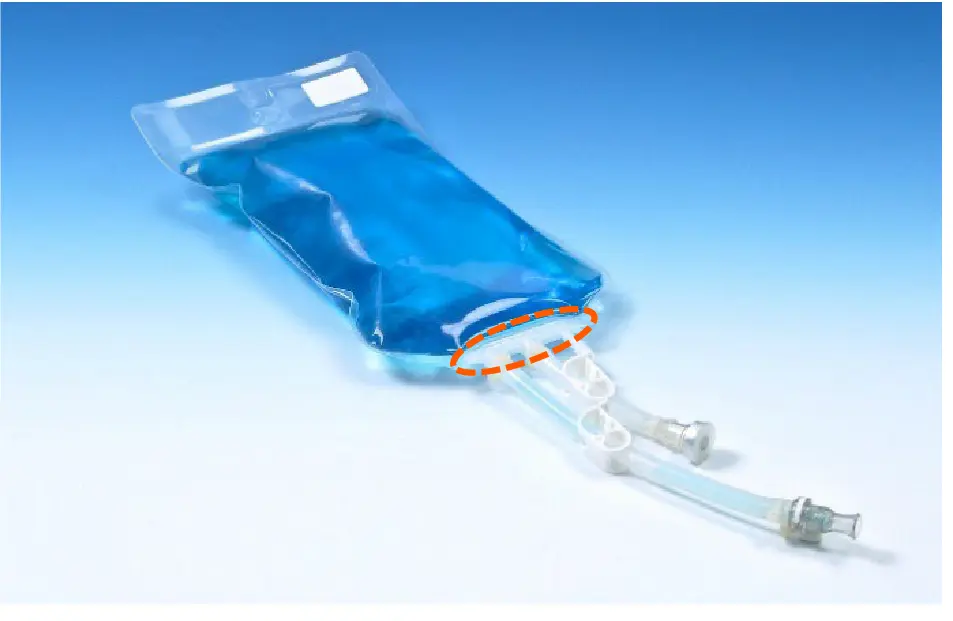
Fig 1. Picture of an Allegro 2D biocontainer system with the multiport boat connector circled in orange.
Summary of methods
Ten samples of a 5 L Allegro 2D biocontainer were manufactured for these tests. Five biocontainers were processed through an HIT cycle and successfully passed. The remaining biocontainers were processed as standard. All biocontainers were gamma irradiated at 25 to 50 kGy.
The tensile strength of the boat connector on each biocontainer was checked using a tensometer. The sample strip was 25 mm wide and the tensile force was applied at an elongation rate of 200 mm/min. During this test, the force at which the film broke was recorded. The strength of the connector at break must exceed 70 Newtons (N).
Results
For each biocontainer, three individual test samples were cut from the boat connector and their tensile strength was measured. The average result for each biocontainer is shown in Table 3.
Among all the samples that were tested, the polymer film material broke before any breakage of the connector weld. This is as expected, and therefore any variation in the data relates to the film tensile strength. All the values found during tensile testing were > 70 N, confirming that every connector weld exceeded the specification.
A t-test (one tailed, α = 0.05) was carried out comparing the individual tensile strength results (n = 15 for both with and without the HIT process) and confirmed that the tensile strength of the biocontainer film is not statistically significantly lower after undergoing the HIT process step. A one-tailed t-test was selected because this gives a greater chance of detecting a difference and only a reduction in tensile strength was considered to negatively impact the biocontainer physical properties.
Table 3. Results of tensile strength testing of biocontainer boat connectors with and without the HIT process1
| Biocontainer test number | HIT process step | Average boat connector weld tensile strength (N) |
|---|---|---|
| 1 | Yes | 101.2 |
| 2 | Yes | 96.0 |
| 3 | Yes | 92.2 |
| 4 | Yes | 109.5 |
| 5 | Yes | 102.3 |
| 6 | No | 104.9 |
1 Force in Newtons to break a sample strip of 25 mm width.
Conclusion
The boat connector welds used to manufacture Allegro 2D biocontainers that undergo the HIT process have a tensile strength exceeding the acceptance criteria. No significant differences in tensile strength at break have been observed between samples that have been through the HIT process and control samples. The absence of any impact of the HIT process step is therefore confirmed for tensile testing characteristics of the Allegro 2D biocontainer film and its connector welds.
Endotoxin content testing
Introduction
Endotoxin testing is a critical part of physicochemical suitability tests for biocontainers and is a standard approach to verify the absence of an impact of a processing step on a biocontainer's cleanliness. Based on risk assessment, the chance of endotoxin contamination is minimal due to operation of the HIT process in a cleanroom and the use of a pure, inert, filtered gas. A study was completed to further verify the endotoxin level in biocontainers manufactured with and without the HIT process.
Summary of methods
Samples of Allegro biocontainers were subjected to validated endotoxin determinations in biocontainers of volumes in accordance with USP <85> and the European Pharmacopoeia (2.6.14, current edition). The endotoxin tests were validated using chromogenic endpoint techniques with a 0.005 EU/mL sensitivity. The 5 L biocontainers were filled with 100 mL of endotoxin-free water and the fluid tested for endotoxin content. The data reported is the concentration of endotoxin in this extract solution. Our internal acceptance criteria for this test is ≤ 0.25 EU/mL in the extraction solution.
Results
Ten samples of a 5 L Allegro 2D biocontainer were manufactured for these tests. Five biocontainers were processed through an HIT cycle and successfully passed. The remaining biocontainers were processed as standard. All biocontainers were gamma irradiated at a normal routine irradiation dose of 25 to 50 kGy. The endotoxin levels for the biocontainers are summarized in Table 4.
Table 4. Data on endotoxin concentration in the extract solution measured from 5 L Allegro 2D biocontainers with and without the HIT process
| Biocontainer test number | Endotoxin level (EU/mL) | |
|---|---|---|
| HIT process step included | No HIT process step |
|
| 1 | < 0.050 | < 0.050 |
| 2 | 0.085 | < 0.050 |
| 3 | 0.059 | 0.063 |
| 4 | < 0.050 | 0.165 |
| 5 | 0.056 | < 0.050 |
| Maximum value reported | 0.085 | 0.165 |
All measurements confirmed the presence of endotoxins, with some samples below the limit of sensitivity of the method. All samples showing < 0.050 EU/mL were repeated, according to procedure, as the first reading was under the limit of detection. For 5 L biocontainers, the maximum endotoxin value of the biocontainers manufactured with a HIT process step (a total of five) was 0.085 EU/mL in the 100 mL extraction volume solution. Comparable control biocontainers (a total of five) gave a maximum endotoxin value of 0.165 EU/mL in the 100 mL extract solution. All endotoxin concentrations in the extract solution were ≤ 0.25 EU/mL, confirming that every biocontainer was below the specification.
Conclusions
The endotoxin levels in Allegro 2D biocontainers that undergo the HIT process are consistently below the acceptance criteria, below the limit of quantification for the assay, and comparable to control biocontainers. The absence of any impact of the HIT process step is therefore confirmed for endotoxin cleanliness of the Allegro 2D biocontainers.
Particulate cleanliness analysis
Introduction
Particulate cleanliness is another critical part of physicochemical suitability tests for biocontainers and is a standard approach to verify the absence of an impact of a processing step on a biocontainer's cleanliness. Based on risk assessment, the chance of particle contamination is minimal due to operation of the HIT process in clean room and the use of a pure, inert, filtered gas. A study was completed to verify acceptable particulate levels.
Summary of methods
Subvisible particle content in the biocontainers has been verified, extracting the biocontainers with a 50 mL volume solution in three consecutive rinses and applying a microscopic particle count (USP <788> test method 2) test method on each 50 mL rinse solution. Our acceptance criteria for this subvisible particle testing is ≤ 12 particles/mL for particle size ≥ 10 μm and ≤ 2 particles/mL for particle size ≥ 25 μm.
Results
Ten samples of a 5 L Allegro 2D biocontainer system were manufactured for these tests. Five biocontainers were processed through an HIT cycle and successfully passed. The remaining biocontainers were processed as standard. All biocontainers were gamma irradiated at 25 to 50 kGy.
The particulate testing results are summarized in Table 5 and Table 6. All data are reported in particles/mL, calculated by dividing total particle count (sum of the three rinse solutions) by the nominal volume of the biocontainer and multiplying it by a correction factor taking into account the extraction efficiency.
Table 5. Data on >10 μm particulate concentration in the extract solution measured from 5 L Allegro 2D biocontainers with and without the HIT process
| Biocontainer test number | Particulate concentration (count/mL) | |
|---|---|---|
| HIT process step included | No HIT process step |
|
| 1 | 0.00 | 0.00 |
| 2 | 0.00 | 0.00 |
| 3 | 0.00 | 0.00 |
| 4 | 0.00 | 0.00 |
| 5 | 0.00 | 0.00 |
| Mean | 0.00 | 0.00 |
Table 6. Data on >25 μm particulate concentration of the extract solution measured from 5 L Allegro 2D biocontainers with and without the HIT process
| Biocontainer test number | Particulate concentration (count/mL) | |
|---|---|---|
| HIT process step included | No HIT process step |
|
| 1 | 0.00 | 0.00 |
| 2 | 0.00 | 0.00 |
| 3 | 0.00 | 0.00 |
| 4 | 0.00 | 0.00 |
| 5 | 0.00 | 0.00 |
| Mean | 0.00 | 0.00 |
All measurements gave results below the reporting limit of the assay procedure, with the majority of samples detecting some low level of particles. These results are all well below the acceptance limit. The magnitude of these results is too small to make clear statistical comparisons on the impact of the HIT process. However, any variability at this very low level would not impact the overall cleanliness of a single-use system.
Conclusions
The particulate levels in Allegro 2D biocontainers that undergo the HIT process are consistently very low in comparison to the acceptance criteria and are comparable to control biocontainers. The absence of any impact of the HIT process step is therefore confirmed for particulate cleanliness of the Allegro 2D biocontainers.
CY61208