Biologics manufacturing has seen many developments in recent years with industry moving away from processing systems based on stainless steel (with cleaning and validation requirements) to single-use systems (sterilized, disposable molded plastics).
As more molecules progress through Phase I and II towards commercialization, GMP manufacturing is also performed at larger scales than ever before. At the same time, increasing titers and the rise of personalized medicine is driving other production processes towards smaller and more individualized batch sizes. The COVID pandemic and the subsequent race to create vaccines pushed single-use bioprocessing to become the industry standard.
Due to these market demands, bioprocessing facilities need to increase production capabilities by becoming more modular and scalable. This demand applies to all equipment, including mixing systems, which need to adapt to handle a wider range of solutions and larger volumes.
In this white paper, we present an overview of the mixing technology landscape driven by the need for versatile biomanufacturing platforms with increased productivity. In this context we discuss the importance of mixing as an operation and how its limitations impact biomanufacturing processes.
Typical mixing requirements for a biomanufacturing facility are also presented in combination with the most recent user requirements, highlighting a quest for usability and integration improvements. Taken together, these multiple factors act as drivers for technical developments in mixing technologies, shaping the design and performance of the next generation of mixers.
From trend to industry standard in biomanufacturing
The last 25 yr have seen a rapid growth in the development of therapeutic molecules and biologics, with monoclonal antibodies (mAbs) being one of the fastest growing markets (1).
In addition to the expansion of mAb production, the industrialization of gene therapies and the growth of new vaccine platforms also share many of the same process challenges. In order to translate these molecules into clinical and commercial success, manufacturers are looking to increase production efficiency, lower production cost and accelerate the development of manufacturing processes. Manufacturing facilities need to be able to process both large and small manufacturing runs to accommodate fluctuating market demands within the same production unit. Features such as flexibility and modularity are sought after, as well as means to increase process outputs and reduce cost while maintaining consistent product quality. The optimal platform for a biomanufacturing facility would be a versatile unit capable of handling various product types and batch sizes (high or low volume) using compact manufacturing equipment for a smaller footprint. With this in mind, manufacturers are increasing capabilities by opening new facilities or making more efficient use of existing ones by retrofitting them. This approach is driving new trends in bioprocessing including continuous processing, and wider use of single-use technologies for improved flexibility, scalability and productivity as well as improved cleanliness.
As a result, bioprocessing equipment, including mixing tanks, has to evolve accordingly. Nowadays, most biomanufacturing steps—including holding, mixing, distribution of media and buffers, cell seed expansion, fermentation, cell removal by depth filtration, disposable chromatography, sterile filtration, ultrafiltration (UF)/diafiltration (DF) and virus filtration—can be performed routinely in single-use equipment up to 3000 L (2). Therefore, it has not been surprising to see a wider adoption of single-use technologies for clinical and commercial manufacturing (3-6).
Single-use systems, which are usually composed of an outer steel compartment where a gamma-irradiated tubing or biocontainer bag is inserted, present multiple advantages. First, they require significantly lower capital investment for both facilities and equipment. Second, they reduce the amount of time needed to get up and running compared to fully stainless-steel systems with long installation time. Third, they eliminate cleaning requirements and thus decrease the downtime between batches. Fourthly, the risk of contamination including cross-contamination is significantly reduced (7). Finally, and most importantly, they allow more flexibility with a modular approach.
While there are clearly economic advantages to single-use bioprocessing versus stainless steel, adoption has occurred incrementally as manufacturers progressively expand by building new single-use facilities and retrofitting existing ones (8). Many facilities are still hybrid to maximize the existing infrastructure, with stainless steel mixers in use for operations such as large-scale buffer preparation. Gradual replacement of aging equipment and the building of new facilities will see a shift toward single-use systems also in the larger scales, increasing productivity over time (4, 9). Another new concept is the development of portable biomanufacturing units to be quickly deployed, especially in emerging markets to establish regional biomanufacturing (4). Such models also require flexible, compact and modular mixing equipment that can cope with increasingly larger batch sizes.
Even though single-use technologies present numerous advantages for mixing, several issues remain. In particular, the inability to adequately mix large volumes in a reasonable time, and the limited availability to pre-test the single-use systems after installation still represent major concerns (5, 6, 10). You also require biocontainer bags of the highest quality, which should be easy to install without any risks of leaks or tears and tested for leachables.
Standardization of biocontainer bags and connectors is another key element to facilitate qualification and integration into existing cleanroom space. Manufacturers of single-use biocontainer bags also need to overcome volume handling limitations and have effective filling/emptying mechanisms with increased usability, especially for the critical biocontainer bag installation step at larger scales.
Finally, manufacturers need to address the environmental and biosafety issues posed by single-use biocontainer bags. This can be achieved by the implementation of ecological waste management and sustainability practices as part of the manufacturing process. The wider adoption of single-use technologies has also facilitated a strong shift towards intensified and continuous processing. This is illustrated, for example, by the wider integration of mixing tanks with low product risk as surge tanks between operations. Furthermore, regulators and biomanufacturers all recognize that closed processing using single-use technology streamlines product development by reducing cleaning requirements and contamination risk, and alleviating the need for stricter room air quality classification (4).
In addition, continuous processing requires on-line monitoring and real-time control testing for more consistent quality assurance. Although further developments are needed, GMP manufacturing in a fully closed single-use technology unit is no longer just a distant dream as it is implemented gradually using available equipment.
Mixing in the biomanufacturing world: An insight into Lonza’s Ibex Solutions
Mixing, albeit seemingly simple, is a complex procedure critical for successful production of homogenous batches of biologicals. Mixing equipment is needed for numerous operations such as homogenization, suspension, dispersion and heat exchange during medium and buffer preparation, cell culture, fermentation, virus inactivation and fill and finish (see Fig 1 and 2 for typical mixing requirements in a biomanufacturing facility).
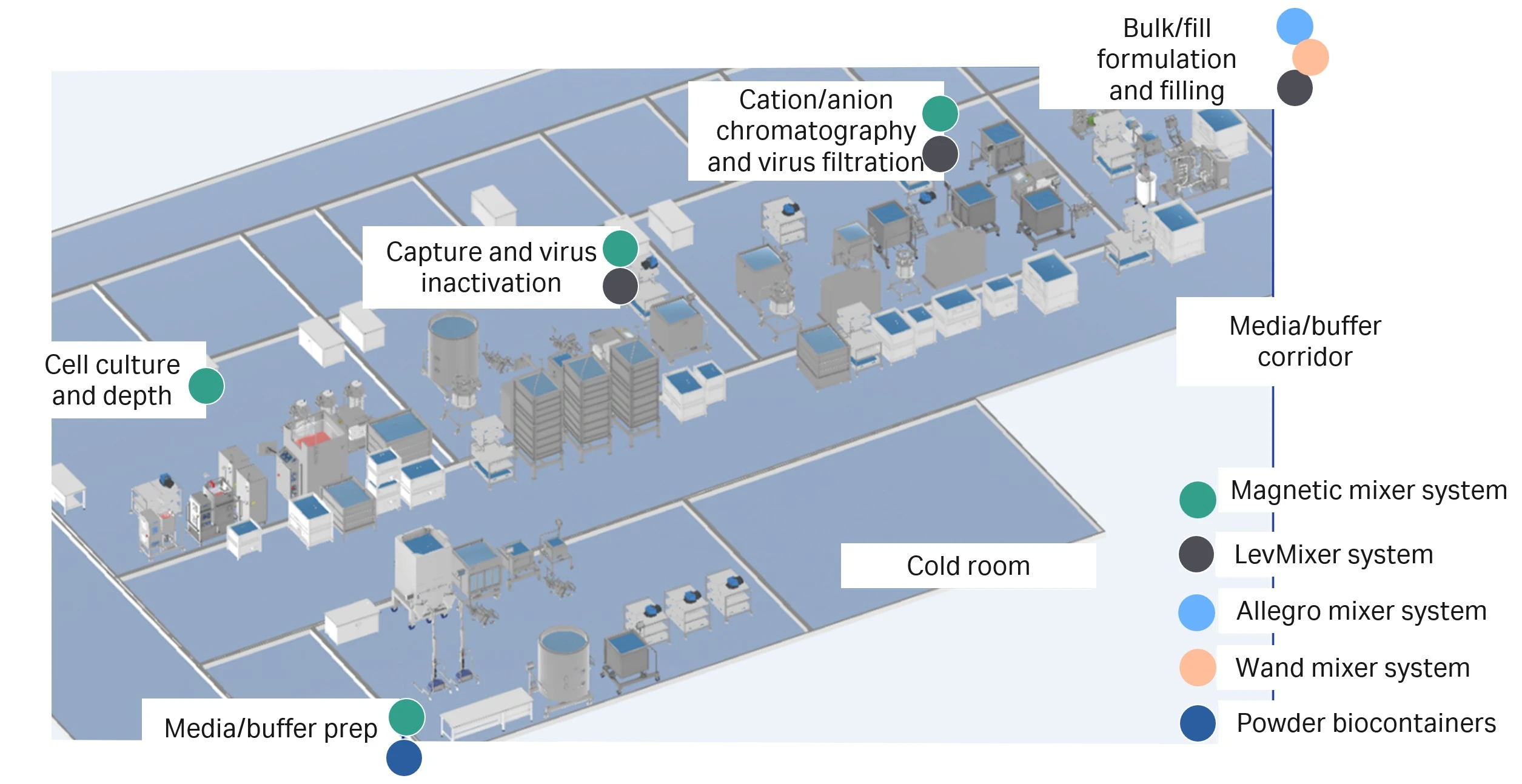
Fig 1. Typical layout (simulation) of a bioproduction facility indicating the different sections requiring mixing equipment.
As an example of mixing equipment used within a modular approach, Lonza has kindly provided an insight into their Ibex solutions contract development and manufacturing organization (CDMO) development suite: The new facility developed for Lonza’s Ibex design and Ibex develop programs is a modern, fully single-use production facility for development and clinical production. It was initially foreseen to produce mAbs in fed-batch mode using single-use technology at the 1000 L (1k) and 2000 L (2k) scale. High production capacity is achieved by using multiple inoculum suites and seed trains, multiple production bioreactors and through optimization of the occupation time of purification equipment. The single-use design guarantees fast changeover times and enables quick change of products. The production suite is also built with a modular approach in mind, so the equipment can be arranged to best fit the customer processes’ needs. The latter allowed Lonza a fast adaptation of the facility to produce COVID vaccine. For the Ibex suite, more than 20 mixers have been installed covering media prep, downstream processing and bulk drug substance formulation (see Fig 2). This mixing equipment needs to be scalable, satisfying requirements for low and large volumes as batch sizes and yields vary. While upstream processing (USP) water consumption scales linearly with the cell culture volume, downstream processing (DSP) water consumption scales with the amount of product produced in the cell culture step. As an example, assuming batch processing throughout DSP and mAb titers of 3 g/L and 6 g/L, buffer consumption of a 1000 L cell culture process is in the range of 7000 and 14000 L, respectively. Access to different types of mixing equipment, which satisfy various volume needs, provides Lonza with the desired flexibility to adopt fast and in a scalable manner.
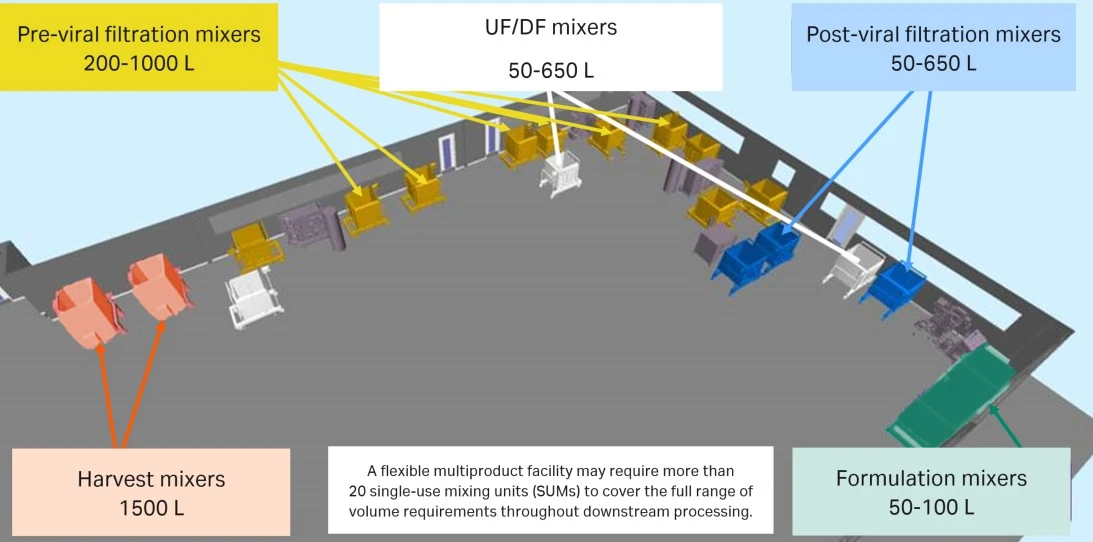
Fig 2. Example of single-use mixers utilization within Lonza’s modular Ibex downstream suite in Switzerland.
Image credit: Lonza Ltd
Given that mixing is used throughout the production process, all mixing operations need to be seamless. They require efficiency, scalability, consistency and reproducibility. Issues with mixing represent a major cause of productivity loss during bioprocess scale-up and full-scale manufacturing.
Common mixing challenges include handling of larger volumes, optimization of mixing times as well as maintaining uniformity, and most importantly the integrity and functionality of the product (without contamination or degradation). Automation developments have indirectly increased the functionality of mixing equipment by improving liquid handling and precise control of complex mixing processes. This, in turn, has led to improvements in mixing, which have impacted manufacturing processes. Lonza’s Ibex suite is raising the bar in this regard by connecting the mixers to a centralized control system. This, however, is not representative of the mixing market, which overall requires further developments to translate positively into productivity and production economics.
The importance of mixing
By definition, mixing homogenizes a fluid by eliminating concentration gradients and temperature variations and blending compounds thoroughly. The mixing of components introduced into the mixer is achieved by interchanging material at different locations. A perfectly mixed system is composed of a random and homogenous distribution of compounds and system properties.
So how can effective mixing be achieved at large scale during biomanufacturing?
The most commonly used mixing method is mechanical agitation using an impeller, typically used in bioreactors and stainless-steel mixers (Fig 3). The most common single-use mixing technology is utilizing magnetically driven impellers where the magnetic drive and motor can either be fixed or are located in a mobile drive unit which can be placed underneath the mixer containment (Fig 4). Agitation can also be achieved through a frictionless/levitating impeller, a stirring shaft, a tumbling motion (non-rotating stirrer) or the oscillation of a disk.
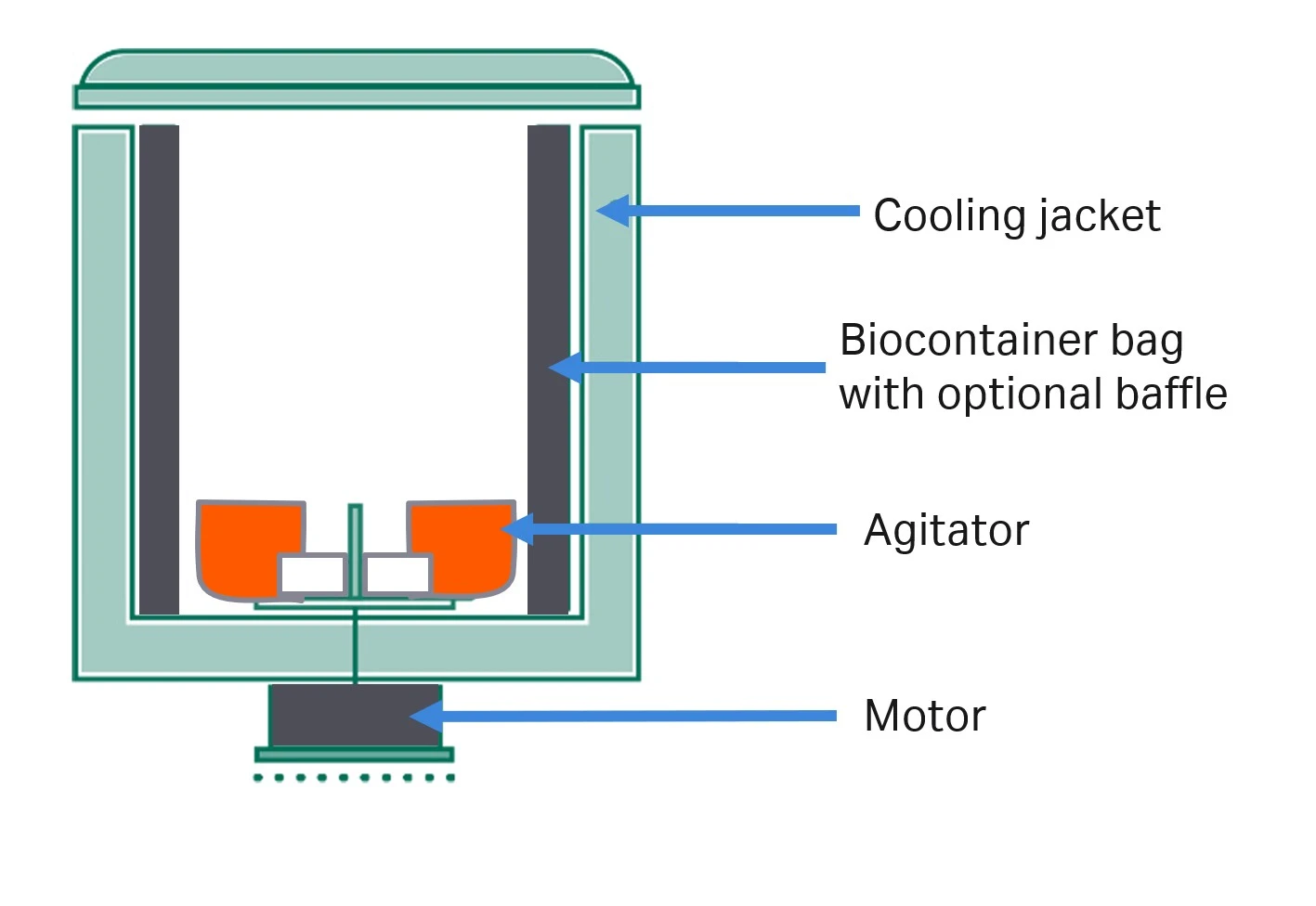
Fig 3. Schematic representation of a typical configuration of a cylindrical steel mixing tank.
Fig 4. Example of a cubical mixing tank for single use with a mobile drive unit.
The fluid dynamics in a mixing tank are often summarized as three major physical processes:
- Distribution
- Dispersion
- Diffusion
First, for an effective distribution of liquid, the impeller must circulate the fluid around the entire vessel in a reasonable timeframe. Furthermore, the velocity of the fluid moved by the impeller must be sufficient to carry materials into the most remote areas of the tank. This is achieved in part by the impeller, based on its shape and speed, but also by the turbulence created within the tank, which is also dependent on the tank shape and design. Next, the process of breaking up bulk flow into smaller and smaller flows, known as eddies, is called dispersion; dispersion is driven by the turbulence and facilitates rapid transfer of material throughout the vessel. The degree of homogeneity as a result of dispersion is limited by the size of the smallest eddies, which may be formed in a particular fluid. Rounded tanks generate a good distribution but insufficient dispersion if unbaffled, as high speed and low turbulence generate a strong vortex resulting in poor mixing in adjacent layers. In a square tank, the corners act as baffles, improving mixing performance by generating higher turbulence (dispersion) and improving distribution. Finally, whilst turbulence allows mixing at the macroscopic level, diffusion will create a concentration equilibrium at the molecular level. The latter, however, is less relevant in an industrial setting. For more details on the physics of mixing and bioprocess engineering principles see references 11 and 12.
Another important function occurring during mixing is heat transfer, which may need to be controlled. The vessel must allow heat to be transferred to and from the fluid in order to reach and maintain the desired temperature. This is achieved via a jacketed system in which a heat transfer fluid is pumped. The rate of heat transfer depends on the design and efficiency of the jacket (surface area, flow rate and temperature gradient in the jacket) and the mixing conditions in the tank (liquid, viscosity, flow, mixing time etc.). Efficient mixing and heat transfer enables the mixer to be used as a reactor for enzymatic reactions like the mRNA synthesis.
The process of mixing also causes different types of stress, posing a risk of aggregation and degradation, particularly to biologics during biomanufacturing. Several potential stress types are associated with the grinding action due to the relative motion between two surfaces:
- Interfacial interaction (air-liquid and liquid-solid)
- Shear stress
- Cavitation
- Nucleation
- Localized thermal stress
The product quality can be affected by more than one stress: for example, some mAbs are particularly vulnerable to aggregation during the many mixing steps required for production. In those cases, aggregation is due to friction and thermal stress (13-16). Whilst shearing is considered as negligible for downstream applications, interface interactions are likely to cause protein aggregation. Such stress can be minimized in part through the use of well-designed tanks and friction-less impellers.
The parameters used to describe a mixing process usually include mixing time, quality and power input (defined as the quantity of power introduced into a mixing system by a drive mechanism). Whilst mixing time for a particular process is often determined based on previous data acquired in the same system in similar conditions, additional qualitative and quantitative testing to optimize mixing parameters for a given mixing process is generally recognized as good practice. These tests may include evaluation of impeller type, geometry, size and orientation relative to the vessel.
In addition, a robust mixing system should be developed based on the product's characteristics - including fluid density, solubility, viscosity, thermal conductivity and nature of the particles (size and density). Qualitative tests assessing visual indicators such as visible aggregation, homogeneity, presence of powder, minimal foaming, dead pockets (zones in the mixer where liquid doesn't circulate), spattering (droplet accumulation within the container), can be performed without sampling to allow rapid adjustment of the mixing parameters. Quantitative analyses include the measurement of variables such as pH and conductivity of the liquid are equally important as they become constant as a function of mixing time.
Mixing systems available
The choice of mixers for biomanufacturing largely depends on whether the mixing requirement is for blending, dissolving, suspending or homogenizing; other considerations include whether the solution needs to be stored, dispensed, heated/cooled, or weighed and which volumes will be handled (13, 17, 18).
An overview of the different types of single-use mixers used in the various sections of a biomanufacturing facility is shown in Figures 1 and 2. In the cell culture room, the capture section and the chromatography section, magnetic mixers are mostly used. Frictionless mixers such as our LevMixer™ system are often preferred for polishing and fill and finish applications. The Wand Mixer is another attractive solution for fill and finish, while the Allegro™ single-use mixer is often used as the retentate vessel in tangential flow filtration (TFF) applications.
For media and buffer preparation, classical magnetic mixers and powder bags are preferred. In addition to the mixing tank itself, the design of upstream and downstream connections, is of equal importance to minimize the risk of contamination of the mixer’s content. There is a wide range of commercially available single-use mixing systems based on various mixing technologies (Cytiva, Sartorius Stedim Biotech, Thermo Fisher Scientific, Merck Millipore, etc.). The equipment uses different mixing principles, shapes, and sizes (round or cubical), impeller technologies (disk or classical impeller, top or bottom mounted), and power input systems (superconducting, magnetic, or mechanical).
As discussed previously, the choice of mixing systems significantly impacts mixing performance. For example, stress and aggregation can be minimized through optimization or design choice: by increasing the turbulence in a tank or using a cubical tank, it is possible to partly disrupt subvisible particles. Alternatively, a frictionless levitating magnetic impeller such as our LevMixer system with no contact between the impeller and the bottom shaft, will also significantly reduce aggregation (16).
Another differentiator between commercial systems is the type of biocontainer bag fitted into the mixing unit. The biocontainer bags are made of different materials, which define their inherent cleanliness and robustness. The integrity testing also differs amongst suppliers. With a range of control/automation and many integration systems available on the market, users need to find the best solution for their manufacturing processes to fit their applications, processes and facilities.
Mixing technology limitations and user requirements
Whilst there is a wide range of offerings, mixing equipment for biomanufacturing still has clear limitations. A good understanding of manufacturing needs will help focus further developments and improve equipment usability. Following discussions, we have compiled some user considerations below (summarized in Table 1).
Space and user constraints
Due to increasing demand and production of larger batches, mixers need to handle larger volumes without taking additional space as facilities aim to reduce their overall footprint. Thus, larger mixers need to fit within the operating range of existing facilities, as well as use minimal operational floor space and height to easily fit through doors. Such size restrictions should, however, not affect the handling, cleaning and movability of the apparatus. Furthermore, ease of installation and usability aspects of mixing equipment and their biocontainer bags remain equally important. The larger mixers in particular should be easier to install, even offering bag leak testing after installation for quality assurance purposes.
Also, in order to limit human error and contamination risk during production runs, ease of use and access should be improved to prevent unnecessary user movements. Finally, to facilitate the overall set-up, users are seeking mixing equipment that integrates easily into their existing processes, in particularly those using consumables with a flexible design.
Technical requirements
As manufacturing platforms become more versatile, mixers must be able to handle a wider range of applications. In the first instance they need to be able to process both small and large volumes in a scalable mixing system whilst maintaining similar mixing performance at larger scale. This calls for improved specifications requiring new impeller design and physical testing for low and high capacity of mixing without compromising product quality and quantity (no product loss - low hold up volume).
Secondly, mixers must operate across a wide range of temperatures, viscosities, pH and volumes to process different solutions (e.g., media, buffer, and batch hold after virus inactivation). Currently mixers are usually designed to operate over a restricted temperature set. Going forward, users would like to use the same mixing equipment for even more challenging settings such as fast heat exchange at very high viscosities. Such a request demands the incorporation of perfectly controlled heating and cooling units.
Similarly, the handling of liquids with different viscosities (up to 170 cP or higher) requires technical development with high-performance impellers. Overall clients are searching for more flexible and modular mixing systems. There is also an increased demand for reliable standardized and ready-to-go systems that do not require customization to accelerate lead-times and increase efficiency.
Automation and hardware
A notable benefit of single-use bioprocessing mixing equipment is process flexibility such as, for example, the ability to scale buffer preparation with ease and the ability to reconfigure/repurpose the same equipment for another bioprocessing steps such as product hold or virus inactivation using probes and dosing options.
The underpinning flexibility is the automation and control architecture of the single-use equipment, which should be sufficiently flexible and robust to cater for varying user needs ranging from a single system with local control to large, integrated systems controlled via distributed control system (DCS) or supervisory control and data acquisition (SCADA). Each of these systems has its advantages depending on the complexity of the bioprocess, the stage of clinical development and integration into legacy control systems. Therefore, irrespective of the automation and control systems employed, the single-use bioprocessing equipment needs to be sufficiently flexible to be able to integrate into users’ workflow. This integration, however, needs to be seamless, ideally without customization to allow users to further benefit from reduced downtime and increased speed-to-market.
Table 1. Common requirements for mixing equipment
| Space restraints | Mixer size Movability Usability Ease of installation |
| Technical improvements for tanks | Large volumes handling Low and high mixing capacity Low hold up volume Broader temperatures and viscosity range Modular standardization |
| Automation systems | Seamless integration Improved control architecture DCS or SCADA communication |
Conclusion
The current market drivers in the biotech industry demand process innovation to increase manufacturing flexibility and reduce production costs. This results in increased pressure on bioproduction platforms to become more versatile whilst maintaining high productivity and minimal down time. Mixing equipment needs to adapt to these requirements by becoming interchangeable and more scalable in order to handle wider ranges of volumes and more varied applications, without loss in efficiency. This is partly achievable through the adoption of single-use mixing units and through the development of mixing technologies. The market is currently looking for improvements in technical specifications and automation control. Improved designs for better mixing dynamics, mixing units that are easier to operate, modular adoptable but still standardized systems for seamless integration, and user-friendly automation systems, all represent new features that would have a significant impact for the users. Such technological developments would bring to the market versatile, higher performance mixers with improved automation and reduced footprint.
References
- Antibody therapeutics approved or in regulatory review in the EU or US. Antibody Society. https://www.antibodysociety.org/resources/approved-antibodies/. Accessed August 10, 2021.
- Grebe A, Chaubard J, Fenge C. Single-use, stirred-tank bioreactors: efficient tools for process development and characterization. Bioprocess International, Issue 12(8), p7-9. 2014.
- Boulais A. Single-use platforms accelerate viral vaccine development and manufacturing in accelerated development, manufacturing and monitoring of viral vectors. Sartorius Stedim biotech in association with Bioprocess International, p7-12. 2018.
- Frank G. Transformation of biomanufacturing by single-use systems and technology. Curr Opin Chem Eng. 2018; vol 22: 62-70.
- Langer, E.S. et al. 16th Annual report and survey of biopharmaceutical manufacturing capacity and production. BioPlan Associates, Rockville, MD, USA; 2019.
- Scott C. Large-scale capacity strategies: single use, multiuse, or both? Bioprocess International. https://bioprocessintl.com/manufacturing/facility- design-engineering/largescale-capacity-strategies-single-use-multiuse-or-both/. Accessed August 10, 2021.
- https://www.pharmaceuticalonline.com/doc/the-quest-for-clean-mixing-0004
- Ecker D, Seymour P. Supply and demand trends: Mammalian biomanufacturing industry overview. Bioprocess International. 18 (1-2) p10-14. 2020.
- Single use upstream bioprocessing markets (bioreactors, media bags, bioprocess containers, tubing and connectors, mixing systems, sensors and probes. Science and medicine group. https://scienceandmedicinegroup.com. Accessed August 10, 2021.
- Beodeker B. Disposables for biomanufacturing: A user’s perspective. Bioprocess International, Issue 12(8), p68. 2014.
- Doran P. Bioprocess engineering principles. Second edition, Elsevier Ltd. 2014: 255-304.
- Eibl R, Eibl D. Single-use technology in biopharmaceutical manufacture. 2nd Edition October 2019. Chapter 3.
- Gikanga B, Eisner D, Ovadia R, Stauch O, Maa Y. Processing impact on monoclonal antibody drug products: protein subvisible particulate formation induced by grinding stress. PDA J. Pharm. Sci. Technol. 2017. doi: 10.5731/pdajpst.2016. 006726
- Gikanga, B, Hui A, Maa, Y. Mechanistic investigation on grinding-induced subvisible particle formation during mixing and filling of monoclonal antibody formulations. PDA J. Pharm. Sci. Technol. 2018. doi: 10.5731/pdajpst.2017.007732
- Kiese S, Pappenberger A, Friess W, Mahler H. Shaken, not stirred: mechanical stress testing of an IgG1 antibody. J. Pharm. Sci. 97 (10) p4347. 2007. DOI 10.1002/jps.21328
- Gikanga B, Chen Y, Maa Y, Stauch O. Mixing monoclonal antibody formulations using bottom mounted mixers: impact of mechanism and design on drug product quality. PDA J. Pharm. Sci. Technol. March 2015, 69(2): 284-296. doi:10.5731/pdajpst. 2015.01031
- Challener C. Optimizing the selection of mixing equipment. Pharmatech.com. http://www.pharmtech.com/optimizing-selection-mixing-equipment. Accessed August 10 2021.
- Heindel, T. Mixing considerations in stirred tank bioreactors when using fluid property altering microorganisms. ASME 2010 3rd Joint US-European Fluids Engineering Summer Meeting: Volume 1, Symposia – Parts A, B, and C. 2010. https://doi.org/10.1115/FEDSM-ICNMM2010-30366