Introduction
All breweries and their beers must meet basic regulatory standards for long-term commercial viability. Consumers expect a specific beer to look and taste the same everywhere they go and for it to be safe and pleasurable to drink.
An effective laboratory QC and QA program executed throughout brewing workflows helps maintain uniformity of manufacturing processes and provides consistent final products. This safeguards the taste profile, product safety, and overall quality of beer.
Several key testing procedures rely on laboratory filtration. These include general clarification and degassing, analytical chemistry, and microbiological tests.
The correct selection of filtration devices used in these tests can have a major impact on laboratory efficiency and the accuracy of results.
Clarification and degassing
Laboratory filtration is used to clarify samples before performing numerous quality control techniques. Passing a beer or wort sample through a filter removes particulates, such as yeast and gases, that can distort color determination and other measurements.
Clarification is crucial when performing spectroscopic analysis techniques. Particulates may clog instrumentation, impact optical components, and scatter light. This reduces signal quality, which then leads to inaccurate measurements. In techniques such as UV-Vis, IR, NMR, and Raman spectroscopy, the presence of particulates can cause baseline noise and reduce the clarity of spectral data.
We offer various filter media for sample clarification including cellulose, glass fiber, and membrane filters. The best choice of media is based on the application, level of filtration, regulatory requirements, desired throughput, and cost.
Whatman™ cellulose filters are manufactured from high-quality cotton linters treated to achieve a minimum alpha cellulose content of 98%. These cellulose filter papers are used for general filtration and exhibit particle retention levels down to 2.5 µm.
We offer various retention and flow rate combinations to suit your laboratory applications. The different cellulose filters provide increasing degrees of purity, hardness, and chemical resistance. Papers are available in a variety of diameters and folded options.
Learn more about general clarification and degassing
Liquid chromatography analysis
Liquid chromatography (LC) techniques are widely used in beer analysis to assess chemical composition and quality. High-performance liquid chromatography (HPLC) is one of the most common methods because of its high sensitivity and precision, which allows scientists to analyze various compounds and contaminants.
LC is used throughout the brewing process including raw materials, fermentation, and the final product. Here are the key applications:
- Quality control of raw ingredients
- Hops analysis: LC is used to measure the levels of alpha acids and iso-alpha acids in hops, which are critical to determine bitterness and flavor in the beer.
- Malt analysis: Detects sugars and amino acids in malt to make sure they meet desired specifications for fermentation.
- Monitoring fermentation
- Sugar content: Measures fermentable sugars (e.g., glucose, maltose) to monitor yeast activity and determine that the desired alcohol content is achieved.
- By-products analysis: Tracks unwanted compounds like diacetyl, which can affect the beer's taste.
- Flavor profiling
- Aroma compounds: Identifies and quantifies flavor and aroma compounds such as esters, phenols, and terpenes for consistency and optimization of sensory characteristics.
- Bitterness profiling: Quantifies bittering compounds to achieve the desired balance in the final product.
- Detection of contaminants
- Mycotoxins and pesticides: Determines if raw materials and the final product are free of harmful substances.
- Unwanted fermentation by-products: Detects fusel alcohols and other off-flavors.
- Alcohol content determination
- Ethanol levels: Confirms compliance with legal requirements and matches the product's labeled alcohol by volume (ABV).
- Shelf-life studies
- Stability testing: Measures oxidation products and other degradation compounds to predict the shelf life and storage conditions.
Sample filtration is an essential preventive maintenance step in LC methods. It protects the instrument’s pump, valves, and tubing from damage or clogging due to particulates introduced by unfiltered samples or mobile phase.
Sample filtration also prevents particulates from building up within the LC column's packing, which can affect data quality and reduce column life.
We supply syringe and syringeless filters in various diameters, pore sizes, and membrane types to suit your sample and analysis requirements.
Learn more about analytical sample preparation
Microbiology
A common method to determine the presence of microorganisms is to filter samples throughout brewing processes and isolate potential bacterial contamination. These samples are then plated and incubated. This method is known as the membrane filter (MF) technique (Fig 1). Membrane filters are selected based on their pore size to allow for isolation of specific microorganisms. The MF technique is applicable to many organisms, including bacteria, yeast, and fungi.
The MF technique provides rapid and efficient detection and quantification of microorganisms. It is highly sensitive and can detect low concentrations of bacteria, which is critical for quality control in beverage production.
The technique is also cost-effective, requires minimal media preparation, and allows for larger sample volumes to be tested. The MF technique can detect specific microbial species by using selective media—essential for targeted microbial analysis.
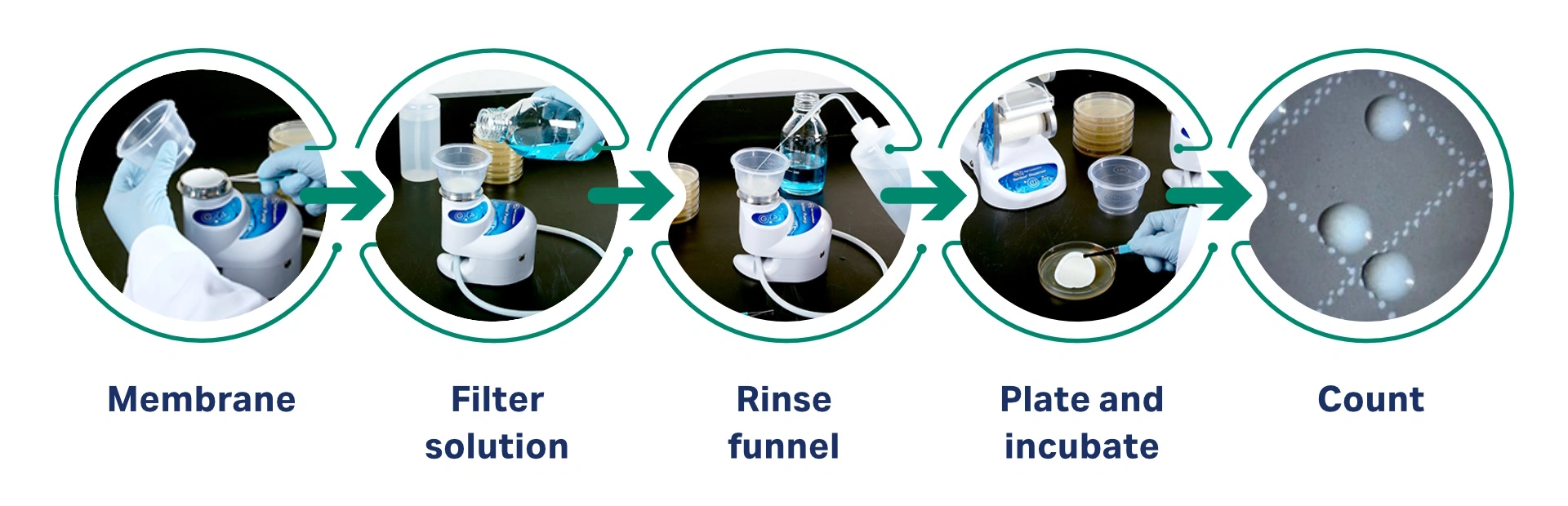
Fig 1. The membrane filtration technique.
Microbiology laboratory workflows
The choice of workflow used by microbiologists is based on several factors including product handling preferences, laboratory efficiency, cost per test, recovery of organisms, and controlling sample-to-sample cross-contamination.
The MF technique can be performed using reusable hardware. A membrane disc is placed into a reusable funnel that has been previously autoclaved, the sample filtered, and the membrane transferred to a petri dish. If another replicate of the same sample is required, the same funnel may be reused. When moving to a new sample, a newly autoclaved funnel should be used to prevent sample-to-sample contamination.
A partially disposable workflow uses a presterilized cylinder funnel. The funnel and membrane disc are aseptically placed onto a manifold, the sample filtered, and the membrane transferred to a petri dish. If another replicate of the same sample is required, the same cylinder funnel may be reused. The cylinder funnel is discarded after use. When moving to a new sample, a new cylinder funnel should be used and the manifold support sanitized. This workflow allows users to rapidly process multiple samples with a reduced amount of laboratory preparation time.
Filter dispensers are ideal for high throughput microbiology testing labs that want an ergonomic and faster way to handle individual membranes. The Sentino™ filter dispenser is designed to aseptically dispense one disc of membrane at the touch of a button.
The dispenser is easy to load with guide plates to assist loading and to keep the refill web in alignment to avoid jamming the instrument. The unit features a compact and portable design that is easy to clean by sanitizing with standard laboratory disinfectants.
Learn more about the Sentino filter dispenser
Our flexible microbiology manifold allows you to optimize testing without sacrificing cleanliness with interchangeable components and coupling devices. It has a modular design that allows two manifolds to combine, yielding a standard 6-place manifold that can be easily separated for disinfection and sterilization.
Learn more about our flexible microbiology manifold
Microbiologists may also perform the MF technique using individual disposable funnels. The funnels contain an encapsulated membrane and are purchased presterilized. The funnel can be placed directly onto a manifold system, and the sample poured directly into it. The sample is filtered and the membrane transferred to a petri dish.
This workflow reduces the amount of laboratory preparation required, and individual disposable funnels can significantly reduce the potential for cross-contamination from sample to sample.
We offer a range of products for performing the MF technique that allow you to choose products suitable for your specific workflow requirements. For busy, high-throughput beverage laboratories we offer Microcheck™ beverage monitors for analyzing sample contamination. The disposable, gamma-irradiated filter funnels come fully assembled, featuring both filter membrane and funnel. They can increase productivity and efficiency of laboratories that don’t have time to clean and sterilize reusable hardware.
The funnels feature an easy-to-use design—the unique squeeze separation of the cylinder from the base allows easy access to the membrane. Alternatively, the lid of the funnel can be used to convert the base of the funnel into a Petri dish for sample culturing without membrane removal. They are delivered in a sterile bulk pack of 50 units and are not individually packaged for rapid use in the laboratory.
Learn more about Microcheck beverage monitors
The Sentino pump is a compact microbiology pump that can be used with Microcheck beverage monitors and other filter funnels. It eliminates the need to clean, wrap, and autoclave a larger multi-place manifold. The instrument has a peristaltic flow design, which pulls the sample through the filter and fluid path and eliminates the need for a vacuum source. The peristaltic flow ensures fluid flows in one direction without backup and contamination. The small footprint frees up valuable benchtop space and provides flexibility to arrange your workspace for optimal efficiency.
Learn more about the Sentino microbiology pump
Summary
Laboratory quality control testing is a multi-faceted process that combines analytical chemistry and microbiology so breweries can meet the highest safety and quality standards.
As outlined, laboratory filtration is vital for sample preparation, enhancing analytical precision, and protecting instrumentation from particulate contamination.
Comprehensive microbial analysis allows brewers to assure the safety of their products. The membrane filter technique allows for efficient detection and quantification of microorganisms. It requires minimal media preparation and can be used for testing larger sample volumes.
We provide a range of filter media and devices to improve efficiency and handling in different laboratory workflows.
By integrating robust quality control protocols and selecting appropriate filtration media and methods, your brewery can provide consistent, high-quality beers that consumers enjoy, while complying with stringent regulatory requirements across global markets.
Cytiva and the Drop logo are trademarks of Life Sciences IP Holdings Corporation or an affiliate doing business as Cytiva.
Microcheck, Sentino, and Whatman are trademarks of Global Life Sciences Solutions USA LLC or an affiliate doing business as Cytiva.
© 2025 Cytiva
For local office contact information, visit cytiva.com/contact