

Many tools and techniques are available today for protein purification. Development of a purification process requires an analysis of various strategies to isolate a protein of interest. Protein purification from a complex sample, such as cell culture or serum, requires more than one chromatographic step. Typically, the first step is ion exchange (IEX) or multimodal chromatography to fractionate the sample and yield a subpopulation of proteins containing the target molecule. This is followed by subsequent chromatographic steps to further fractionate the sub-population until a desired purity level is reached. These steps can include affinity purification, such as protein A for immunoglobulins, immobilized metal affinity chromatography (IMAC) for histidine-tagged proteins, and size exclusion chromatography, as well as IEX or multimodal chromatography to isolate the target protein. Each step in the purification process requires optimization in order to maximize yield and purity of the target protein. Therefore, small-scale purification experiments are used during the development and optimization phase to preserve precious sample while providing crucial information.
The method in this application note demonstrates the use of AcroPrep™ Advance 96-well filter plates as an efficient tool for fractionation of small-volume protein samples. The format can be used to develop protein purification strategies and/or as a platform for moderate to high throughput protein isolation. In either case, purified sample can be used for further analysis and/or downstream applications. Development methods for protein purification strategies using small quantities of protein mixtures are presented.
One method uses AcroPrep Advance filter plates with Supor™ membrane combined with traditional chromatography IEX and multimodal resins. An alternative method discussed here uses AcroPrep Advance filter plates with Mustang™ IEX membrane to separate different proteins. In all cases, the utilization of a filter plate-based strategy allows for rapid screening of multiple purification schemes ready for optimization at a larger scale.
Protein purification strategies using AcroPrep Advance filter plates with a combination of media provide:
- An optimized, rapid protocol for the efficient fractionation of a protein sample using anion and cation exchange membranes.
- A simple protocol for using minimal sample volume to conserve precious samples.
- An example for protocol development of small-scale protein purification.
|
Buffer |
Composition |
|
Binding buffer |
Carbonate buffer, 150 mM NaCl, pH 10 |
|
Elution buffer 1 |
20 mM Tris HCl, pH 7.0 |
|
Elution buffer 2 |
20 mM sodium acetate, pH 5.0 |
|
Elution buffer 3 |
20 mM sodium acetate, pH 4.0 |
Membrane-based protein purification
To overcome mass transfer limitations associated with conventional resin-based chromatography, membrane chromatography was developed to obtain better flow distribution, fast flow rates, and increased accessibility for rapid purification of target proteins or removal of contaminants. These attributes can translate into higher throughputs and reduced processing times. We offer two IEX membranes with strong IEX ligands, quaternary amine and sulfonic functional groups on Mustang Q (strong anion) and Mustang S (strong cation) membranes respectively. Our AcroPrep Advance 96-well filter plate with Mustang Q or S membrane is suitable for use in small scale, primary protein purification applications. The following protocol describes a purification strategy for each of the devices.
Materials and methods
- AcroPrep Advance filter plates with Mustang Q membrane, 350 µL
- AcroPrep Advance filter plates with Mustang Q membrane, 1 mL
- AcroPrep Advance filter plates with Mustang S membrane, 350 µL
- AcroPrep Advance filter plates with Mustang S membrane, 1 mL
- Vacuum manifold
- Vacuum/pressure pump
Table 2. Buffers for Mustang Q membrane protein separation
|
Buffer |
Composition |
|
Loading buffer |
50 mM Tris, pH 8.8 |
|
Elution buffer 1 |
50 mM Tris, 0.1 M NaCl, pH 8.8 |
|
Elution buffer 2 |
50 mM Tris, 0.4 M NaCl, pH 8.8 |
Table 3. Buffers for Mustang S membrane protein separation
|
Buffer |
Composition |
|
Loading buffer |
50 mM sodium acetate, pH 4.5 |
|
Elution buffer 1 |
50 mM sodium acetate, 0.2 M NaCl, pH 4.5 |
|
Elution buffer 2 |
50 mM sodium acetate, 0.4 M NaCl, pH 4.5 |
|
Elution buffer 3 |
50 mM sodium acetate, 1 M NaCl, pH 4.5 |
Protocol for protein mixture separation using Mustang Q membrane
- Pre-wet AcroPrep Advance filter plate with Mustang Q membrane with 300 µL/well of loading buffer.
- Place filter plate on collection plate and centrifuge at 1000 × g for 5 min to remove loading buffer. All subsequent centrifugation will occur at 1000 × g for 5 min.
- Load 200 µL/well of protein mixture to filter plate and incubate on shaker for 10 min.
- Place filter plate on clean collection plate and centrifuge. Retain flowthrough fraction containing unbound protein.
- Wash with 200 µL/well loading buffer, place filter plate on clean collection plate, centrifuge and retain flowthrough.
- Add 200 µL/well elution buffer 1, incubate on shaker for 10 min.
- Place filter plate on clean collection plate and centrifuge. Retain eluate.
- Repeat steps 6-7.
- Add 200 µL/well elution buffer 2, incubate on shaker for 10 min.
- Place filter plate on clean collection plate and centrifuge. Retain eluate.
- Repeat steps 9-10.
- Analyze collected fractions by SDS-PAGE.
Protocol for protein mixture separation using Mustang S membrane
- Pre-wet AcroPrep Advance filter plate with Mustang S membrane with 300 µL/well of loading buffer.
- Place filter plate on collection plate and centrifuge at 1000 × g for 5 min to remove loading buffer. All subsequent centrifugation will occur at 1000 × g for 5 min.
- Load 200 µL/well of protein mixture to pre-wet filter plate with Mustang S membrane and incubate on shaker for 10 min.
- Place filter plate on clean collection plate and centrifuge. Retain flowthrough fraction containing unbound protein.
- Wash with 200 µL/well loading buffer, place filter plate on clean collection plate, centrifuge and retain flowthrough.
- Add 200 µL/well elution buffer 1, incubate on shaker for 10 min.
- Place filter plate on clean collection plate and centrifuge. Retain eluate.
- Repeat steps 6-7.
- Add 200 µL/well elution buffer 2, incubate on shaker for 10 min.
- Place filter plate on clean collection plate and centrifuge. Retain eluate.
- Repeat steps 9-10.
- Add 200 µL/well elution buffer 3, incubate on shaker for 10 min.
- Place filter plate on clean collection plate and centrifuge. Retain eluate.
- Repeat steps 12-13.
- Analyze collected fractions by SDS-PAGE.
Results and discussion
Performance of Mustang Q membrane is illustrated by separating a three protein mixture using a simple salt elution strategy. SDS-PAGE analysis of fractions (Fig 1) shows a clear separation of each protein.
- Cytochrome C (12 kDa) does not bind to the Mustang Q membrane at pH 8.8 (Lane FT)
- Conalbumin (78 kDa) is eluted with the addition of 0.1 M NaCl (Lane E1)
- Albumin (67 kDa) is eluted with 0.4 M NaCl (Lane E2)
Similar levels of protein separation are seen with Mustang S membrane in AcroPrep Advance filter plates, as seen by SDS-PAGE analysis of these fractions (Fig 2).
- All three proteins tested bind to the Mustang S membrane in Na Acetate, pH 4.5
- Trypsinogen (24 kDa) elutes first with 0.2 M NaCl (Lane E1)
- Cytochrome C (12 kDa) requires higher salt and elutes with 0.5 M NaCl (Lane E2)
- Lysozyme 14.4 kDa requires 1.0 M NaCl for elution (Lane E3)
AcroPrep Advance filter plates with Mustang IEX membranes have demonstrated robust charge-based protein separations allowing for rapid protein purification.
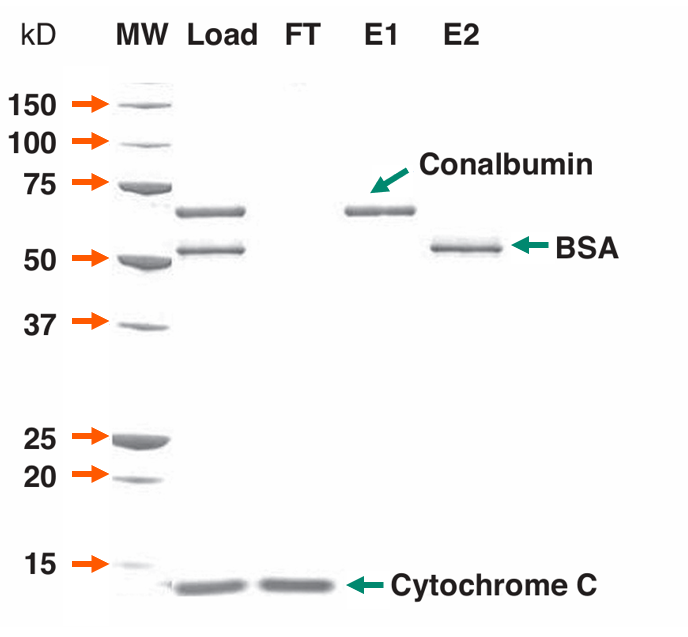
Fig 1. Complete separation of proteins with AcroPrep Advance filter plates with Mustang Q membrane*.
*1.25-3.75 µg of total protein (not reduced) loaded onto 12% SDS-PAGE. Lanes: MW = molecular weight markers; Load = protein mixture; FT = flowthrough; E1 and E2 = 0.1 and 0.4 M eluate fractions. GelCode stain used.
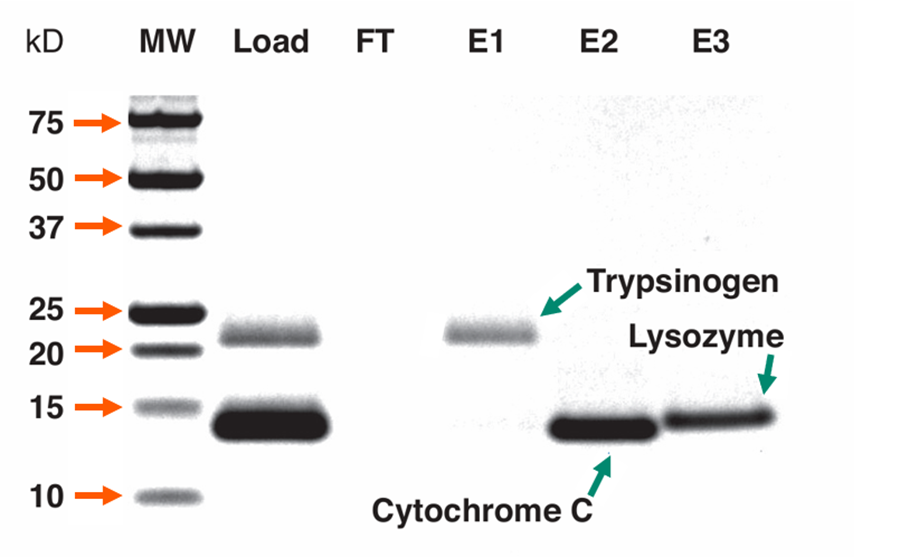
Fig 2. Complete separation of proteins with Mustang S membrane*.
*1.25-3.75 µg of total protein (not reduced) loaded onto 12% SDS-PAGE. Lanes: MW = molecular weight markers; Load = protein mixture; FT = flowthrough; E1 and E2 = 0.1 and 0.4 M eluate fractions. GelCode stain used.
AcroPrep Advance filter plates with Mustang IEX membranes may provide performance advantages over resin-based IEX purification. Increased flow rates and better flow distribution allow for rapid binding and elution of large biomolecules, and wash steps are immediate. Large membrane pores increase accessibility to the IEX chemistries, either for purification or contaminant removal. In addition, membranes often have reduced hold-up compared to traditional resin-based alternatives. This therefore increases wash efficiency and yields more concentrated eluates. These factors combine to create an efficient platform for protein purification. When reviewing protein purification strategies using IEX chemistries, we recommend that you analyze the performance of membrane chromatography.
Our Mustang membrane is available in syringe filters and capsules to easily scale up purification developed in the AcroPrep Advance filter plate platform.
Conclusion
Purification strategies should be developed based on known physical and chemical characteristics of the target molecule, such as net charge, hydrophobicity and affinity for metals or ligands. Ion exchange, multimodal and affinity ligands can be screened to determine candidates for the purification of the target molecule.
Methods for the fractionation of protein samples using IEX membranes have been demonstrated using AcroPrep Advance filter plates with Mustang Q and S membranes. These techniques can be applied using a variety of sample types and optimized to meet individual purification requirements at all scales.
AcroPrep Advance filter plates with Mustang Q (AEX) and Mustang S (CEX) membranes can efficiently fractionate proteins from complex protein samples to support high-throughput screening in a ready to use format.
CY59868