It’s no secret that digital biomanufacturing has arrived. As biomanufacturers begin or continue to incorporate digital technologies into their process, they might wonder, how do I best apply these technologies whether they are designed into a new workflow or added onto an existing one?
As a leading biomanufacturing supplier, Cytiva can help guide you on your journey toward digital maturity. In this article, we’ll discuss not only the challenges facing the industry—and how going digital can help address and overcome them—but where drug manufacturers can either start or continue to implement digital technologies in their bioprocessing workflows. Whether you’re looking to increase digital maturity or simply improve your process development timelines and derisk your path to approval, understanding the landscape of digital manufacturing is key to advancing today’s therapeutics at every stage, from discovery to delivery.
Digital manufacturing can improve the productivity and robustness of new and existing processes and facilities. However, digital biomanufacturing is not just automation and enhanced digital plant maturity. Going beyond what legacy distributed control systems (DCS) and supervisory control and data acquisition (SCADA) systems offers, digital transformation can include predictive simulations, integrated connectivity and real-time access to multiple sources of information, enhanced data analysis and traceability, and a streamlined learning experience that is faster and more thorough.
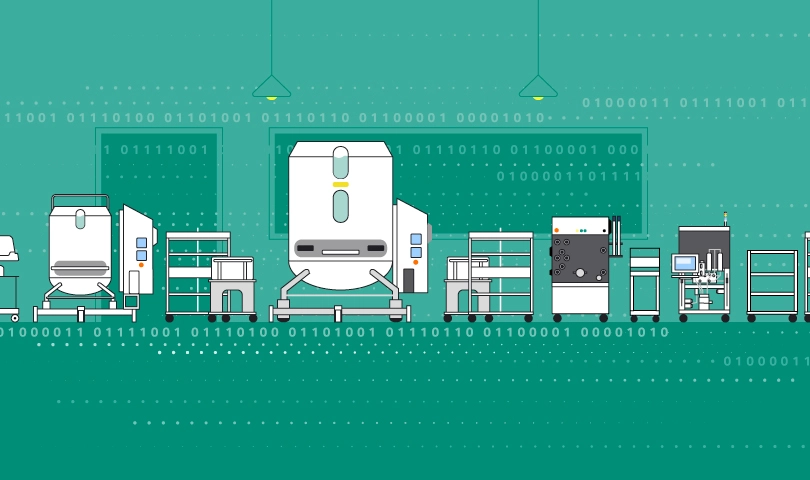
Industry landscape of bioprocess digital solutions
Industry challenges
Historically, manufacturing was focused on building out process development (PD) for monoclonal antibody (mAb) therapies on a large, blockbuster scale. Now, cell and gene therapies, mRNA, and other advanced therapy medicinal products (ATMPs) require novel PD workflows that account for evolving regulatory guidelines, typically produced at a much smaller scale and faster timeline. For personalized therapies for rare or orphan diseases, or vaccines geared toward fighting a future pandemic, the old way of taking years to produce a drug is no longer a viable option. While the industry faces many challenges to keeping pace with this evolving landscape, adopting digital technologies can help biomanufacturers address them.
One challenge is rising R&D costs and timelines. The cost of bringing a new drug to market has skyrocketed, with estimates often exceeding $2 billion per therapy, according to recent reports (1, 2). R&D timelines are also long, often taking 10 to 15 years from discovery to commercialization. Often, manufacturers have difficulty with optimizing data capture and integration, proving data quality, validating data-driven models and their application to processes, embracing technologies such as artificial intelligence (AI) and machine learning (ML), and meeting reduced time to milestone.
Inefficiencies in data capture and integration can occur because biopharma companies are still using manual, paper-based methods, which wastes time and leads to errors. In silico modeling and digital raw material data handling can reduce PD timelines and improve data accuracy by decreasing trial-and-error runs and errors in manual processing.
There is increased pressure to meet demand for novel drugs. With the growth of personalized medicines and biologics, companies face specific manufacturing challenges around batch complexity and diversity. Small batch size and molecule complexity can create a problem when it comes to manufacturing flexibility. Problem factors to solving this challenge include complex bioprocesses not meshing with legacy systems, hesitancy toward embracing simulation/prediction tools, inconsistent data capture and application, and lack of in-house capabilities and organizational buy-in.
For personalized medicine, this means scaling out, not scaling up, and building a PD workflow wholly unlike what’s been done before. Digital tools like in silico PD, leveraging, for example, mechanistic models, can help predict PD outcomes and simulate scaling, so manufacturers can save time and money as they redesign large-batch processes for new modalities in smaller batch size.
Regulatory and compliance pressures also present a problem. Biopharma companies face increasingly complex regulatory requirements from bodies like the US Food and Drug Administration (FDA), European Medicines Agency (EMA), and others worldwide. Compliance with evolving quality standards—for instance, the new European Union (EU) GMP Annex 1 guidelines around sterile filtration (3)—and safety monitoring add significant costs and risks to operations. Factors that impede solving are the ever-changing landscape, data privacy and security, data-supported submissions, cybersecurity, and inefficiencies in regulatory submissions.
This evolving regulatory landscape leads to inefficiencies in filing a biologics license application (BLA), delayed approvals, less time on the market, and more work. Streamlined methods for data capture, integration, and reporting are necessary for meeting stringent regulatory expectations.
Talent shortages and skills gaps also contribute challenges. The biopharma industry is experiencing a shortage of skilled workers in both technical roles (e.g., data scientists, bioprocess engineers) and leadership roles focused on digital transformation. In fact, according to our latest Global Biopharma Resilience Index (4), about 25% of biopharma executives believe a key challenge to finding and retaining talent is the increasing need for artificial intelligence (AI)-modeling skills. Competition for recruiting top talent, the need for faster and more effective training methods, and overlooked knowledge gaps in tech transfer will likely contribute to filling skilled roles.
Those biomanufacturers that have taken the leap are starting to realize the gains promised by hybrid learning. The benefits of a one-size-does-not-fit-all approach will fundamentally improve training efficiency.
Supply chain complexities have been creating headwinds, too. Global supply chains have become more vulnerable due to geopolitical risks, natural disasters, and health crises like COVID-19. Key factors include inefficiencies in supply chain resilience, lack of visibility, lack of interoperability of systems, and further disruption from the adoption of new technology.
Digital tools will go a long way towards improving efficiency. They can be employed for digital characterization of raw materials, which eliminates a risky manual process. Digital biomanufacturing can also improve productivity and efficiency by allowing manufacturers a window into supply chain transparency to proactively mitigate supply risks, including by tracking delivery of materials, planning production, and performing quality checks.
Slow to adopt bioprocess digital solutions
The biopharma industry lags far behind other industries in digital adoption, which results in incremental improvements versus step-changes. Why are biomanufacturers resistant to change and digital adoption? There are many false perceptions that exist that keep biopharma companies from beginning or progressing their digital journeys.
Cost to adopt digital is too high
Perception: The cost of adopting digital technologies is prohibitively high, making it unaffordable for many biopharma companies, especially smaller firms.
Reality: While initial investments in digital tools (e.g., AI, cloud platforms, IT resources) can be significant, the long-term benefits—reduced deviations, increased productivity and capacity, and decreased lead times and conversion costs—can outweigh the initial costs (5). In addition, cloud-based and vendor-agnostic solutions make digital transformation accessible to any biopharma or biotech company, regardless of size or variety of pipeline. Everyone's journey toward digital transformation will look different, but there are myriad digital opportunities for biomanufacturers of all sizes.
Digital will replace people
Perception: Automation and AI will render many jobs in R&D, manufacturing, and other areas obsolete, leading to job losses.
Reality: Digital technologies are meant to complement human expertise rather than replace it. They automate repetitive tasks, enhance data analysis, and provide insights that allow scientists and operators to focus on higher-value work. Digital tools can also be used to train personnel more quickly (with more equipment uptime) and thoroughly, making them invaluable contributors.
Legacy systems don’t work with new solutions
Perception: Legacy IT and operational systems cannot be integrated with modern digital solutions, making digital transformation too complex or impractical.
Reality: While integration with legacy systems can be challenging, it is not impossible. Many digital platforms are designed to be interoperable and can integrate with existing infrastructure through APIs and other middleware solutions. Biopharmas don’t have to go it alone; collaborating with an organization that offers expertise in digital integration can help discover solutions that are both easy and economical to implement.
Regulatory agencies aren’t accepting of digital solutions
Perception: Regulatory agencies like the FDA and EMA are not fully prepared for AI-driven research or digital submissions, so adopting these technologies won’t be beneficial.
Reality: Regulatory agencies are actively embracing digital solutions and encouraging innovation. The EMA has several primary key digitalization initiatives, including the development of a central repository for standardized product information (6). In 2023, the FDA published updated guidelines for assessing the credibility of computational modeling and simulation used for medical device regulatory submissions (7).
Employee adoption will be low
Perception: Employees, especially those in more traditional roles, won’t have the skills or willingness to adopt digital tools, creating friction in the organization.
Reality: With the right training and support, most employees can adapt to new technologies. Digital tools are increasingly designed with user-friendly interfaces, and many platforms offer training modules and customized onboarding processes to facilitate adoption and complement available augmented reality (AR)/virtual reality (VR) learning solutions for quicker competency with hardware.
Digital biomanufacturing is already here: addressing pain points through technology
Digital technologies are here, and they have built upon existing industry-wide shifts in monitoring, analytics, and new computing capabilities. Now, digital manufacturing includes AI, cloud-based data management, advanced data analytics, predictive modeling and the Internet of Things (IoT), which enable integration and uptime of equipment.
Despite these advancements, biopharma companies in general remain conservative in their adoption of these technologies, according to the BioPhorum Digital Technology Roadmap (8). Larger organizations have invested in data management, cloud-based storage, data analytics, AI and machine learning (ML) for drug discovery, mechanistic modeling for process development, and blended learning techniques such as augmented reality and virtual reality. However, while pilot programs are in place, scaling is challenging. And, while companies have invested in going digital, it is likely still relegated to one team inside a larger organization, not enterprise-wide adoption.
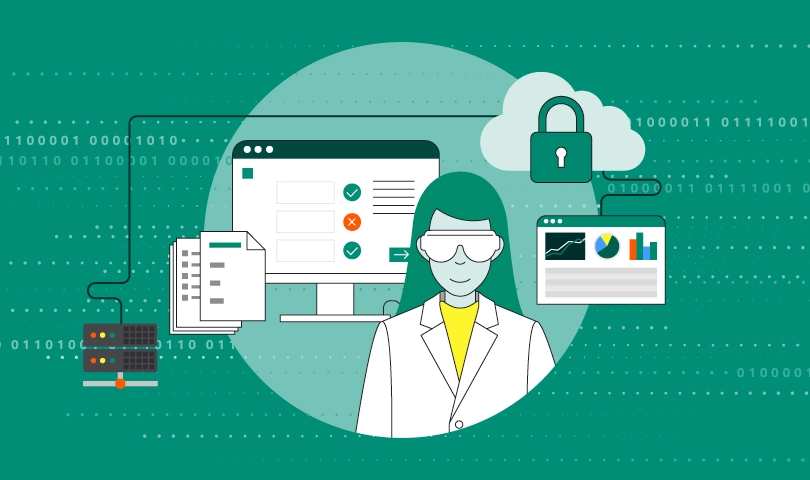
Biopharma takes the lead: what biomanufacturing can learn from industry-adjacent digitalization
Digital technologies can be applied to solve critical challenges in biomanufacturing. In fact, the biomanufacturing industry only has to look outside itself to see positive examples of digital solutions already at work. For example, the pharmaceutical industry has begun to use digital innovations from the IT, automobile, and other industry-adjacent fields, applying them to upstream drug discovery processes.
In a recent article, industry leaders, including Ludovic Brellier, President of Hardware Solutions at Cytiva, discussed how they see technologies from other industries being applied to biopharma to transform therapeutic delivery (9). Specifically, they discuss how AI and ML models can speed up and reduce the cost of drug discovery using in silico modeling to observe and predict molecular interactions. They believe that cloud-based platforms increase collaboration and improve data management across a global organization. Furthermore, automation improves scalability. When it comes to clinical trials, sites can be better managed digitally.
“While industries like tech, finance, and manufacturing have eagerly jumped on the digital transformation train, biopharma has been a bit more cautious,” Chris Long, title, at Cytiva says. “Regulatory hurdles and a natural resistance to change have slowed things down. But the pandemic has exposed a need for change and the potential of game-changing technologies like AI, cloud computing, and IoT to revolutionize drug development and manufacturing. The future looks bright for biopharma as it starts to embrace digital technologies."
To unlock the full potential of digital technologies, biopharma companies need to embrace digital’s place in not just upstream drug discovery, but downstream process development and manufacturing. An example underscores the gap: while the 2024 Nobel prize went to researchers using AI for target discovery, producing the drug based on this protein could take a decade because of legacy processes (10). Closing this gap through digital transformation is key to advancing therapeutic development.
Transforming digital biomanufacturing challenges into opportunities
Digital technologies take many shapes, and they can be applied to specific areas for specific purposes. AI and ML for R&D can be used to speed up drug discovery, improve candidate selection, and streamline clinical trials. Benefits are that it reduces time and cost, enhances predictive accuracy, and aids in better decision-making during drug development. Predictive analytics for drug development and supply chain management can predict outcomes in drug development and manage supply chain risks by forecasting potential disruptions. Benefits are that it reduces uncertainty in R&D, prevents supply chain bottlenecks, and improves operational planning. Automation and regulatory software are used to automate regulatory submissions, track compliance, and help ensure data integrity. Its benefits are that it increases efficiency, reduces human error, and eases the burden of regulatory complexities.
Digital tools for bioprocess development and scaling, like our digital bioreactor scaling tool and predictive process modeling software, help simulate and optimize bioprocesses. These tools offer many benefits, including they improve scalability of production processes, reduce the risk of failure during tech transfer, improve process robustness, and enhance manufacturing efficiency.
Advanced analytics for supply chain optimization are used to monitor and optimize supply chains using predictive analytics and IoT for real-time tracking. Benefits are they enhance supply chain visibility, mitigate disruptions, and help ensure timely delivery of materials and products. Blockchain for supply chain transparency and data security can track supply chain movements and help ensure data integrity and traceability, particularly in regulatory reporting and compliance. Benefits are that it improves transparency, secures sensitive data, and helps ensure accountability in the supply chain.
Automation in manufacturing and laboratories automates repetitive tasks, such as quality control and data collection, in labs and production facilities. Benefits are that it increases operational efficiency, reduces errors, and allows the reallocation of human resources to higher-value tasks. Cloud-based collaboration platforms facilitate team collaboration, data sharing, and project management across global and multi-site operations. Benefits are that it increases collaboration, supports remote work, and enables data accessibility across the organization.
Training platforms and upskilling tools can be used to train employees in digital tools and hardware with AR/VR, cloud platforms, and data analytics to bridge the skills gap. Benefits are that it enables the workforce to adapt to new technologies, fostering innovation and improving productivity.
Cytiva offers a helping hand on your digital journey
Cytiva is addressing customers’ needs in their digital transformation through our current portfolio of products and future innovations that will be focused on higher-level customer needs. our expertise and experience make us a “digital doer”—and we want to offer our helping hand to make the biomanufacturing companies that we supply digital doers, too.
Digital tools for bioprocess development and scaling: in silico process development
In silico process development helps enable smarter PD through prediction, modeling, and simulation tools that aim to solve your most pressing process problems. Our smart PD solutions help customers to get it right the first time, reduce risk, and spend less resources.
Bioreactor scaling: Digital tools for bioreactor scaling can predict scaling in silico to help define key process parameters, enabling seamless tech transfer.
Chromatography software solutions: Chromatography modeling software leverages fast and reliable computer simulation to increase process understanding and improve process outcomes.
Automation in manufacturing and laboratories: digitized data
We offer tools for highly characterized and digitally delivered, consolidated, and/or extracted data aimed at improving the upfront delivery of raw materials and production.
Digitized raw material data: Digital or web-based solutions for raw material processing can improve insight and analysis through better access, reporting, and visualization of raw material data.
Data historian solution: Historian software is a data collection and reporting solution designed to deliver aggregated data, advanced visualization, and both standard and custom reports to optimize operational efficiency across the biomanufacturing process.
Training platforms and upskilling tools: maximized return on digital investment
With many pieces of integrated hardware, customers need to apply digital technologies and solutions to create more value from that equipment. They can create operational efficiency and excellence (OEE) through blended learning solutions (watching/seeing/doing) accompanied by virtual reality and augmented reality technologies instead of traditional read-and-accept training courses. This encourages a shift from reactive upkeep to proactive maintenance.
Remote/online services: Remote monitoring allows customers to track their instrument’s health and potentially detect irregularities before they become critical.
Blended learning solutions in VR/AR and online training courses: Personalized online learning curriculums, including interactive eLearning courses and step-by-step instructional videos, as well as VR equipment training, offer hands-on operator training in a virtual environment.
To learn more about our digital offerings, visit the website.
References
- Philippidis A. The Unbearable Cost of Drug Development: Deloitte Report Shows 15% Jump in R&D to $2.3 Billion. Genetic Engineering and Biotechnology News (GEN). https://www.genengnews.com/gen-edge/the-unbearable-cost-of-drug-development-deloitte-report-shows-15-jump-in-rd-to-2-3-billion/. Published February 28, 2023. Accessed March 2025.
- Seize the digital momentum: Measuring the return from pharmaceutical innovation 2022. Deloitte. January 2023. Accessed March 2025. https://www2.deloitte.com/content/dam/Deloitte/uk/Documents/life-sciences-health-care/deloitte-uk-seize-digital-momentum-rd-roi-2022.pdf
- EudraLex - Volume 4 - Good Manufacturing Practice (GMP) guidelines; Annex 1 – Manufacture of Sterile Medicinal Products. European Commission. 2022. Accessed March 2025. https://health.ec.europa.eu/document/download/e05af55b-38e9-42bf-8495-194bbf0b9262_en?filename=20220825_gmp-an1_en_0.pdf
- Cytiva Communications. Cytiva launches 2023 Biopharma Resilience Index. Cytiva. https://www.cytivalifesciences.com/news-center/cytiva-launches-2023-biopharma-resilience-index-10001. Published June 5, 2023. Accessed March 2025.
- Arora V, Keeling D, Patel P, Rajendran R. Reimagining the future of biopharma manufacturing. McKinsey and Company. October 11, 2022. Accessed March 2025. https://www.mckinsey.com/industries/life-sciences/our-insights/reimagining-the-future-of-biopharma-manufacturing#/
- Bartolomei A. The Impact of Digitalization in Pharmaceutical Regulatory Affairs. PQE Group. https://blog.pqegroup.com/ra-phv/the-impact-of-digitalization-in-pharmaceutical-regulatory-affairs. Accessed March 2025.
- Assessing the Credibility of Computational Modeling and Simulation in Medical Device Submissions. US FDA. November 2023. Accessed March 2025. https://www.fda.gov/regulatory-information/search-fda-guidance-documents/assessing-credibility-computational-modeling-and-simulation-medical-device-submissions
- Digital Technology Roadmap. BioPhorum Operations Group. July 8, 2022. Accessed March 2025. https://www.biophorum.com/download/digital-technology-roadmap/
- How is the pharmaceutical industry integrating innovations from adjacent industries to enhance drug development and production? Pharma's Almanac. https://www.pharmasalmanac.com/articles/how-is-the-pharmaceutical-industry-integrating-innovations-from-adjacent-industries-to-enhance-drug-development-and-production. Published Oct 28, 2024. Accessed March 2025.
- Popular information, The Nobel Prize in Chemistry 2024. NobelPrize.org. Nobel Prize Outreach 2025. https://www.nobelprize.org/prizes/chemistry/2024/popular-information/. Published March 7, 2025. Accessed March 2025.
- Ayers M, Shamsad N, Tulkki V, Meier C, Shuttleworth B. Biopharma Is Betting Big on Digital and Data. Are Companies Organized for Success? Boston Consulting Group (BCG). https://www.bcg.com/publications/2022/how-biopharma-companies-can-maximize-digital-investments. Published September 29, 2022. Accessed March 2025.