We evaluated the performance of Supor™ Prime sterilizing grade membrane filters to determine the level of polysorbate transmission through the filter membrane and how this translates to product loss in a final filtration process.
Our study shows that Supor™ Prime sterilizing grade filter membranes:
- Provide good transmission of polysorbate at low loadings compared to other competing sterilising grade filters.
- Deliver 100% transmission of polysorbate 20 and polysorbate 80 through the membrane filter with relatively low biologic drug-product loss.
Find out more about Supor™ Prime sterilizing grade membrane filters
Introduction
Subcutaneous drug administration is now a common approach, often preferred by both patients and healthcare providers. With the smaller dosage volumes required biological drugs must be prepared at higher concentrations. This is the case for mAbs that are used to treat various cancer and autoimmune diseases. However, as the drug concentration increases, additional excipients need to be added to the drug formulation to maintain the product stability over the shelf-life period. Some of the most common excipients used are polysorbates. Studies have shown that polysorbate excipients can bind to PES sterilizing grade membranes, impacting product quality at the critical final formulation and filling step.
Our Supor™ Prime sterilizing grade membrane filters have been specifically developed to offer high transmission performance and to minimize any impact to the drug critical quality attributes (CQAs).
This application note presents data on excipient transmission through the membrane for a Supor™ Prime filter compared to other sterilizing grade filter membranes with the use of polysorbate 20. It also presents data on the transmission of polysorbate 80 using Supor™ Prime filters that have been gamma sterilized.
MATERIALS AND METHODS
Transmission testing was conducted using low-concentration solutions of polysorbates to obtain increased definition in results, therefore identifying subtle transmission differences between membrane filters tested. Transmission analysis was performed with Supor™ Prime filters, as well as other sterile filter products available in the market (see Table 1).
Table 1. Membrane filters used for the polysorbate transmission study
| Supplier | Membrane | Membrane type | Pore size rating (µm) | EFA per 10” capsule (m2) |
| Cytiva | Supor™ Prime | PES | 0.45/0.2 | 1.34 |
| Merck KGaA | Express SHC | PES | 0.5/0.2 | 1 |
| Sartorius AG | Sartopore Platinum | PES | 0.45/0.2 | 1 |
Testing was performed using different IgG solutions with the two alternative excipients, polysorbate 20 and polysorbate 80.
A 30 g/L IgG solution was made in a buffer containing 10 mM sodium acetate and 0.004% of the polysorbate for each test. Throughout the filtration studies, across each replicate test, 34 × 1.5 mL fractions were collected, and from these 34 samples, five fractions were selected to generate transmission data. Along with fractions tested, control samples were also taken to be analysed as a baseline.
Polysorbate analysis was conducted whereby solid phase extraction (SPE) was used to remove the IgG from the solution, then HPLC-MS/MS was used to complete analysis of the remaining sample volumes to assess polysorbate transmission.
* All studies were performed at Cytiva, Portsmouth, UK, with analysis completed by Intertek UK Limited (Manchester). All data is held at Cytiva, Portsmouth.
Results
Transmission of polysorbate excipients during sterile filtration
We averaged transmission data between replicate samples for each membrane filter tested (n=3) as part of the polysorbate study. Figures 1 and 3 below illustrate the average transmission values over loading for polysorbate 20 and polysorbate 80 respectively, obtained via HPLC-MS/MS for each of the fraction samples.
Figure 1 shows polysorbate 20 transmission data for Supor™ Prime filters compared against other sterilizing grade filters. Figure 3 demonstrates transmission of polysorbate 80 using Supor™ Prime filters that have been gamma sterilized.
Polysorbate 20 transmission results
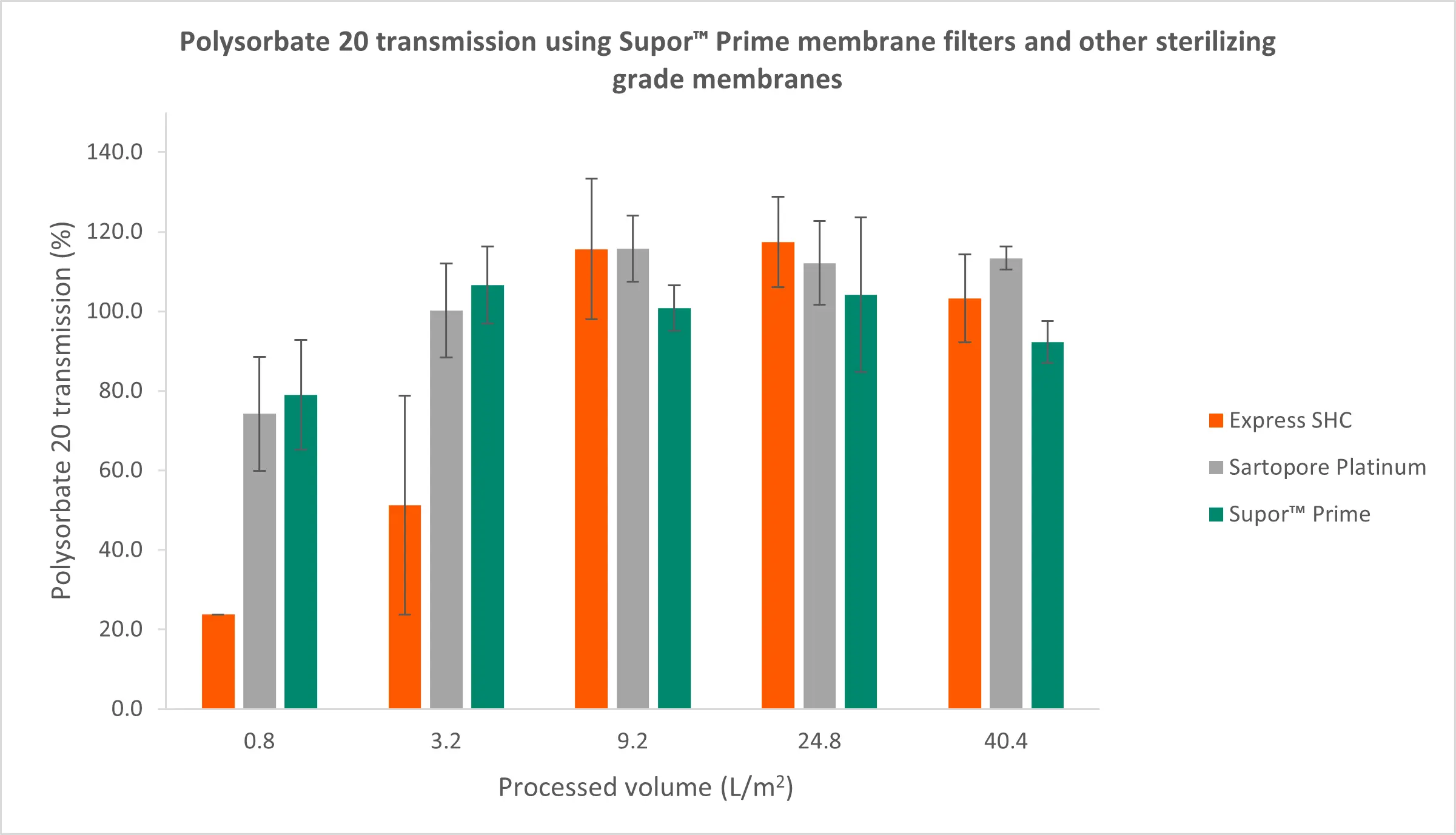
Fig 1.Average membrane filter transmission of polysorbate 20 showing substantial differences between Express SHC and Supor™ Prime between 0.8 and 3.2 L/m2 process volumes. Data shows mean values ± S.D, n = 3.
Table 2. Membrane filter batch loss comparison using polysorbate 20
| Supor™ Prime | Express SHC | Sartopore Platinum | ||
| Load required to reach 100% polysorbate 20 transmission | L/m2 | 2.6 | 7.7 | 3.2 |
| Polysorbate 20 adsorbed | g/m2 | 0.01 | 0.06 | 0.01 |
| Capacity (averaged over 17 mAb trials ranging from 71 - 220 g/L) | L/m2 | 1839.5 | 875.2 | 517.1 |
| Percentage loss of batch during polysorbate saturation | % | 0.1 | 0.9 | 0.6 |
Experimental results displayed in Figure 1 and Table 2 show good transmission of polysorbate 20 with only 0.1% product loss using Supor™ Prime filters. For the comparison of Supor™ Prime with the other filters presented in Figure 1 and Table 2, analysis was completed on the early aliquot datasets (up to membrane saturation) to assess statistical differences. The calculated p-values are shown in Table 3 below following use of the t-test model with two samples assuming unequal variances.
Table 3. Statistical comparison of early aliquot analysis Express SHC and Sartopore Platinum vs Supor™ Prime membrane filter, n = 3, with polysorbate 20. Data was obtained using the t-test model with two samples assuming unequal variances
| Processed volume (L/m2) | Membrane filter p-values | |
|
Express SHC |
Sartopore Platinum |
|
| 0.8 | 0.0002 | 0.5656 |
| 3.2 | 0.0035 | 0.3313 (saturated) |
| 9.2 | saturated | saturated |
In Table 3, the outputs given by the t-test model indicate a statistically significant difference between Supor™ Prime and Express SHC for the two early aliquot samples, both showing < 0.05 p-value, whereas for Sartopore Platinum no strong difference was observed for any aliquot tested.
As the filters became saturated through testing, the p-value data becomes less reliable and therefore no samples tested beyond saturation are reported for statistical significance.
To fully understand the polysorbate loading and product loss characteristics across each membrane tested, we used the capacity data to provide a Vmax output for each filter (using the standard pore blocking model) to provide us with expected percentage batch losses during polysorbate 20 saturation. Based on this we can see in Figure 2 how product loss will vary during filtration for each filter tested.
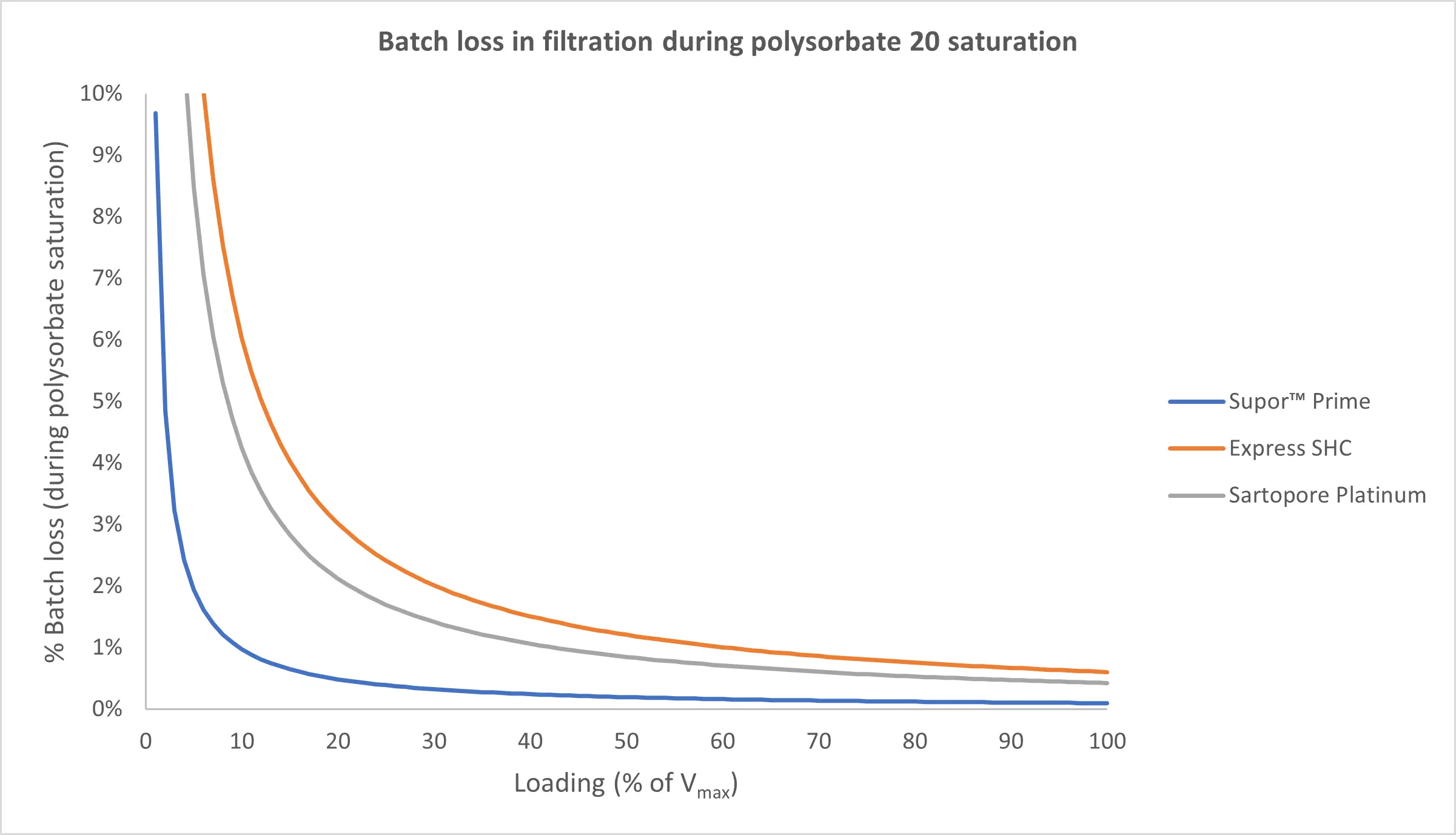
Fig 2. The percentage batch loss during filtration of polysorbate 20 with different sterilizing grade filters.
Polysorbate 80 transmission results
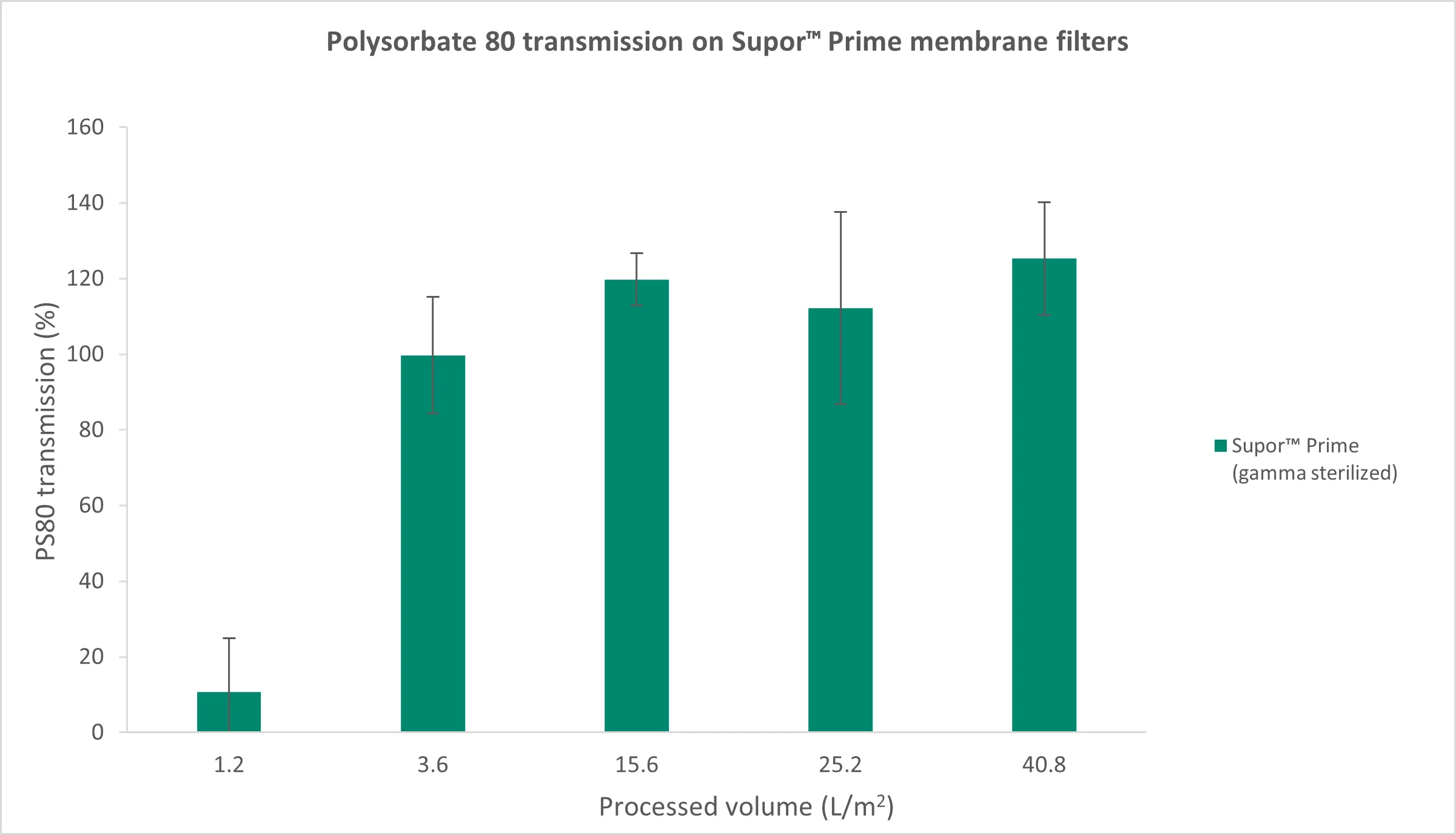
Fig 3. Average Supor™ Prime membrane filter transmission using polysorbate 80. Data shows mean values ± S.D, n = 3.
Table 4. Membrane filter batch loss using polysorbate 80
| Supor™ Prime | ||
| Load required to reach 99.7% polysorbate transmission | L/m2 | 3.6 |
| Polysorbate 80 adsorbed | g/m2 | 0.04 |
| Capacity (averaged over 17 mAb trials ranging from 71 - 220 g/L) | L/m2 | 1839.5 |
| Percentage loss of batch during polysorbate saturation | % | 0.2 |
Experimental results displayed in Figure 3 and Table 4 show good transmission of polysorbate 80 with only 0.2% product loss using gamma sterilized Supor™ Prime filters.
Product loss assessment was determined for polysorbate 80 in the same way as polysorbate 20, using the Vmax approach Results are shown in Figure 4.
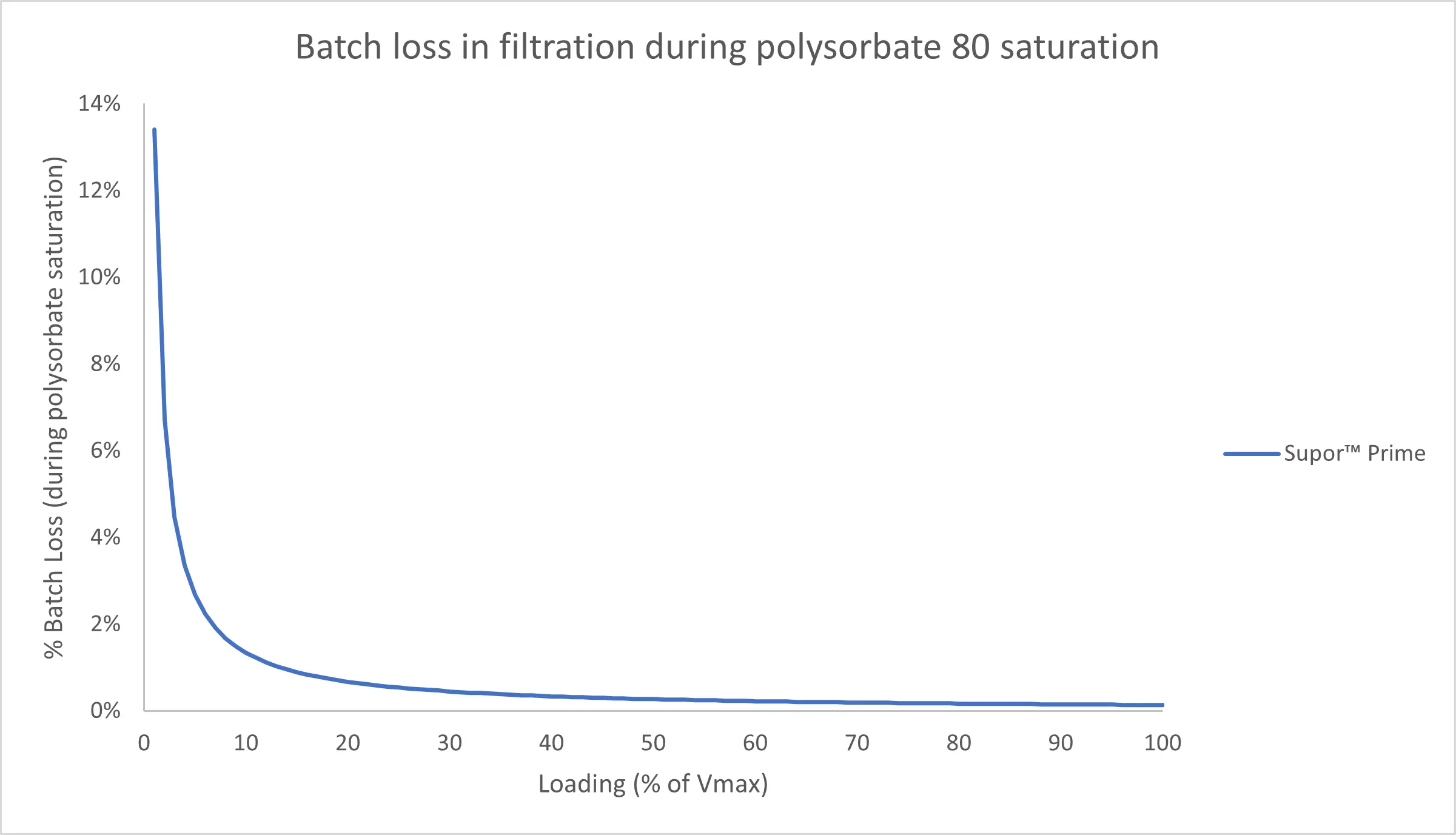
Fig 4. The percentage batch loss during filtration of polysorbate 80 using Supor™ Prime filters.
Summary of results
The polysorbate 20 transmission comparison study showed that Supor™ Prime membrane filters:
- Reached 100% polysorbate transmission by the second aliquot volumes (3.6 L/m2).
*Note: Testing was conducted using low-concentration solutions of polysorbates to obtain increased definition in results, as such we would expect saturation to occur after a much smaller volume with higher concentrations).
- Achieved higher transmission in the first sample fractions when compared with Express SHC filters.
- Resulted in significantly less batch loss (%) during polysorbate saturation when compared with Express SHC and Sartopore Platinum filters.
Conclusion
We can conclude that:
- The polysorbate 20 results show that Supor™ Prime membrane filters provide minimal adsorptive properties and high transmission with lower processed volumes than other sterilizing grade filters.
- Polysorbate 80 results using gamma sterilized Supor™ Prime membrane filters gave very similar results/transmission performance to polysorbate 20.
In terms of final filtration, we can equate these desirable polysorbate transmission results to a high percentage of drug product that meets CQAs and as such, a low percentage of drug product wastage when using Supor™ Prime filters. The net reward is a reduction in the waste of valuable drug product.
Compared to other sterilizing grade filters, Supor™ Prime membrane filters have a higher throughput and flux performance as shown in the application note, Sterilizing grade filter performance with high concentration biologic drugs. High throughput and flux performance combined with good transmission of polysorbates, makes Supor™ Prime sterilizing grade filters an excellent choice for your process.