Ultrafiltration is an essential technique in protein science that separates and concentrates proteins from complex mixtures. Researchers use ultrafiltration for selective passage of smaller molecules while retaining larger proteins. This results in high purity and concentration for downstream applications.
This article explores the primary applications of ultrafiltration in protein purification, focusing on techniques such as tangential flow filtration and centrifugal filtration. We also offer guidance on selecting appropriate membrane types and molecular weight cut-offs (MWCO) to maximize protein recovery. Whether you’re purifying antibodies or preparing proteins for downstream analysis—ultrafiltration is a critical modern tool for achieving consistent results.
What is Ultrafiltration?
Ultrafiltration is a size-based technique used to separate components in a mixture, usually molecules ranging from 0.001 to 0.1 µm in size. A semipermeable membrane is used that permits the passage of specific smaller molecules while restricting others. Ultrafiltration has a large range of applications, as many molecules used for research and therapy fall within the 0.001 to 0.1 µm size range. These include proteins like antibodies and nucleic acids like mRNA. While size is the primary characteristic of separation—shape and charge can also play a role in isolation.
Ultrafiltration, compared to non-membrane processes:
- Is gentler to the molecules being processed.
- Does not require organic extraction, which may denature labile proteins.
- Maintains the ionic and pH environment.
- Is fast and relatively inexpensive.
- May be performed at low temperatures (like a cold room).
- Simultaneously concentrates and purifies molecules.
Applications
Ultrafiltration is widely used for various applications in protein science.
- Purification: Obtain uncontaminated samples, such as antibodies from cell culture medium and other solutions.
- Concentrating and desalting: Attain optimal conditions for downstream applications, such as structural analysis, functional assays, or therapeutic use.
- Fractionation: Isolate specific proteins for detailed characterization and functional studies.
- Buffer exchange: Maintain protein stability, remove contaminants, and optimize conditions for further processing.
Core techniques
Centrifugal filtration uses centrifugal force to draw molecules through semipermeable membranes while excluding larger molecules. It’s an efficient method for concentrating or separating substances based on size. Centrifugal filtration is easily scalable for a variety of volumes, pore sizes, and MWCOs. When sample volume increases in size and centrifugal filtration becomes time-consuming, researchers can scale up to tangential flow filtration process.
Tangential flow filtration (TFF), also known as cross flow filtration, is a form of filtration that allows solutions to flow in parallel to a semi-permeable membrane (as shown in figure 1). The key advantage of this method is that the membrane remains unclogged by larger molecules, which can block the passage of smaller ones. Instead, the tangential flow continuously recirculates the solution so smaller molecules can pass through the membrane freely.
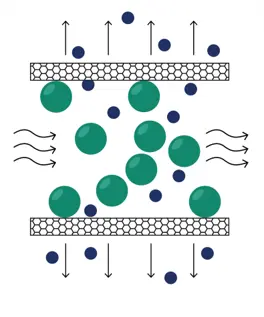
Fig 1. Tangential flow filtration process.
Tips for choosing the right technique
Several factors must be considered when selecting the optimal membrane type and MWCO for your application.
Understanding membrane types
There are many membrane types available that are suitable for different applications and samples may interact differently with each membrane type. To optimize recovery, it is best to test the sample with all available membrane types and evaluate which one offers the highest recovery. Membrane types that are particularly suitable for working with proteins include:
Polyethersulfone (PES) - This material is hydrophilic and is compatible with a wide range of solvents. PES membranes generally offer a higher flow rate than other types, and their very low protein binding properties make them an excellent choice for protein-related applications. However, they are typically not compatible with DMSO.
Cellulose acetate (CA) - This material is hydrophilic and is known for its very low protein binding properties, making it suitable for many protein filtration applications. It reduces the chances of sample contamination and is highly chemical resistant.
Regenerated cellulose (RC) - This material is hydrophilic and suitable for use with aqueous solutions and organic solvents, including those used for chromatography. It has very low protein binding properties, which makes it excellent for protein filtration applications.
Understanding molecular weight cut-off (MWCO)
MWCO is a key factor in ultrafiltration processes, determining which molecules can pass through the filter and which will be retained. It is important to note that MWCO does not indicate pore size but rather indicates an ability to retain molecules above a certain molecular weight. This is typically defined as the smallest molecular weight at which 90% of the solute is retained. Selecting the correct MWCO is crucial to ensure the effective filtration of the target molecule. For TFF and centrifugal filtration, you can generally use a MWCO that is 3-6 times smaller than the molecular weight of the target protein.
Look through Tables 1-3 as a quick guide to choose your optimal MWCO) based on protein molecular weight.
Table 1. Suggested MWCO for different protein sizes.
| Product molecular weight (KDa) | MWCO (KDa) |
| 3-10 | 1 |
| 10-30 | 3 |
| 30-90 | 10 |
| 90-300 | 30 |
| 300-900 | 100 |
| > 900 | 300 |
Table 2. MWCO selection for nucleic acid applications.
| MWCO (KDa) | Base pairs (DS) (BP) | Bases (SS) (Bs) |
| 1 | 5 - 16 Bp | 9 - 32 Bs |
| 3 | 16 - 32 Bp | 32 - 65 Bs |
| 10 | 50 - 145 Bp | 90 - 285 Bs |
| 30 | 145 - 285 Bp | 285 - 570 Bs |
| 100 | 475 - 1450 Bp | 950 - 2900 Bs |
| 300 | 1450 - 2900 Bp | 2900 - 5700 Bs |
Table 3. MWCO selection for virus applications.
| MWCO (KDa) | Membrane nominal pore size* (nm) | Virus of particle diameter (nm) |
| 100K | 10 nm | 30 - 90 nm |
| 300K | 35 nm | 90 - 200 nm |
*Nominal pore size as measured by electron microscopy
Tips for improving protein filtration
Speed: If you want to prioritize the flow rate of your filtration, consider using a MWCO that is 3X smaller than the product. A tighter membrane (6X smaller) should be considered for improved retention.
Quality control: Perform pilot experiments to verify membrane performance, especially when using a new membrane for a new application.
Recovery: Our centrifugal filtration range, including Nanosep™ devices, enables > 90% protein recovery with high flow rates. Ultracentrifugation is a gentler method for separating proteins than other techniques, making it an excellent choice when protein degradation is a concern.
Volume: Avoid wasting resources on an oversized system. Instead, choose a filter that matches your volume requirements. Our ÄKTA flux™ tangential flow filtration system is suitable for ultrafiltration and microfiltration applications. It’s a versatile choice for small-scale laboratory tasks across a range of volumes.
Budget: TFF provides a cost-effective solution for protein filtration. TFF devices and cassettes in the Minimate™ TFF system from Cytiva, can be cleaned and reused. Performing a simple integrity test ensures they remain suitable for continued use.
Final concentration volume (dead stop): Make sure that your final volume provides the required concentration of sample. Verify that all manufacturers indicate the manufacturer’s labeled final concentration volume works with your requirements.
Time: When working in sample size of over 300 mL, consider switching from using 20+ centrifugal devices to TFF to save precious lab time.
Aggregation: Different centrifugal devices have different structures. The vertical paddle in Microsep™ Advance and Macrosep™ filter devices is designed to reduce concentration gradients and prevent aggregation.
Materials: In addition to membrane choice, material of construction is important. Polypropylene is a commonly chosen material in protein science due to its low extractables and low protein binding.
Membrane preservatives: Most ultrafiltration membranes arrive in a preservative and wetting agent to preserve membrane quality. To prevent contamination, rinse membranes with DI water prior to use.
Conclusion
Selecting the appropriate MWCO and filtration technique is essential to achieve optimal protein purity and concentration with ultrafiltration. By understanding membrane types, MWCOs, and specific applications, researchers can enhance protein recovery and workflow efficiency. With thoughtful planning, ultrafiltration remains an indispensable tool in protein science for consistent and reliable results.