The industrial trend for fed-batch cell cultures is lower cultivation volumes with higher cell densities and monoclonal antibody (mAb) titers. However, this puts pressure on the clarification step to remove the increase in cells and cell debris. This is a challenge for midstream depth filtration, and alternative depth filters (DF) may have to be considered to satisfactorily remove fine particles.
As part of mAb bioprocessing, protein A pools are subjected to low pH for viral inactivation (VI). The inactivation is often followed by a neutralization step before the first polishing step, which can result in significant turbidity of the neutralized VI pools (NVIPs). As a result, this poses a challenge to many simple filtration options currently employed, which may be tight dead-end membrane filters with limited processing capacity for particle-rich feeds.
Considering these contemporary changes, here we demonstrate the flexibility of a series of Cytiva filters, including HP series depth filters, Supor™ EKV sterilizing-grade membrane filters, and Mustang™ Q anion exchange (AIEX) membrane filters, in optimizing a cost-effective process development for two NVIP feeds:
- NVIP 1—a moderately turbid NVIP feed for which a depth filter with nominal rating 0.2 to 0.5 µm was deemed appropriate.
- NVIP 2—a significantly turbid NVIP feed with a turbidity ranging between approximately 70 and 400 NTU for which a few filter train options were deemed appropriate and cost effective.
Both filtrate pools showed good quality attributes (pool turbidity, host cell protein (HCP) concentration, mAb transmission) while exhibiting high throughput of the final solutions determined.
As every feed is different, results and conclusions from these two feeds may not apply directly to all feeds, but the strategy covered here should serve as a useful guide to purify an NVIP with appropriate and cost-effective solution.
Introduction
Typically, protein A pools have on the order of 100 to 1000 ppm HCPs and even smaller amounts of nucleic acid impurities. Because nucleic acids are phosphate-rich, they remain negatively charged across a wide pH range and therefore do not significantly change charge during subsequent downstream processing. In contrast, the low pH VI step and subsequent neutralization that commonly follow the capture step might titrate many remaining HCP species, altering their net charge. This charge shift is one proposed mechanism for the turbidity frequently observed in NVIPs.
As each NVIP feed is composed of novel biologics and heterogeneous HCP profile, the turbidity of each after neutralization can cover a broad range, from a turbidity that is hardly noticeable and that may be cleared easily by a dead-end membrane filter to one that is particle-rich and may require multiple depth filter layers to sufficiently clarify.
Our standard offering for processing particle-rich feeds at all scales is the HP-series Seitz filter membranes, which are available at scales as small as the Supracap™ 50 depth filter capsules (effective filtration area [EFA] = 22 cm2) to the Stax™ depth filter systems (EFA = 1 m2 [HP-series] or 2 m2 [P-series]). The HP-series Seitz filter membrane is available in a wide array of capsules and ratings, with a selection of ratings shown in Figure 1.
Given the wide range of options, we were able to optimize the process for two particle-rich NVIP feeds and assess the cost, throughput, and quality attribute implications of each. For the latter category, we do not comment extensively on the mAb throughput or filtered NVIP turbidity, as these were respectively very high (> 92%) and very low (< 5 NTU) in all cases. Instead, the quality attributes of greatest interest are HCP clearance and PLBL2 clearance, with the latter being an archetype of the difficult-to-remove lipase class that can cause notable problems downstream of the VI step.
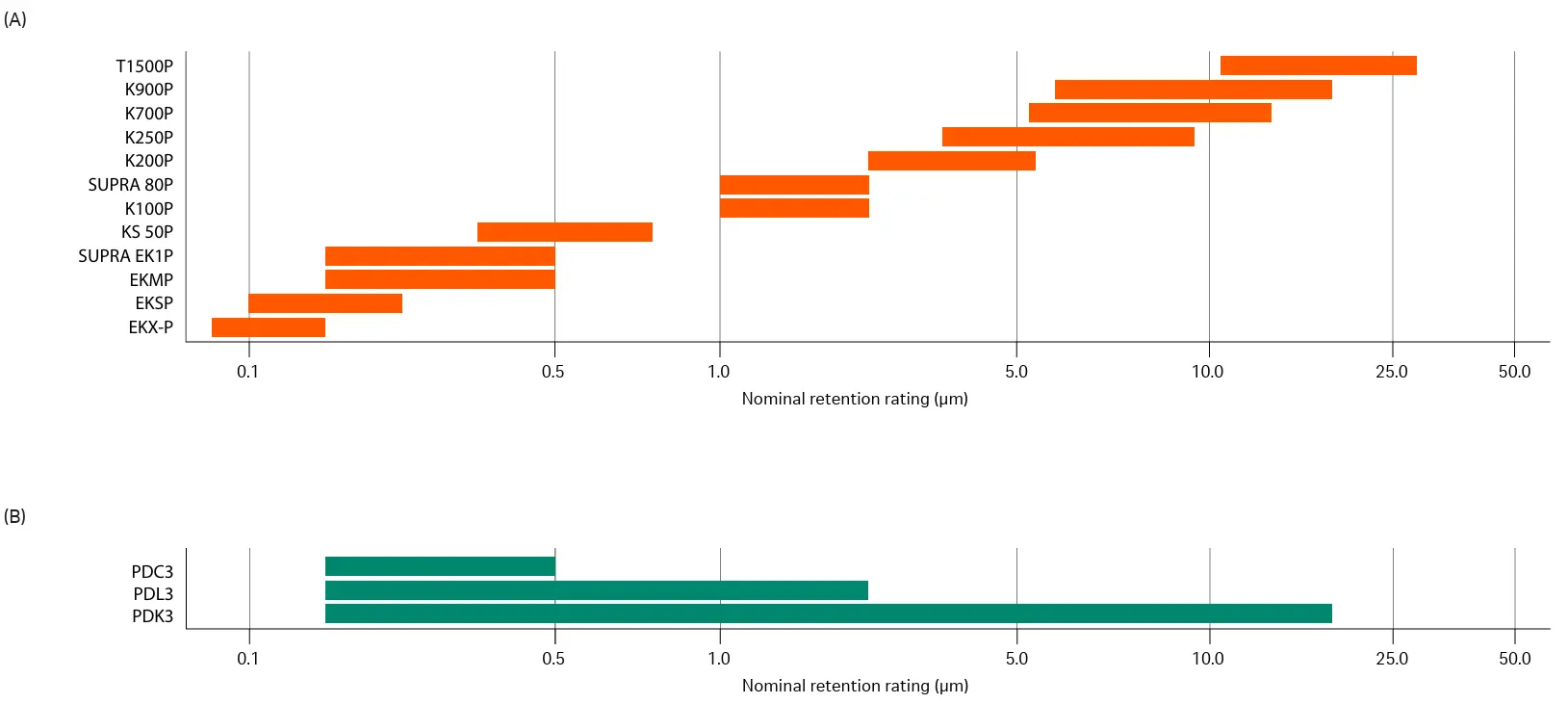
Fig 1. The nominal ratings of selected (A) P-series single layer depth filters and (B) HP-series double layer depth filters, which span a wide range of particle retention.
Introduction
Typically, protein A pools have on the order of 100 to 1000 ppm HCPs and even smaller amounts of nucleic acid impurities. Because nucleic acids are phosphate-rich, they remain negatively charged across a wide pH range and therefore do not significantly change charge during subsequent downstream processing. In contrast, the low pH VI step and subsequent neutralization that commonly follow the capture step might titrate many remaining HCP species, altering their net charge. This charge shift is one proposed mechanism for the turbidity frequently observed in NVIPs.
As each NVIP feed is composed of novel biologics and heterogeneous HCP profile, the turbidity of each after neutralization can cover a broad range, from a turbidity that is hardly noticeable and that may be cleared easily by a dead-end membrane filter to one that is particle-rich and may require multiple depth filter layers to sufficiently clarify.
Our standard offering for processing particle-rich feeds at all scales is the HP-series Seitz filter membranes, which are available at scales as small as the Supracap™ 50 depth filter capsules (effective filtration area [EFA] = 22 cm2) to the Stax™ depth filter systems (EFA = 1 m2 [HP-series] or 2 m2 [P-series]). The HP-series Seitz filter membrane is available in a wide array of capsules and ratings, with a selection of ratings shown in Figure 1.
Given the wide range of options, we were able to optimize the process for two particle-rich NVIP feeds and assess the cost, throughput, and quality attribute implications of each. For the latter category, we do not comment extensively on the mAb throughput or filtered NVIP turbidity, as these were respectively very high (> 92%) and very low (< 5 NTU) in all cases. Instead, the quality attributes of greatest interest are HCP clearance and PLBL2 clearance, with the latter being an archetype of the difficult-to-remove lipase class that can cause notable problems downstream of the VI step.
Fig 1. The nominal ratings of selected (A) P-series single layer depth filters and (B) HP-series double layer depth filters, which span a wide range of particle retention.
Materials and methods
NVIP generation
We generated the protein A pool for each feed by protein A chromatography from a harvested Chinese hamster ovary (CHO) cell culture fluid containing a recombinant mAb biologic.
For NVIP 1, the protein A pool underwent VI at a pH between 3.5 and 4.0, for 30 to 60 min, and was subsequently neutralized to pH 5.5 upon which turbidity was clearly visible.
For NVIP 2, we performed VI on the protein A pool via addition of boluses of 1.0 M acetic acid until the pH was 3.5. The pool was maintained at this pH for 30 min and was subsequently neutralized to pH 8.0 via addition of boluses of 0.5 M Tris base. The final conductivity across multiple runs for NVIP 2 was between 4 and 6 mS/cm and the final dilution ratio compared to the protein A pool was between 1.5 and 1.7. The turbidity of the protein A pool for NVIP 2 was between 50 and 60 NTU, the turbidity of the VI pool was between 30 and 40 NTU, and the turbidity of the NVIP ranged from as low as 70 NTU to as high as 400 NTU. Turbidity measurements were all taken by a Hach turbidimeter.
NVIP clarification
For all depth filtrations, we wetted filters with > 50 L/m2 of deionized water and 50 L/m2 of buffer at the same pH as the feed. For NVIP 2, the buffer used was 25 mM Tris-HCl at pH 8.0.
We filtered NVIP 1 with a PDC3 depth filter at the Supracap 50 capsule scale (EFA = 22 cm2). PDC3 is composed of two layers of P-series Supra EK1P filter membranes and has a nominal rating of 0.2 to 0.5 µm. Compared to most other P-series filter membranes, Supra EK1P has a relatively higher positive zeta potential, enabling greater capture of acidic impurities such as nucleic acids and most HCPs, and greater passage of the more basic biologics. During the run, we monitored pressure drop across the filter with a PendoTECH normal flow filtration (NFF) screening system, and the filtered NVIP was fractionated in 20 L/m2 fractions. The feed and its various filtered fractions were analyzed for HCP content after completion of the experiment.
NVIP 2 was largely filtered in the same way as NVIP 1, but with a greater number of filter membranes to optimize the VI filtration step for this feed. As above, in each case we analyzed the filtrate for HCP presence but also for PLBL2 quantitation via Gyrolab Gyros ELISA kits. The depth filter sets studied with this feed were PDC3, PDL3, and PDK3, with the filter membrane compositions and nominal ratings for each covered in Table 1.
Table 1. The filter membrane compositions and nominal ratings for the HP-series filters studied with NVIP 2 (PDC3 was also used to study NVIP 1)
Filter
Top layer filter membrane
Bottom layer filter membrane
Nominal rating (µm)
PDC3
SEK1P
SEK1P
0.2–0.5
PDL3
S080P
SEK1P
0.2–3.0
PDK3
K900P
SEK1P
0.2–20.0
Compared to all other Seitz filter membranes, S080P and SEK1P are partially composed of different materials, which imparts them with a greater positive charge character (higher zeta potential). Table 2 shows the nominal rating and zeta potential for each of the filter membranes used in the relevant sets. Additionally, we studied two other products for the purification of NVIP 2—the Supor EKV sterile filter (SF), with an absolute rating of 0.2 µm, and the Mustang Q AIEX membrane. For some NVIP 2 runs, these filters were sequentially added inline after the depth filter.
Table 2. The nominal ratings and zeta potentials of the filter membrane layer composing the filters studied with NVIP 2
Filter membrane
Nominal rating (µm)
Zeta potential
SEK1P
0.2–0.5
Higher positive charge
S080P
1.0–3.0
Higher positive charge
K900P
8.0–20.0
Moderate positive charge
Materials and methods
NVIP generation
We generated the protein A pool for each feed by protein A chromatography from a harvested Chinese hamster ovary (CHO) cell culture fluid containing a recombinant mAb biologic.
For NVIP 1, the protein A pool underwent VI at a pH between 3.5 and 4.0, for 30 to 60 min, and was subsequently neutralized to pH 5.5 upon which turbidity was clearly visible.
For NVIP 2, we performed VI on the protein A pool via addition of boluses of 1.0 M acetic acid until the pH was 3.5. The pool was maintained at this pH for 30 min and was subsequently neutralized to pH 8.0 via addition of boluses of 0.5 M Tris base. The final conductivity across multiple runs for NVIP 2 was between 4 and 6 mS/cm and the final dilution ratio compared to the protein A pool was between 1.5 and 1.7. The turbidity of the protein A pool for NVIP 2 was between 50 and 60 NTU, the turbidity of the VI pool was between 30 and 40 NTU, and the turbidity of the NVIP ranged from as low as 70 NTU to as high as 400 NTU. Turbidity measurements were all taken by a Hach turbidimeter.
NVIP clarification
For all depth filtrations, we wetted filters with > 50 L/m2 of deionized water and 50 L/m2 of buffer at the same pH as the feed. For NVIP 2, the buffer used was 25 mM Tris-HCl at pH 8.0.
We filtered NVIP 1 with a PDC3 depth filter at the Supracap 50 capsule scale (EFA = 22 cm2). PDC3 is composed of two layers of P-series Supra EK1P filter membranes and has a nominal rating of 0.2 to 0.5 µm. Compared to most other P-series filter membranes, Supra EK1P has a relatively higher positive zeta potential, enabling greater capture of acidic impurities such as nucleic acids and most HCPs, and greater passage of the more basic biologics. During the run, we monitored pressure drop across the filter with a PendoTECH normal flow filtration (NFF) screening system, and the filtered NVIP was fractionated in 20 L/m2 fractions. The feed and its various filtered fractions were analyzed for HCP content after completion of the experiment.
NVIP 2 was largely filtered in the same way as NVIP 1, but with a greater number of filter membranes to optimize the VI filtration step for this feed. As above, in each case we analyzed the filtrate for HCP presence but also for PLBL2 quantitation via Gyrolab Gyros ELISA kits. The depth filter sets studied with this feed were PDC3, PDL3, and PDK3, with the filter membrane compositions and nominal ratings for each covered in Table 1.
Table 1. The filter membrane compositions and nominal ratings for the HP-series filters studied with NVIP 2 (PDC3 was also used to study NVIP 1)
|
Filter |
Top layer filter membrane |
Bottom layer filter membrane |
Nominal rating (µm) |
|
PDC3 |
SEK1P |
SEK1P |
0.2–0.5 |
|
PDL3 |
S080P |
SEK1P |
0.2–3.0 |
|
PDK3 |
K900P |
SEK1P |
0.2–20.0 |
Compared to all other Seitz filter membranes, S080P and SEK1P are partially composed of different materials, which imparts them with a greater positive charge character (higher zeta potential). Table 2 shows the nominal rating and zeta potential for each of the filter membranes used in the relevant sets. Additionally, we studied two other products for the purification of NVIP 2—the Supor EKV sterile filter (SF), with an absolute rating of 0.2 µm, and the Mustang Q AIEX membrane. For some NVIP 2 runs, these filters were sequentially added inline after the depth filter.
Table 2. The nominal ratings and zeta potentials of the filter membrane layer composing the filters studied with NVIP 2
|
Filter membrane |
Nominal rating (µm) |
Zeta potential |
|
SEK1P |
0.2–0.5 |
Higher positive charge |
|
S080P |
1.0–3.0 |
Higher positive charge |
|
K900P |
8.0–20.0 |
Moderate positive charge |
Results and discussion
PDC3 enables efficient clarification of moderately turbid NVIP feeds
We filtered NVIP 1 with a PDC3 depth filter, where the filtration was performed with a stable and low differential pressure over the filter while reaching a rather high throughput (~ 175 L/m2). The removal of HCPs was quite significant as well, resulting in a filtrate with > 90% HCP clearance (Fig 2). This data indicates that for moderately turbid feeds the PDC3 depth filter can provide a desirable balance of throughput, HCP removal, and mAb recovery (> 92%). When performing the same filtration using NVIP 2 as feed, which has higher turbidity, the throughput dropped to < 20 L/m2 (Fig 3).
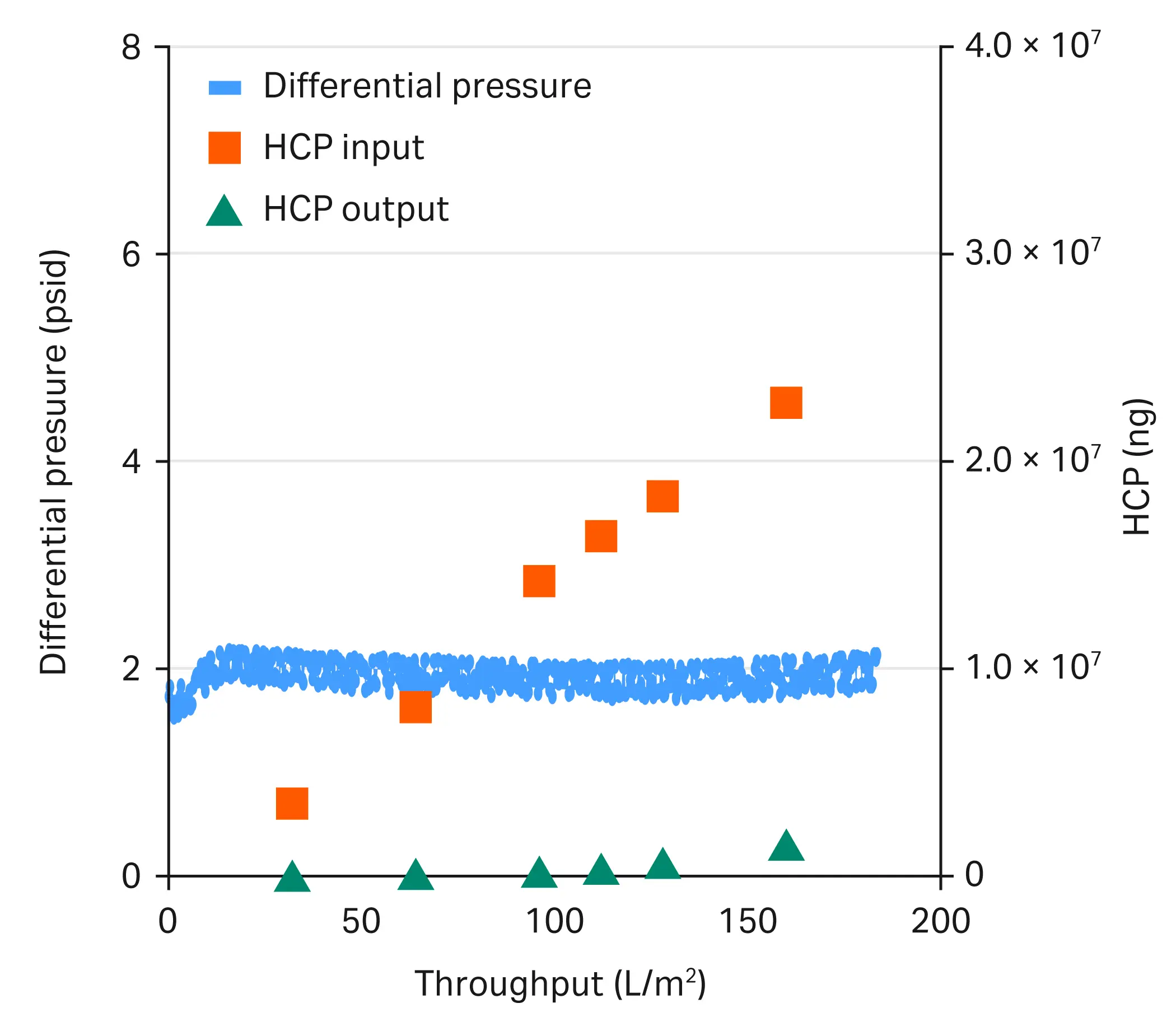
Fig 2. PDC3 throughput, differential pressure, and HCP trends for NVIP 1. A low ratio between HCP input and output and a low, stable differential pressure indicate that this filter is an appropriate choice for this feed.
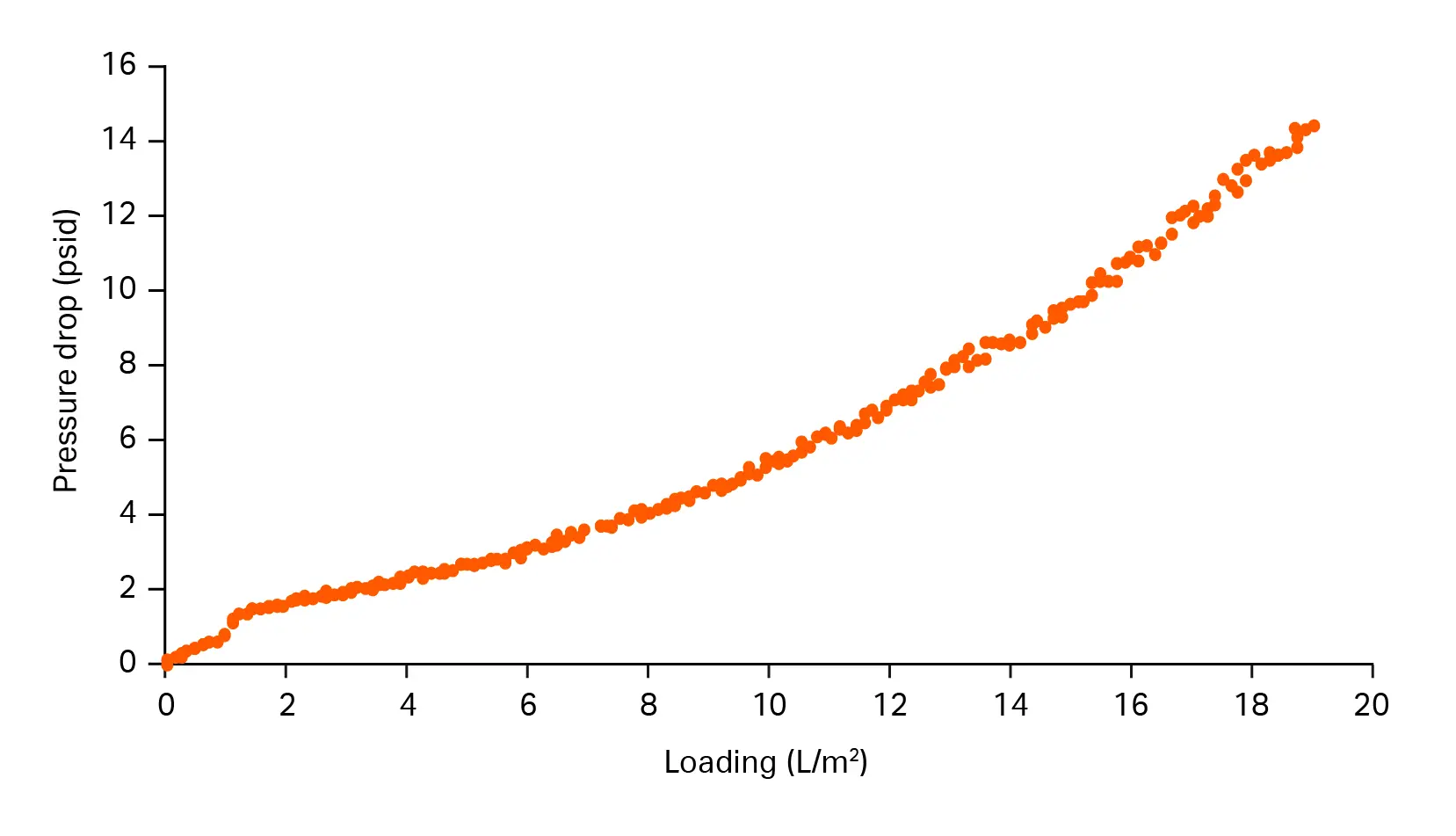
Fig 3. PDC3 throughput (L/m2) for NVIP 2. Relative to the trend for NVIP 1, loading decreased by nearly a factor of 10.
Selecting the right depth filter for highly turbid NVIP feeds
A throughput of less than 20 L/m2 creates challenges with facility fit and cost. Therefore, for the filtration of the highly turbid NVIP 2 feed, we tried the PDL3 depth filter, which is a more open Supra filter grade, with a nominal retention rating of 0.2 to 3.0 µm. The throughput increased to just above 40 L/m2, which is an improvement over the PDC3 filtration, but is still too low to be cost-effective for this step (Fig 4).
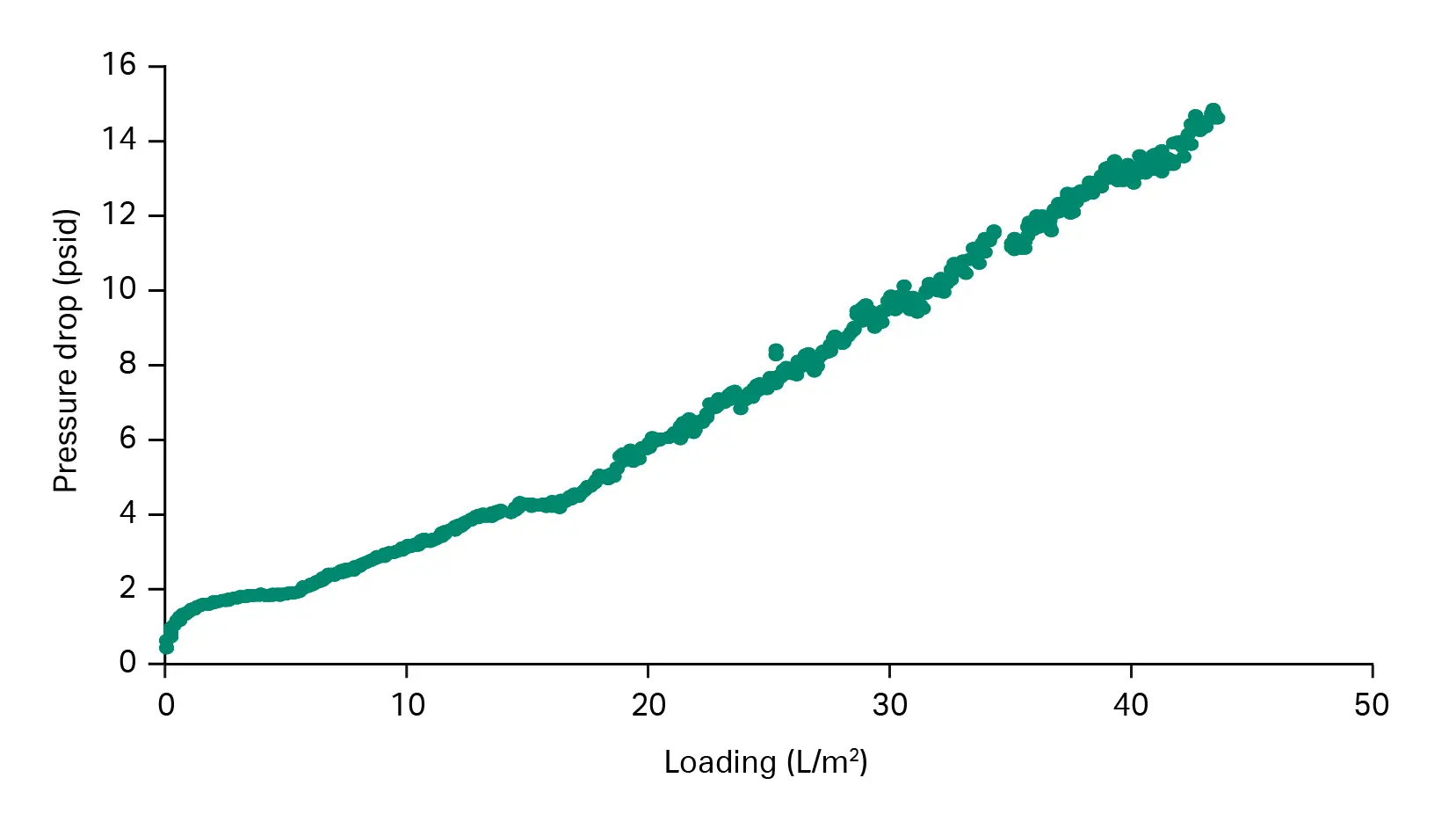
Fig 4. PDL3 throughput (L/m2) for NVIP 2. The loading more than doubled compared to PDC3 but is still suboptimal.
The most open dual-layer depth filter containing two layers of Supra filter grades is the PDL3. Therefore, we tried a more open dual-layer filter containing only one Supra layer—PDK3. The PDK3 filter is composed of a top-layer and a bottom-layer SEK1P sheet (Supra) and has a nominal rating of 0.3 to 20 µm. We chose the K900P top layer after all P-series filters with higher retention ratings than S080P were screened as top layers. K900P gave the highest throughput while maintaining a filtrate turbidity < 5 NTU (Fig 5). This new selection resulted in a significant increase in throughput, with a loading closer to the cost-effective throughput seen for the PDC3 filtration of NVIP 1 in Figure 2.
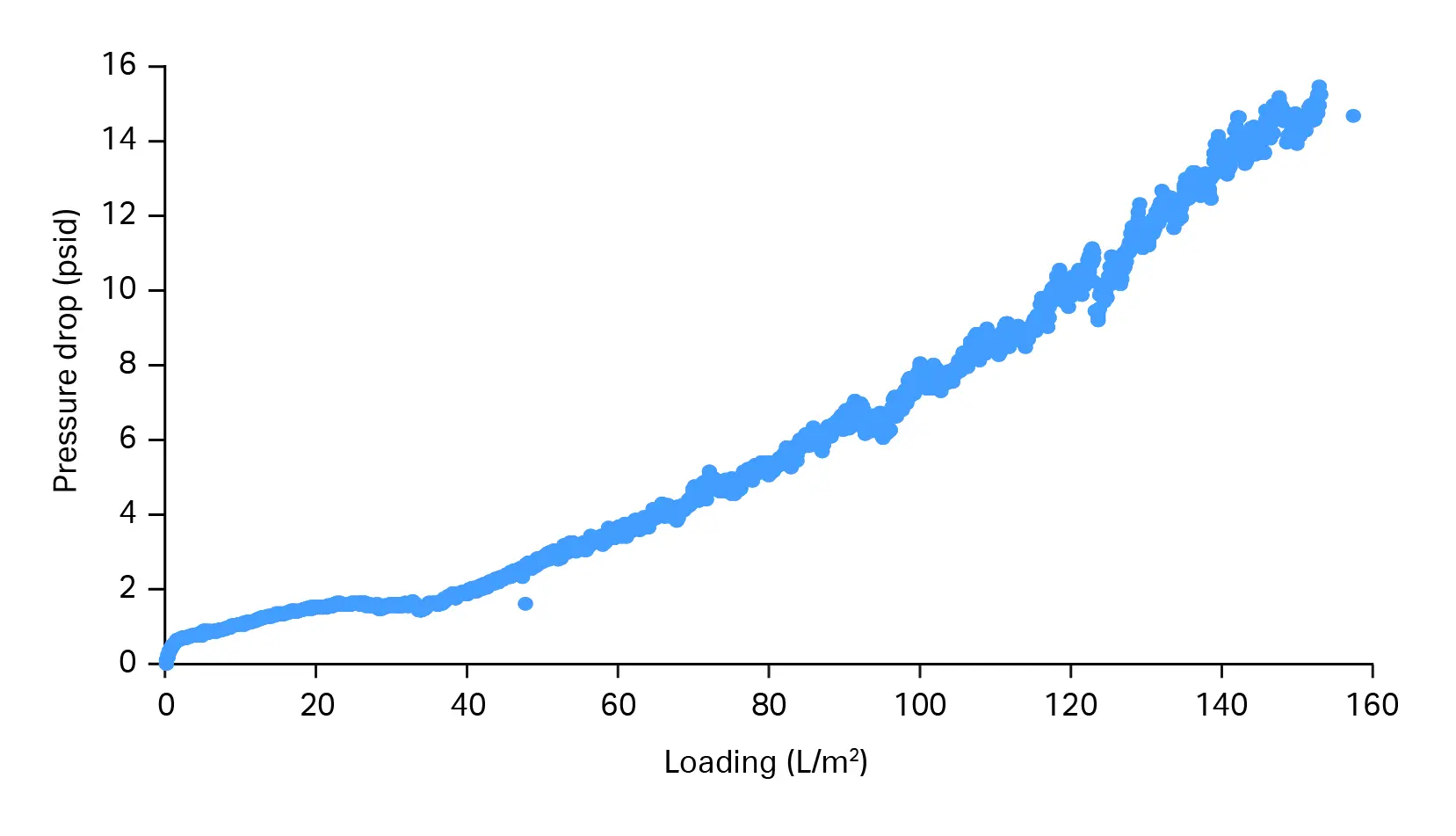
Fig 5. PDK3 throughput (L/m2) vs pressure drop (psid) for NVIP 2. The loading here approaches the loading seen for PDC3 with NVIP 1, but the filter used is expected to remove a smaller fraction of soluble impurities.
The increased throughput by using PDK3 for the filtration of NVIP 2 came with an expected tradeoff in purity, given the lower overall positive zeta potential for PDK3 relative to PDL3 and PDC3. This tradeoff can be seen in the removal of both HCP and PLBL2 impurities (Fig 6). The purity of the PDL3 filtrate was higher compared to PDK3. In particular, we observed that when using PDL3, almost the entire HCP population was removed, and PLBL2, a lipase commonly characterized as “problematic” and/or “difficult-to-remove”, was 80% removed. In contrast, when using PDK3, removal of HCPs and PLBL2 was 90% and 50%, respectively.
While zeta potential is one important factor in determining purity, a second factor on filter performance is the final loading reached. Figure 6 also shows a comparison between total HCP and PLBL2 purity for PDK3 loaded until 15 psid (underloaded, orange) and a PDK3 loaded to the same loading as when PDL3 hits 15 psid (blue). Compared to the fully loaded PDK3 case, the underloaded PDK3 shows better HCP and PLBL2 removal, indicating a poorer marginal performance is the tradeoff for higher loading when using this filter with NVIP 2. Given the continuing saturation of the filter with insoluble particles as loading proceeds, this drop in the retention of soluble species may not be entirely unexpected. It is worth noting that at this same loading, PDL3 still shows a higher purity than PDK3. This retention of soluble particles does not appear to apply to mAb molecules in any significant way; the mAb transmission in the underloaded PDK3 case was 92%, and the transmission in both fully loaded cases was 100%.
The main tradeoff for the PDL3 case is in its cost per volume processed. Since the throughput for fully loaded PDK3 is roughly four times that of PDL3, so too is the adjusted cost, as a greater PDL3 filter area would be needed to compensate for the lower capacity. The plots in Figure 6 do not account for the additional buffer expense needed to equilibrate both filters, which would also be accordingly larger for PDL3 relative to PDK3. Ultimately, the choice of filter in a scenario such as this depends on the desired emphasis on purity, cost, and footprint, which will differ from process to process.
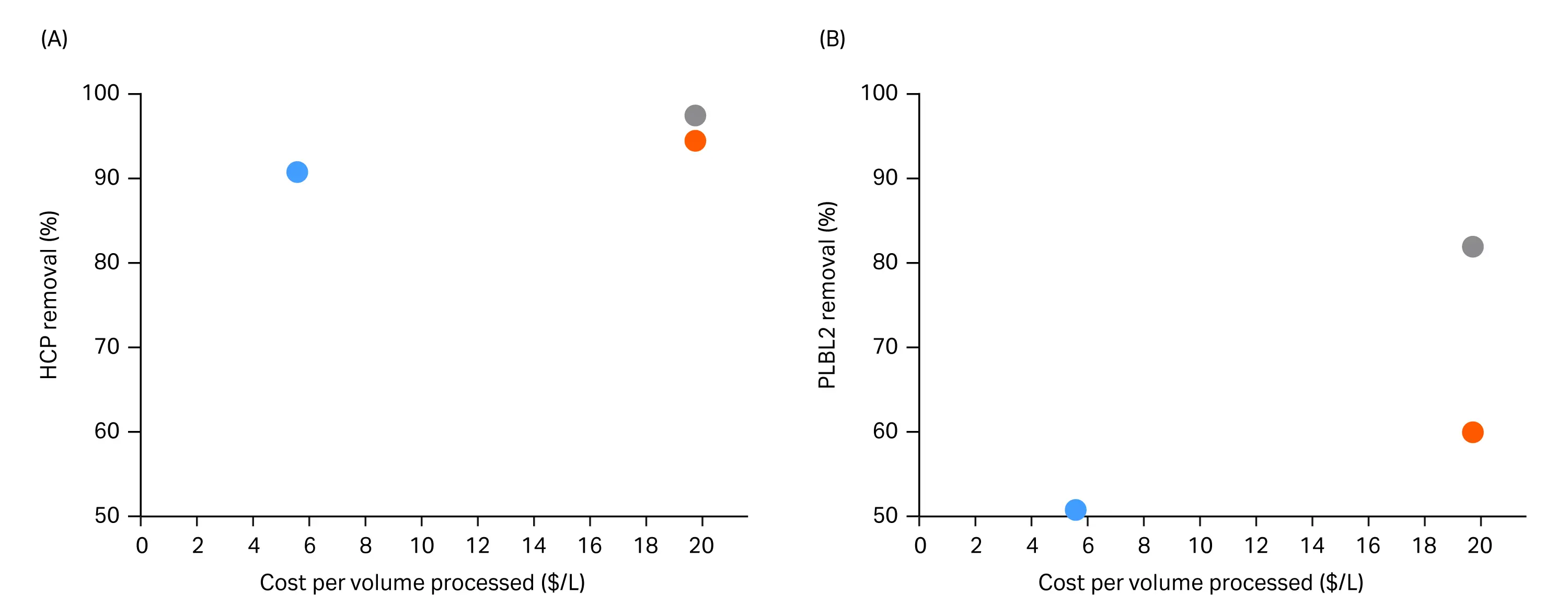
Fig 6. HCP (A) and PLBL2 (B) purity and volume-adjusted cost for PDK3 (blue), underloaded PDK3 (orange), and PDL3 (gray) for one NVIP 2 experiment. PDL3 shows a particular advantage in the removal of often difficult-to-remove PLBL2, but its mAb transmission is about 8% lower than that for PDK3.
Connected filtration and AIEX processing can reduce footprint
The process step that usually follows post-VI filtration is the first polishing step, which can be AIEX, where positively charged ligands remove generally negatively charged impurities such as HCPs and DNA. With the continued rise of bioreactor productivity and the consequential facility fit challenges in downstream processing, it may be preferable to combine steps such as post-VI filtration and AIEX into a single, connected operation. Such a combination has been previously demonstrated and integrated technologies offer benefits for both facility footprint and processing time (1,2).
To investigate if the post-VI filtration and AIEX step can be combined for this setup, we ran a train composed of a PDK3 depth filter, a Supor EKV sterilizing-grade filter, and a Mustang Q AIEX membrane adsorber. A schematic of such a setup is shown in Figure 7.
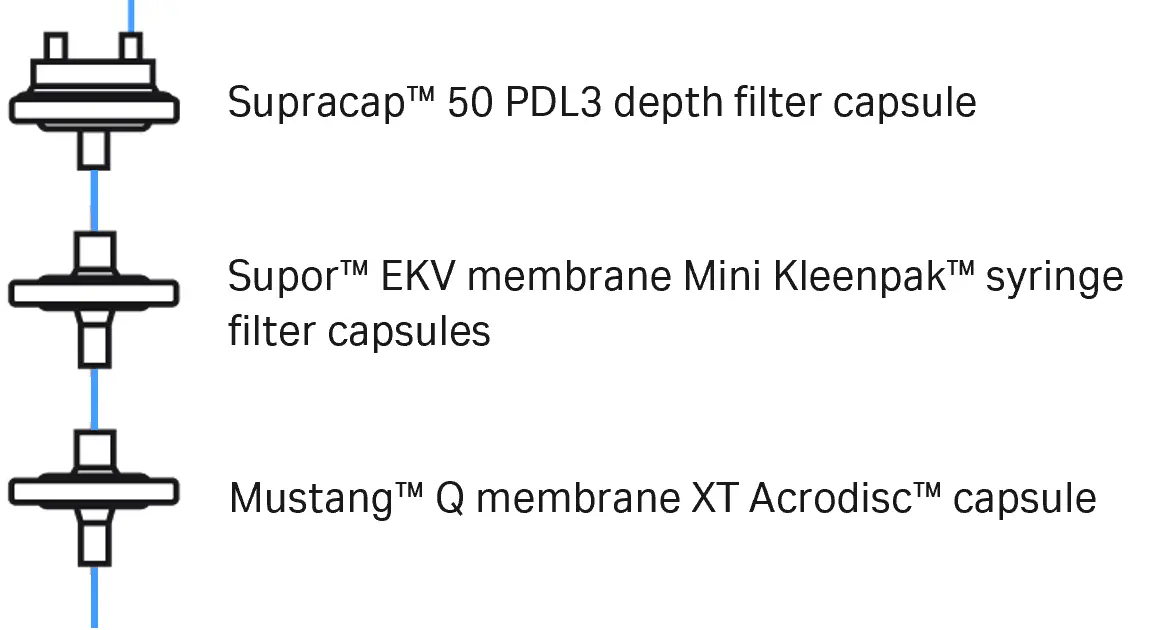
Fig 7. Schematic of the filter train for PDK3 depth filter, Supor EKV sterilizing-grade filter, and a Mustang Q AIEX membrane adsorber.
The filters for each aspect of the combined operation need to be sized in relation to one another to avoid oversizing certain aspects. In this lab-scale case, sizing was based on the smallest offering, with the depth filters being Supracap 50, the EKV being the 2.8 cm2 mini Kleenpak™ syringe filter, and the Mustang Q being the 0.86 mL Acrodisc™ filter.
A key challenge with connected processing is sizing each unit operation based on their relative capacities, flow rates, and options for discrete sizing. After considering these factors based on the available, data we opted for a ~ 50:3:1 ratio using two Supracap 50 depth filters in parallel (44 cm2 total), one Mini Kleenpak™ syringe filter (2.8 cm2) for sterile filtration, and one XT Acrodisc capsule (0.86 mL) for AIEX membrane adsorption. This translated to feed flow rates of 117 LMH, 1840 LMH, and 10.0 MV/min for the depth, sterile, and membrane adsorber respectively, which were all within the recommended flow ranges for the respective technologies. Note that for this trial the VI pool was intentionally neutralized to conditions that would enable mAb flowthrough and impurity binding to the AIEX membrane adsorber (~ pH 8.0, ~ 5.5 mS/cm).
The pressure trends are shown for the connected train in terms of the loading on each filter (Fig 8). The overall pressure drop was modestly increased by the addition of EKV and Mustang Q by about 10 psi compared to PDK3 alone, where the final pressure drop was around 15 psid. This combined inlet pressure is still far below the maximum inlet pressure for any Cytiva depth filter and shows that the connected train can be run without prohibitive inlet pressures.
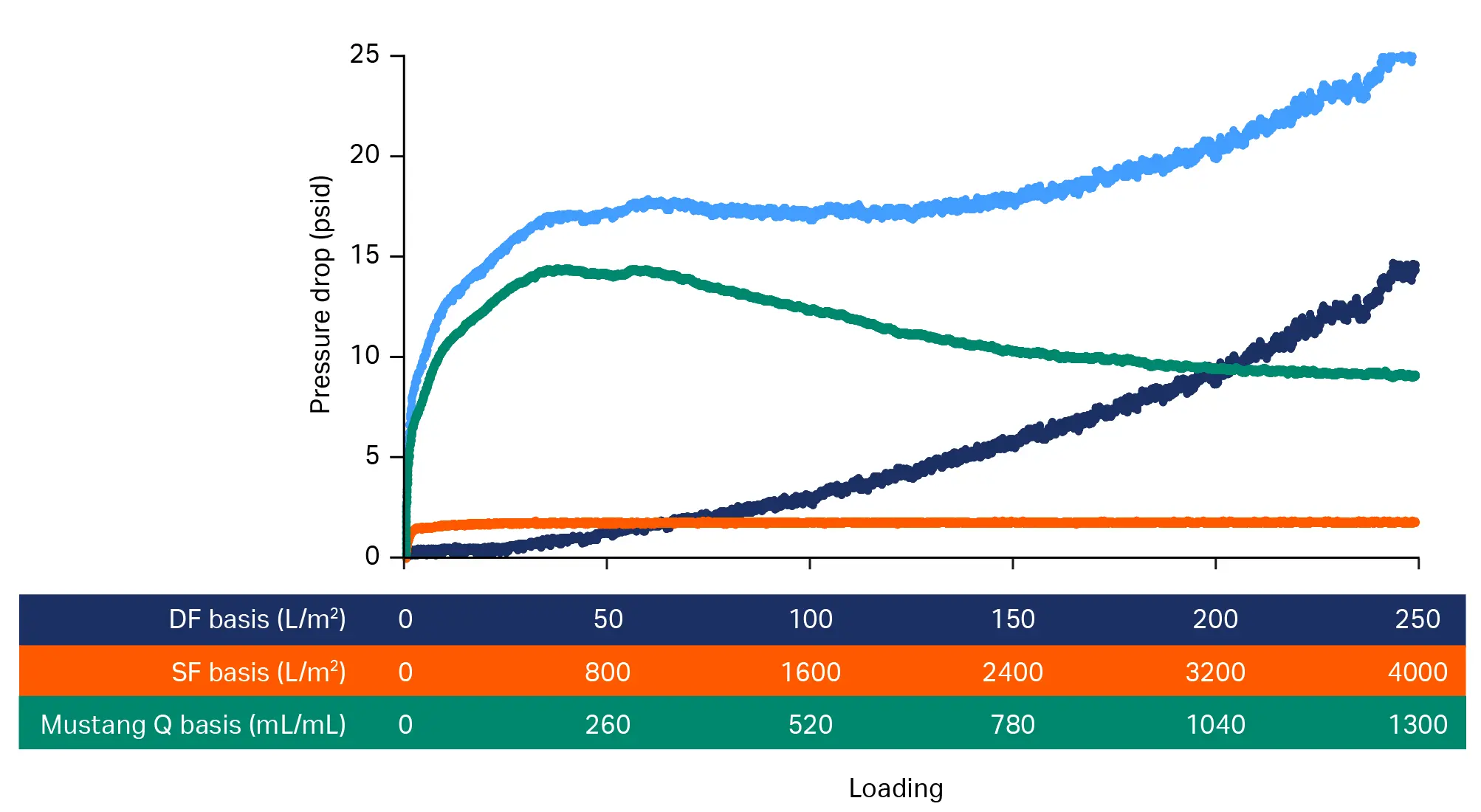
Fig 8. Pressure trends across a combined depth filtration, membrane filtration, and AIEX process train during NVIP 2 filtration.
Results and discussion
PDC3 enables efficient clarification of moderately turbid NVIP feeds
We filtered NVIP 1 with a PDC3 depth filter, where the filtration was performed with a stable and low differential pressure over the filter while reaching a rather high throughput (~ 175 L/m2). The removal of HCPs was quite significant as well, resulting in a filtrate with > 90% HCP clearance (Fig 2). This data indicates that for moderately turbid feeds the PDC3 depth filter can provide a desirable balance of throughput, HCP removal, and mAb recovery (> 92%). When performing the same filtration using NVIP 2 as feed, which has higher turbidity, the throughput dropped to < 20 L/m2 (Fig 3).
Fig 2. PDC3 throughput, differential pressure, and HCP trends for NVIP 1. A low ratio between HCP input and output and a low, stable differential pressure indicate that this filter is an appropriate choice for this feed.
Fig 3. PDC3 throughput (L/m2) for NVIP 2. Relative to the trend for NVIP 1, loading decreased by nearly a factor of 10.
Selecting the right depth filter for highly turbid NVIP feeds
A throughput of less than 20 L/m2 creates challenges with facility fit and cost. Therefore, for the filtration of the highly turbid NVIP 2 feed, we tried the PDL3 depth filter, which is a more open Supra filter grade, with a nominal retention rating of 0.2 to 3.0 µm. The throughput increased to just above 40 L/m2, which is an improvement over the PDC3 filtration, but is still too low to be cost-effective for this step (Fig 4).
Fig 4. PDL3 throughput (L/m2) for NVIP 2. The loading more than doubled compared to PDC3 but is still suboptimal.
The most open dual-layer depth filter containing two layers of Supra filter grades is the PDL3. Therefore, we tried a more open dual-layer filter containing only one Supra layer—PDK3. The PDK3 filter is composed of a top-layer and a bottom-layer SEK1P sheet (Supra) and has a nominal rating of 0.3 to 20 µm. We chose the K900P top layer after all P-series filters with higher retention ratings than S080P were screened as top layers. K900P gave the highest throughput while maintaining a filtrate turbidity < 5 NTU (Fig 5). This new selection resulted in a significant increase in throughput, with a loading closer to the cost-effective throughput seen for the PDC3 filtration of NVIP 1 in Figure 2.
Fig 5. PDK3 throughput (L/m2) vs pressure drop (psid) for NVIP 2. The loading here approaches the loading seen for PDC3 with NVIP 1, but the filter used is expected to remove a smaller fraction of soluble impurities.
The increased throughput by using PDK3 for the filtration of NVIP 2 came with an expected tradeoff in purity, given the lower overall positive zeta potential for PDK3 relative to PDL3 and PDC3. This tradeoff can be seen in the removal of both HCP and PLBL2 impurities (Fig 6). The purity of the PDL3 filtrate was higher compared to PDK3. In particular, we observed that when using PDL3, almost the entire HCP population was removed, and PLBL2, a lipase commonly characterized as “problematic” and/or “difficult-to-remove”, was 80% removed. In contrast, when using PDK3, removal of HCPs and PLBL2 was 90% and 50%, respectively.
While zeta potential is one important factor in determining purity, a second factor on filter performance is the final loading reached. Figure 6 also shows a comparison between total HCP and PLBL2 purity for PDK3 loaded until 15 psid (underloaded, orange) and a PDK3 loaded to the same loading as when PDL3 hits 15 psid (blue). Compared to the fully loaded PDK3 case, the underloaded PDK3 shows better HCP and PLBL2 removal, indicating a poorer marginal performance is the tradeoff for higher loading when using this filter with NVIP 2. Given the continuing saturation of the filter with insoluble particles as loading proceeds, this drop in the retention of soluble species may not be entirely unexpected. It is worth noting that at this same loading, PDL3 still shows a higher purity than PDK3. This retention of soluble particles does not appear to apply to mAb molecules in any significant way; the mAb transmission in the underloaded PDK3 case was 92%, and the transmission in both fully loaded cases was 100%.
The main tradeoff for the PDL3 case is in its cost per volume processed. Since the throughput for fully loaded PDK3 is roughly four times that of PDL3, so too is the adjusted cost, as a greater PDL3 filter area would be needed to compensate for the lower capacity. The plots in Figure 6 do not account for the additional buffer expense needed to equilibrate both filters, which would also be accordingly larger for PDL3 relative to PDK3. Ultimately, the choice of filter in a scenario such as this depends on the desired emphasis on purity, cost, and footprint, which will differ from process to process.
Fig 6. HCP (A) and PLBL2 (B) purity and volume-adjusted cost for PDK3 (blue), underloaded PDK3 (orange), and PDL3 (gray) for one NVIP 2 experiment. PDL3 shows a particular advantage in the removal of often difficult-to-remove PLBL2, but its mAb transmission is about 8% lower than that for PDK3.
Connected filtration and AIEX processing can reduce footprint
The process step that usually follows post-VI filtration is the first polishing step, which can be AIEX, where positively charged ligands remove generally negatively charged impurities such as HCPs and DNA. With the continued rise of bioreactor productivity and the consequential facility fit challenges in downstream processing, it may be preferable to combine steps such as post-VI filtration and AIEX into a single, connected operation. Such a combination has been previously demonstrated and integrated technologies offer benefits for both facility footprint and processing time (1,2).
To investigate if the post-VI filtration and AIEX step can be combined for this setup, we ran a train composed of a PDK3 depth filter, a Supor EKV sterilizing-grade filter, and a Mustang Q AIEX membrane adsorber. A schematic of such a setup is shown in Figure 7.
Fig 7. Schematic of the filter train for PDK3 depth filter, Supor EKV sterilizing-grade filter, and a Mustang Q AIEX membrane adsorber.
The filters for each aspect of the combined operation need to be sized in relation to one another to avoid oversizing certain aspects. In this lab-scale case, sizing was based on the smallest offering, with the depth filters being Supracap 50, the EKV being the 2.8 cm2 mini Kleenpak™ syringe filter, and the Mustang Q being the 0.86 mL Acrodisc™ filter.
A key challenge with connected processing is sizing each unit operation based on their relative capacities, flow rates, and options for discrete sizing. After considering these factors based on the available, data we opted for a ~ 50:3:1 ratio using two Supracap 50 depth filters in parallel (44 cm2 total), one Mini Kleenpak™ syringe filter (2.8 cm2) for sterile filtration, and one XT Acrodisc capsule (0.86 mL) for AIEX membrane adsorption. This translated to feed flow rates of 117 LMH, 1840 LMH, and 10.0 MV/min for the depth, sterile, and membrane adsorber respectively, which were all within the recommended flow ranges for the respective technologies. Note that for this trial the VI pool was intentionally neutralized to conditions that would enable mAb flowthrough and impurity binding to the AIEX membrane adsorber (~ pH 8.0, ~ 5.5 mS/cm).
The pressure trends are shown for the connected train in terms of the loading on each filter (Fig 8). The overall pressure drop was modestly increased by the addition of EKV and Mustang Q by about 10 psi compared to PDK3 alone, where the final pressure drop was around 15 psid. This combined inlet pressure is still far below the maximum inlet pressure for any Cytiva depth filter and shows that the connected train can be run without prohibitive inlet pressures.
Fig 8. Pressure trends across a combined depth filtration, membrane filtration, and AIEX process train during NVIP 2 filtration.
Summary and conclusions
In this study, we demonstrated an efficient process development strategy for two separate NVIP feeds of differing turbidity. We demonstrated solutions for the purification of both feeds with various Cytiva filter membranes, such as multiple depth filters, a sterile filter, and an AIEX membrane filter. Purity metrics for total HCPs and difficult-to-remove PLBL2, as well as volume-adjusted cost varied between the explored approaches, which also demonstrated the feasibility of a combined post-VI filtration and AIEX step.
Generally, cost and purity appear to have an inverse relationship, and it is for the developers of the process to decide the optimal course of action based on their needs. Overall, by adjusting the filter selection to account for feed characteristics, cost, and HCP and PLBL2 purity, a desirable solution can be reached for both feeds studied here, and the approach detailed can thus be considered a guide for such optimization on any neutralized VI pool.
References
- Shirataki H, Matsumoto Y, Konoike F, Yamamoto S. Viral clearance in end-to-end integrated continuous process for mAb purification: Total flow-through integrated polishing on two columns connected to virus filtration. Biotechnol Bioeng. 2023. doi:10.1002/bit.28464.
- Vajda J, Müller E. Hydrophobic interaction chromatography for the purification of antibodies. In: Gottschalk U, ed. Process Scale Purification of Antibodies. 2nd ed. Hoboken, NJ: John Wiley & Sons; 2017:155-180. doi:10.1002/9781119126942.ch7
CY60016