Microarray Hybridization Solution v2.0
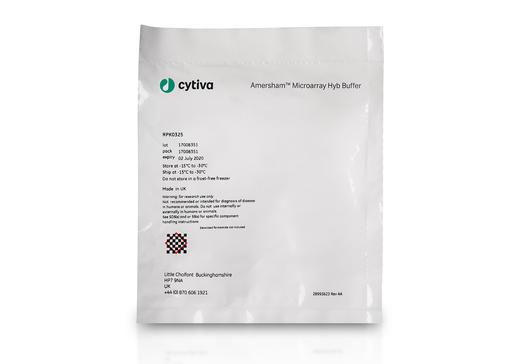
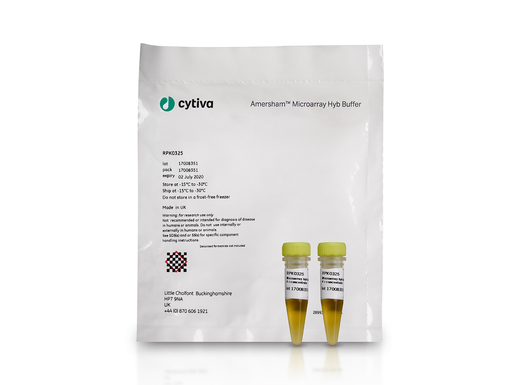
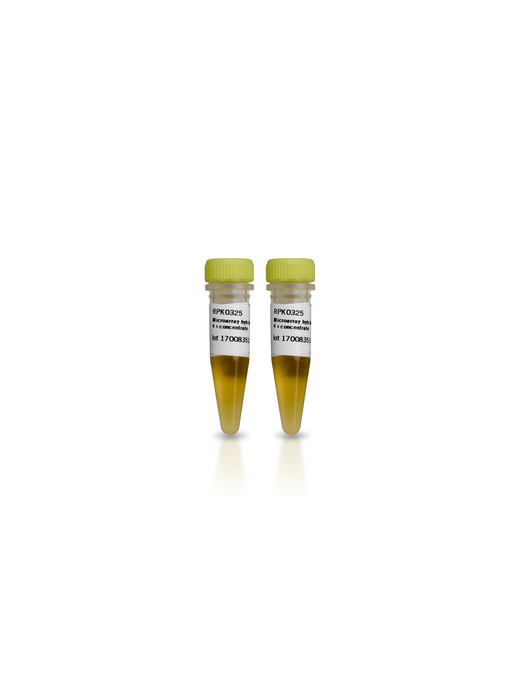
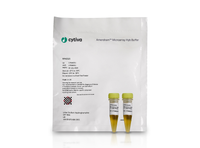
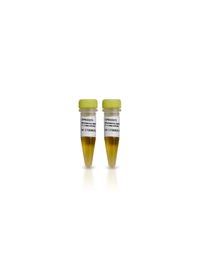
Microarray Hybridization Solution v2.0 can be used in microarray applications, allowing high-quality automated and manual slide hybridizations.
Overview
Microarray Hybridization Solution Version 2.0, for highly reproducible microarray results.
- Includes a blend of proprietary components to provide highly reproducible, high-quality automated and manual DNA microarray hybridizations
- Hybridization rate enhancers improve the detection of rare targets
- Proprietary blocking agents minimize non-specific background
DNA microarrays can be used to measure the expression levels of large numbers of genes simultaneously (gene expression profiling), or to genotype multiple areas of a genome (SNP arrays), with variable coverage or resolution depending how many DNA “spots” cover those areas.
A DNA microarray (or DNA chip) is a collection of microscopic DNA spots arranged in an array and attached to a solid surface, usually a microscope slide. Each DNA spot contains a specific DNA sequence, known as a probe, or hybridization probe. These can be short sections of a gene or other DNA elements and are often used to hybridize a cDNA sample (called the target) under high-stringency conditions. This is where it is useful to have a standardized, proprietary nucleic acid hybridization solution, to get as high as possible a signal to noise ratio for genes which are less highly expressed and allowing this expression to be semi-quantified.
Probe-target hybridization is usually detected and quantified by detection of fluorophore- or chemiluminescence-labeled targets to determine relative abundance of nucleic acid sequences in the target.
When looking at gene structure (e.g. copy number) the hybridization is with DNA rather than cDNA, and the technique is known as array CGH, which is used in looking at copy numbers of genes involved in different cancers, and in looking at genetic diseases.