10 membrane volumes/min (MV/min) is typical (higher flow rates can be achieved specific to your process).
For large molecules such as viral vectors, 5 MV/min or less is typical to faciltate favourable process outcomes.
1. Chromatography Adsorber
2. Pore size
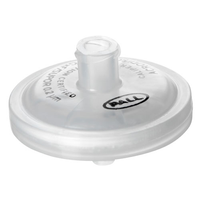
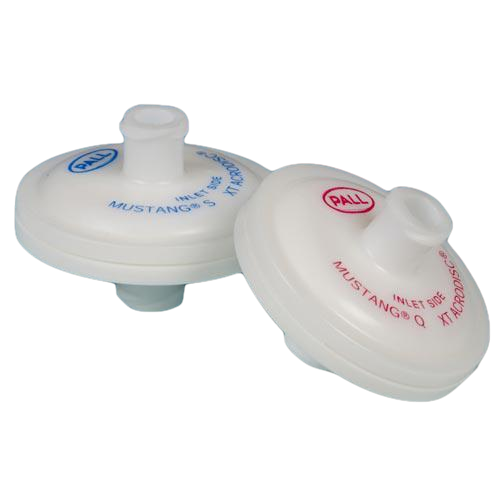
Mustang™ XT Acrodisc™ units, available in Q and S chemistries, are suitable for scale-down process development work in a variety of downstream process applications.
Mustang Q membrane is anion-exchange support with pendant quaternary amine functional groups in a cross-linked polymeric coating on a 0.8-micron pore-size membrane. This gives high dynamic capacities for high molecular weight products such as DNA, plasmids, or even particles as large as viruses.
Mustang S membrane is cation-exchange support with pendant sulfonic functional groups in a cross-linked polymeric coating on a 0.65 µm pore-size membrane. This gives high dynamic capacities for high molecular weight products such as IgG, Factor VIII, and some viruses.
Mustang XT Acrodisc units, available in Q and S chemistries, are ideal for scale-down process development work in a variety of downstream process applications. A membrane volume of < 1 mL reduces the amount of sample required for evaluation, and the female Luer lock inlet and outlet simplifies connection to typical low-pressure chromatography systems. The open-pore structure eliminates diffusion limitations of conventional macroporous sorbents, allowing biomolecules to access all binding sites by the convective flow. In addition, the large pores eliminate the size exclusion effect allowing full access to the binding chemistry for very large proteins, plasmids, and viruses.