cAMP Direct Biotrak EIA (Non-Acetylation Protocol)
cAMP Direct Biotrak EIA (non-acetylation and lysis protocol options).


Overview
- Elimination of inconvenient, time-consuming extraction procedures.
- Flexible method-choice of assay protocols.
- Range 25 - 6400 fmol/well (non-acetylation protocol).
- Rapid assay protocol.
- Nonradioactive.
- Specific for cAMP.
- Precise and accurate measurement
- Ready-to-use substrate.
- Colour coded reagents
Biotrak assays
EIAs and ELISAs are convenient, high-sensitivity, peroxidase-based technologies that enable the amount of protein present in a sample to be measured in a single day. Novel lysis reagents have been developed (Lysis Reagents 1 and 2) to facilitate simple and rapid extraction of cellular molecules.
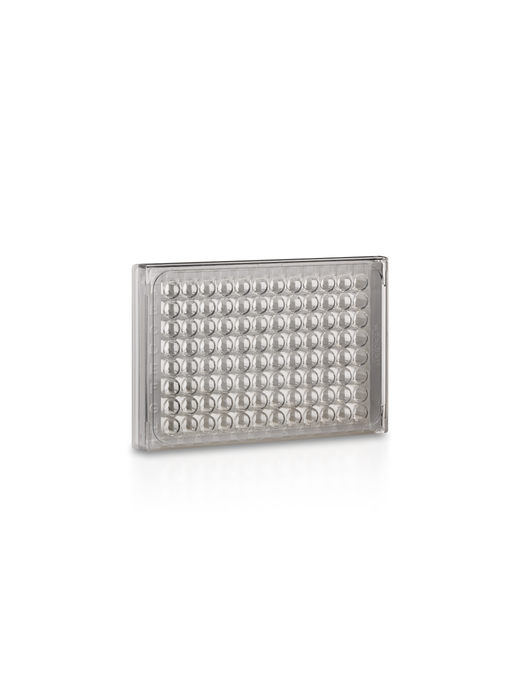
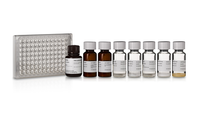
The Biotrak cAMP competitive enzymeimmunoassay system is specifically designed for research purposes. The kit includes protocols using novel lysis reagents in order to facilitate simple and rapid extraction of cAMP from cell cultures. These components avoid the requirement for traditional, time-consuming extraction procedures and obviate the need for removal of extraction reagents prior to measurement. It combines the use of a peroxidase-labeled cAMP conjugate, a specific antiserum which can be immobilized on to precoated microplates, and a one-pot stabilized substrate solution.
Lysis reagent 1 hydrolyzes cell membranes to release intra-cellular cAMP. Lysis Reagent 2 sequesters the key component in Lysis Reagent 1 and ensures cAMP is free for subsequent analysis. The detergent/sequestrant complex does not interfere with antigen: antibody binding. Lysis Reagent 1 is simply added to cultured cells, followed by a 5 to 10 min incubation before assay. The antiserum is reconstituted with Lysis Reagent 2. The assay is based on competition between unlabeled cAMP and a fixed quantity of peroxidase-labeled cAMP, for a limited number of binding sites on a cAMP specific antibody.