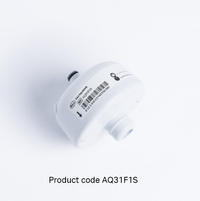
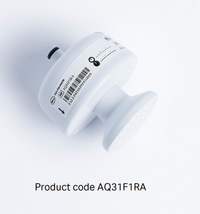
Inline water filters for healthcare
Sterilizing grade 0.2 μm inline water filter to retain pathogens up to 31 days

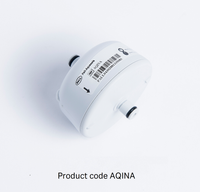

1. Product type
2. Length of life
Overview
- Barrier against waterborne contaminants including Legionella spp. and Pseudomonas spp. – reduces exposure to waterborne contaminants
- Double layer sterilizing-grade filtration with integral pre-filter validated against ASTM F838
- Bacteriostatic additive to reduce risk of surface contamination
- Inline filter improves water quality for a variety of equipment, including ice machines, water fountains, and heater cooler devices
- Compatible with common systemic heat and chemical disinfection and surface disinfectants
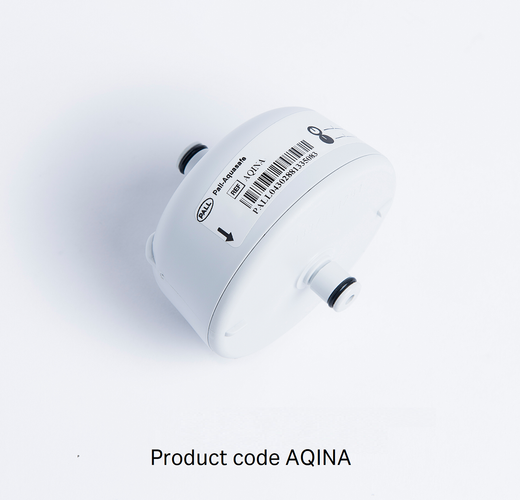
- The AQINA in-line filter may require the Quick Connect Adaptor TAP1/2FV, which can be found here. Depending on installation.
Pall-Aquasafe in-line disposable water filters with Quick Connect inlet and outlet ports (AQINA) are designed to provide high-quality water for medical applications.
Crafted for versatility, the AQINA filters deliver purified water suitable for various medical applications, including washing, drinking*, superficial wound cleansing, equipment sterilization, and surgeon hand hygiene. With a lifespan of up to 31 days, these filters ensure prolonged usage without compromising on quality.
These water filters can be used to improve water quality for equipment like ice machines, drinking fountains, heater cooler equipment, and other in-line applications.
At the heart of its filtration system lies the double layer sterilizing-grade Supor™ membrane, engineered to achieve a rating and validation of 0.2 μm. This advanced membrane acts as a formidable barrier against waterborne particulates and pathogens, contributing significantly to infection control measures and validated using ASTM F838. Moreover, to further enhance safety measures, the filter housing material incorporates silver technology. This innovative addition serves as a non-leaching bacteriostatic agent, effectively minimizing the risk of retrograde contamination on the filter’s surface, thus ensuring the integrity of the filtered water.
*Where local practices allow