This article describes the selective removal of antibody dimers and aggregates from a two-step process based on a MabSelect™ resin and a Capto™ adhere resin.
Capto adhere resin is a strong anion exchange (AIEX) multimodal chromatography resin designed for purification of monoclonal antibodies (mAbs) after the protein A step at process scale.
Removal of remaining contaminants is achieved in flowthrough mode under conditions that allow the antibodies to pass directly through the column while the contaminants are adsorbed.
This study presents results from optimization of the loading conditions with the help of Design of Experiments (DoE). The effects of buffer, pH, conductivity, and sample load were investigated. At optimal buffer conditions, the dimers and aggregates content were reduced 10-fold from 6% to 0.6% at a load of 120 mg mAb/mg resin. At higher load, 265 mg/mL, the dimers and aggregates reduction was 80% and the total yield of antibody was 94%.
Introduction
Over the last 25 years, the use of antibody titers in mammalian cell culture has increased dramatically. Recent industry reports demonstrate increase in antibody titers from 1 to more than 10 g/L. The associated increase of aggregates is a challenge for manufacturers. Since aggregates are potential immunogens and important to keep at a low level, upgraded processes for aggregate removal are required.
Capto adhere resin is a strong anion exchange multimodal chromatography resin with several modes of interaction (Fig 1), which offers a different selectivity compared to traditional ion exchangers.
Capto adhere resin is designed for intermediate purification and polishing of mAbs. Removal of protein A, aggregates, host cell proteins, nucleic acids, and viruses is performed in flowthrough mode.
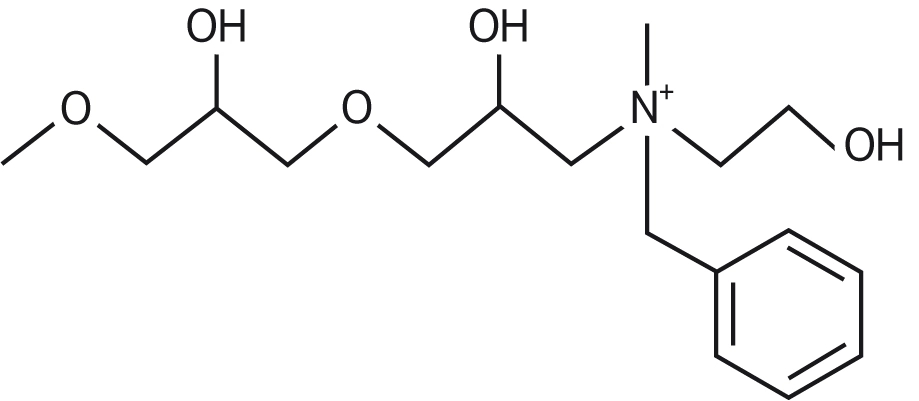
Fig 1. The Capto adhere ligand, N-benzyl-N-methyl ethanolamine, exhibits many functionalities for interaction. The most pronounced are ionic interaction, hydrogen bonding, and hydrophobic interaction.
Capto adhere resin improves yield, productivity, and process economy by offering:
- High capacity and productivity
- Contaminant removal to formulation levels in one post-protein A step
- Wide operational window of pH and conductivity
- Potential savings in time and operating costs with a two-step chromatographic process
As a member of the BioProcess™ resins family, Capto adhere resin meets the demands of industrial biotechnology with validated manufacturing methods, security of supply, and comprehensive regulatory support to assist process development, validation, and submission to regulatory authorities.
Design of Experiments (DoE) – basic principles
DoE is a systematic approach to study how variation in experimental factors affects the responses in a system. DoE is used to plan experiments so that the maximum amount of information can be extracted from a minimum of performed experiments.
The factors in a DoE study are varied so that they are independent of each other in a statistical sense. This makes it possible to evaluate the effect on the response of each factor separately (main effects). In addition, interaction effects between factors can be evaluated. For optimizing purposes, the use of DoE will almost always ensure that the real optimum for a response is reached.
A commonly used type of DoE is full factorial design where all main effects and interaction effects are independent of each other and therefore, their individual effect on the response can be resolved in the evaluation.
A replicated center point is usually included in the list of experiments and will give information on the variation in the responses. The center point also provides information on possible curvature in the data.
Material and methods
Clarified NS0 cell culture supernatant containing approximately 1.3 mg IgG1/mL (supplied by BioInvent International AB) was purified on MabSelect SuRe resin (newer generation MabSelect resins are now available) and the elution pool was neutralized to pH ~ 6 with 1 M Tris, pH 9. The pI of the mAb is 7.5 to 8.4. The elution pool was frozen and thawed several times to force the formation of dimers and aggregates. The pool contained approximately 6% soluble aggregates as determined by size exclusion chromatography on Superdex™ 200 column.
In the DoE, pH, conductivity, and load must be included. It is important to include conditions at the higher pH range (resulting in lower yield and higher purity) as well as conditions at lower pH range (resulting in higher yield and lower purity).
To find conditions suitable for the DoE, initial experiments were performed at pH 5.5 and 7.0, keeping sample load and conductivity constant.
DoE was performed and evaluated using a DoE software. A full factorial design was used including three variables (pH, conductivity, and load) and two center points. The experiments were performed in the pH interval 5.5 to 7.0. The conductivity was varied from 10 to 50 mS/cm and the load from 100 to 200 mg (Table 1).
Preload conditioning of samples was performed by buffer exchange on HiPrep™ 26/10 Desalting column*.
Table 1. DoE setup, including two center points (bold)
| Loading buffer |
pH |
Cond (mS/cm) |
Load (mg IgG/mL resin) |
|---|---|---|---|
| 25 mM BIS-TRIS, 50 mM NaCl | 5.5 | 10 | 100 |
| 25 mM BIS-TRIS, 50 mM NaCl | 5.5 | 10 | 200 |
| 25 mM BIS-TRIS, 500 mM NaCl | 5.5 | 50 | 100 |
| 25 mM BIS-TRIS, 500 mM NaCl | 5.5 | 50 | 200 |
| 25 mM BIS-TRIS, 300 mM NaCl | 6.25 | 30 | 150 |
| 25 mM BIS-TRIS, 300 mM NaCl | 6.25 | 30 | 150 |
| 25 mM BIS-TRIS, 50 mM NaCl | 7.0 | 10 | 100 |
| 25 mM BIS-TRIS, 50 mM NaCl | 7.0 | 10 | 200 |
| 25 mM BIS-TRIS, 500 mM NaCl | 7.0 | 50 | 100 |
| 25 mM BIS-TRIS, 500 mM NaCl | 7.0 | 50 | 200 |
* For larger volumes of feed, sample conditioning is preferably performed by diafiltration or directly by adjustment of pH and conductivity. Desalting by buffer exchange or diafiltration may result in reduction of host cell protein levels and improved column performance.
Results
Initial experiments
A comparison of chromatograms of the Capto adhere flowthrough at different pH is shown in Figure 2. Relatively steep breakthrough and wash curves are obtained at pH 5.5 (10 mS/cm). An increase in pH to 7.0 (i.e., closer to pI for the mAb) results in stronger electrostatic interaction between the mAb and the resin, giving a somewhat delayed breakthrough during sample load. In addition, the breakthrough and wash curves become shallower.
Significant amounts of mAbs are adsorbed to the column, resulting in a lower overall yield.
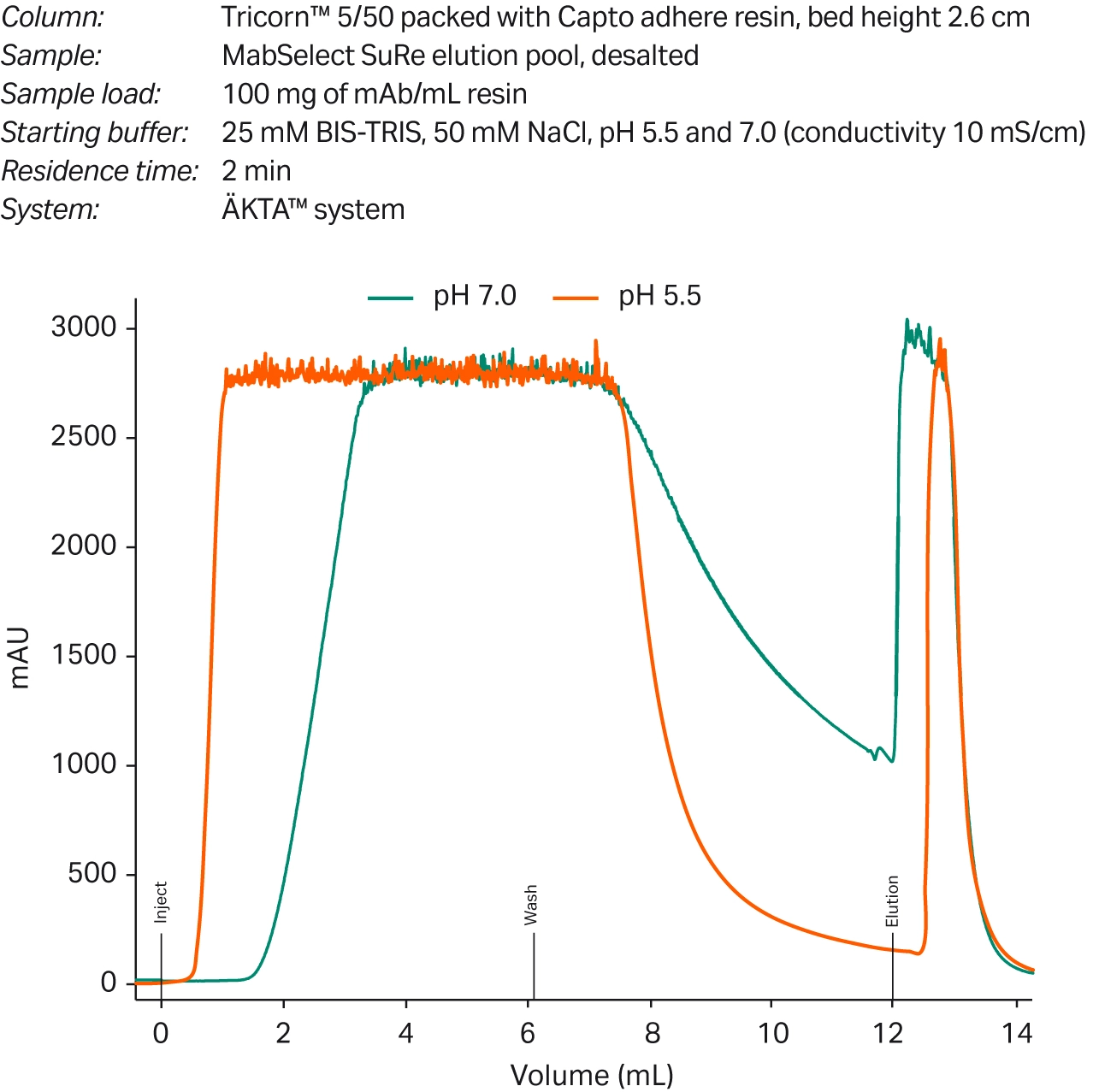
Fig 2. Comparison of chromatograms obtained at different pH. Starting buffer 25 mM BIS-TRIS, 50 mM NaCl, pH 5.5 (orange), and pH 7.0 (green).
DoE
The experimental results from the DoE are summarized in Table 2. The model shows that yield is controlled by pH, but is independent of conductivity and load within the range 10-50 mS/cm and 100-200 mg/mL, respectively. Going from high to low pH, a non-linear increase in yield is obtained (Fig 3).
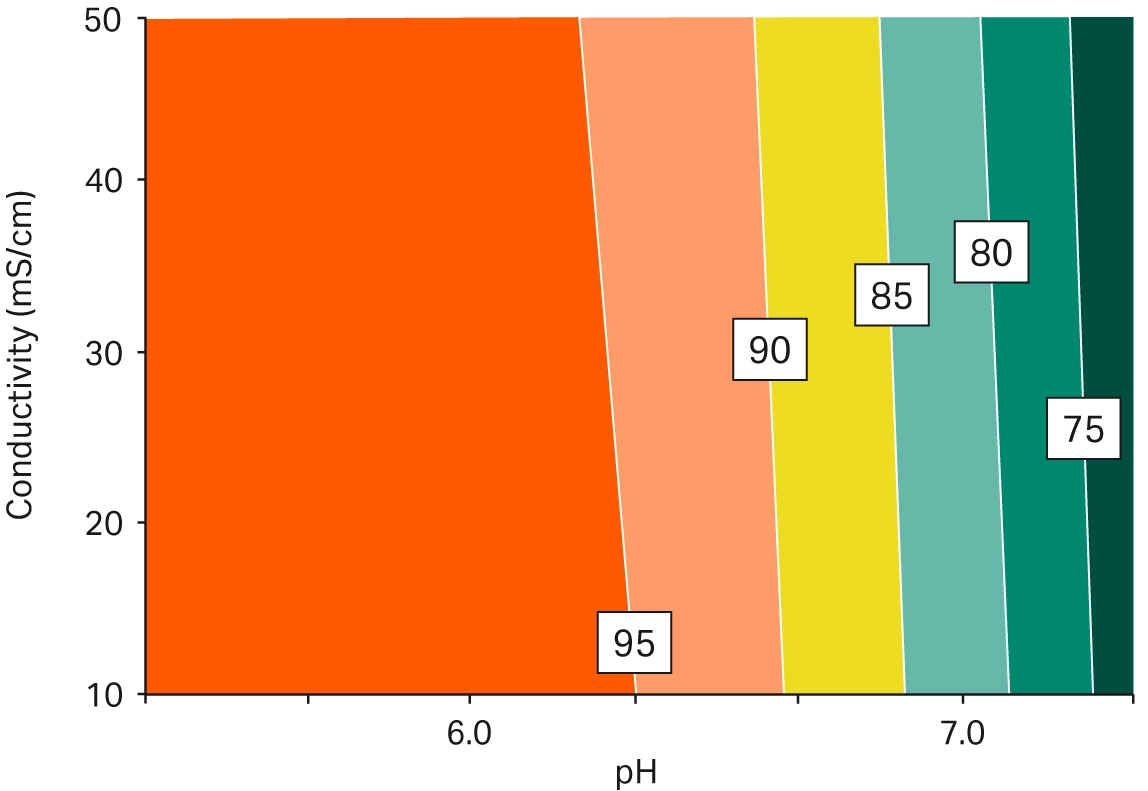
Fig 3. Response surface plot demonstrating the effect of pH on the yield. Neither the load nor the conductivity did significantly affect the yield. Low pH facilitates high yield. Yield expressed in percent (labels).
Table 2. Experimental results from the DoE
| pH |
Cond (mS/cm) |
Load (mg IgG/mL) |
D/A (% in flowthrough) |
Yield (%) |
|---|---|---|---|---|
| 5.5 | 10 |
100 |
0.77 |
94 |
| 5.5 | 10 | 200 | 0.98 |
100 |
| 5.5 | 50 | 100 |
0.30 | 94 |
| 5.5 | 50 | 200 | 0.52 | 99 |
| 6.25 | 30 |
150 |
0.29 |
93 |
| 6.25 | 30 | 150 | 0.25 | 95 |
| 7.0 | 10 |
100 |
0.13 | 47 |
| 7.0 | 10 | 200 | 0.29 | 76 |
| 7.0 | 50 | 100 |
0.24 | 74 |
| 7.0 | 50 | 200 | 0.35 | 68 |
Clearance of dimers and aggregates is influenced by pH, conductivity, and load (Fig 4). Higher pH, higher conductivity, and/or lower load results in higher aggregate clearance. An interaction effect is obtained between pH and conductivity. Higher pH and high conductivity give the lowest dimers and aggregates response.
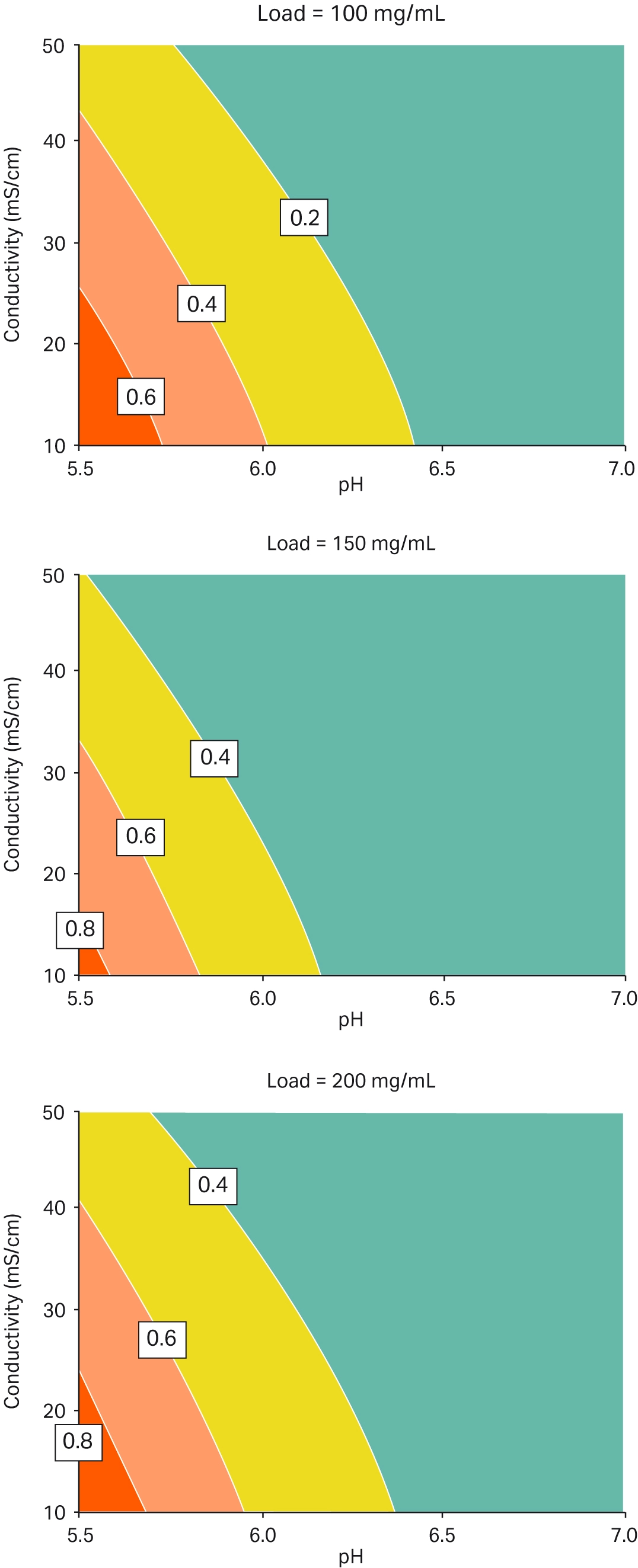
Fig 4. Response surface plots demonstrate the effect of pH, conductivity, and load on the clearance of aggregates. High pH, high conductivity, and low load give the best reduction of aggregates. Aggregate concentration in the flowthrough pool is expressed in percent (labels).
Selective removal of aggregates
Starting from the results above, loading conditions were chosen to favor dimer and aggregate removal (i.e., pH 6.5 and conductivity 30 mS/cm).
A chromatogram from the Capto adhere step is shown in Figure 5. A summary of how load affects the clearance of dimers and aggregates is shown in Table 3 and Figure 6.
Fig 5. Polishing on Capto adhere resin. |
Column: Tricorn 5/50 packed with Capto adhere resin, bed height 2.6 cm Sample: MabSelect SuRe elution pool Sample load: 265 mg of mAb/mL resin Starting buffer: 20 mM citrate, 300 mM NaCl, pH 6.5 (conductivity 30 mS/cm) Elution buffer: 0.1 M acetic acid, pH 3.0 Residence time: 2 min System: ÄKTA system |
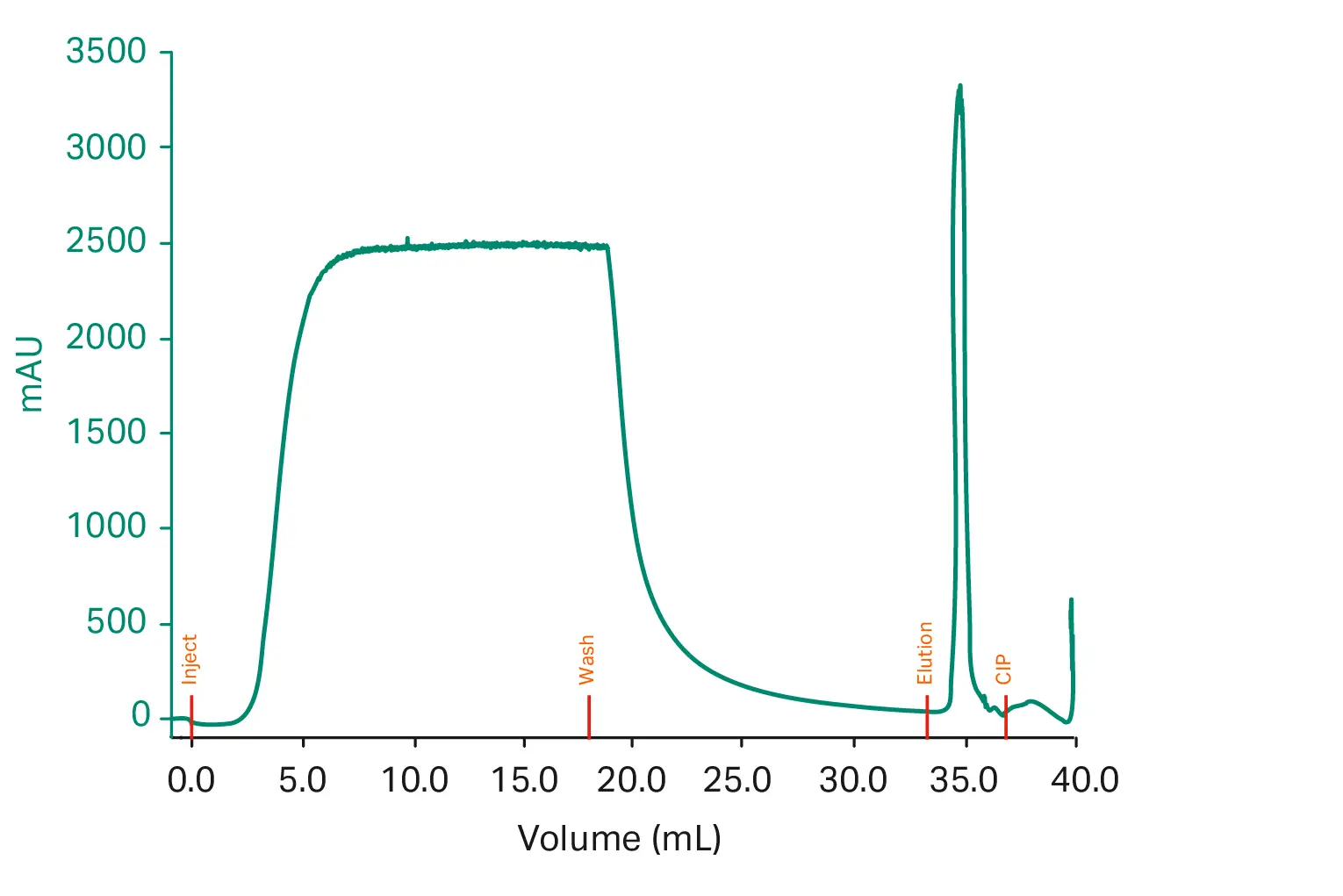
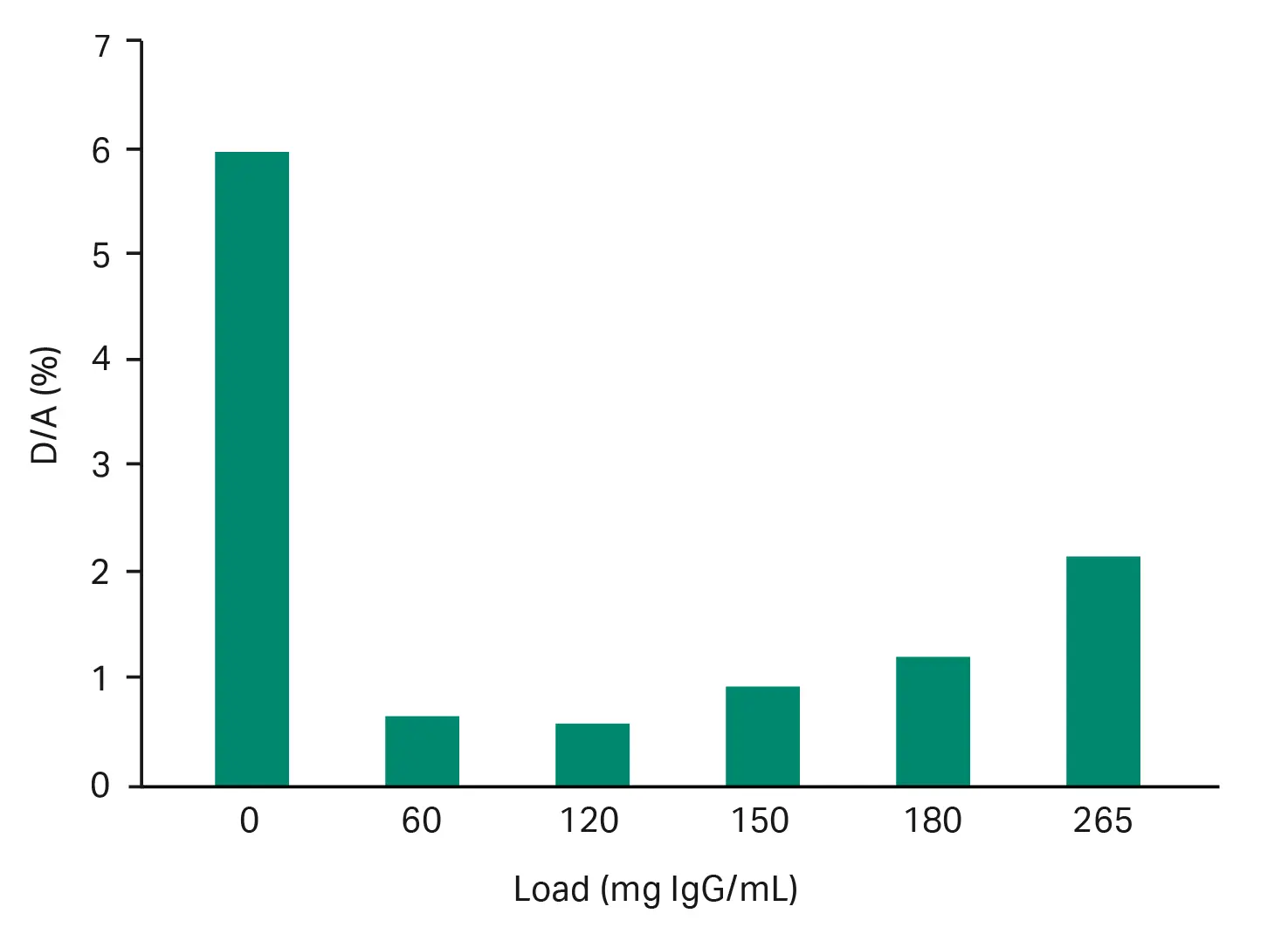
Fig 6. Dimer and aggregate content in starting material and fractions collected during sample loading.
Table 3. Dimers and aggregates (D/A) content in starting material, fractions, and eluate during sample loading
| Load (mg IgG/mL) |
D/A (%) |
Reduction |
|---|---|---|
| Starting material | 6 |
ND |
| 60 | 0.7 | 8.8 |
| 120 | 0.6 | 10.3 |
| 150 | 0.9 | 6.4 |
| 180 | 1.2 |
4.9 |
| 265 | 2.2 | 2.7 |
| Pooled fractions | 1.3 |
4.8 |
| Eluate | ~60 | ND |
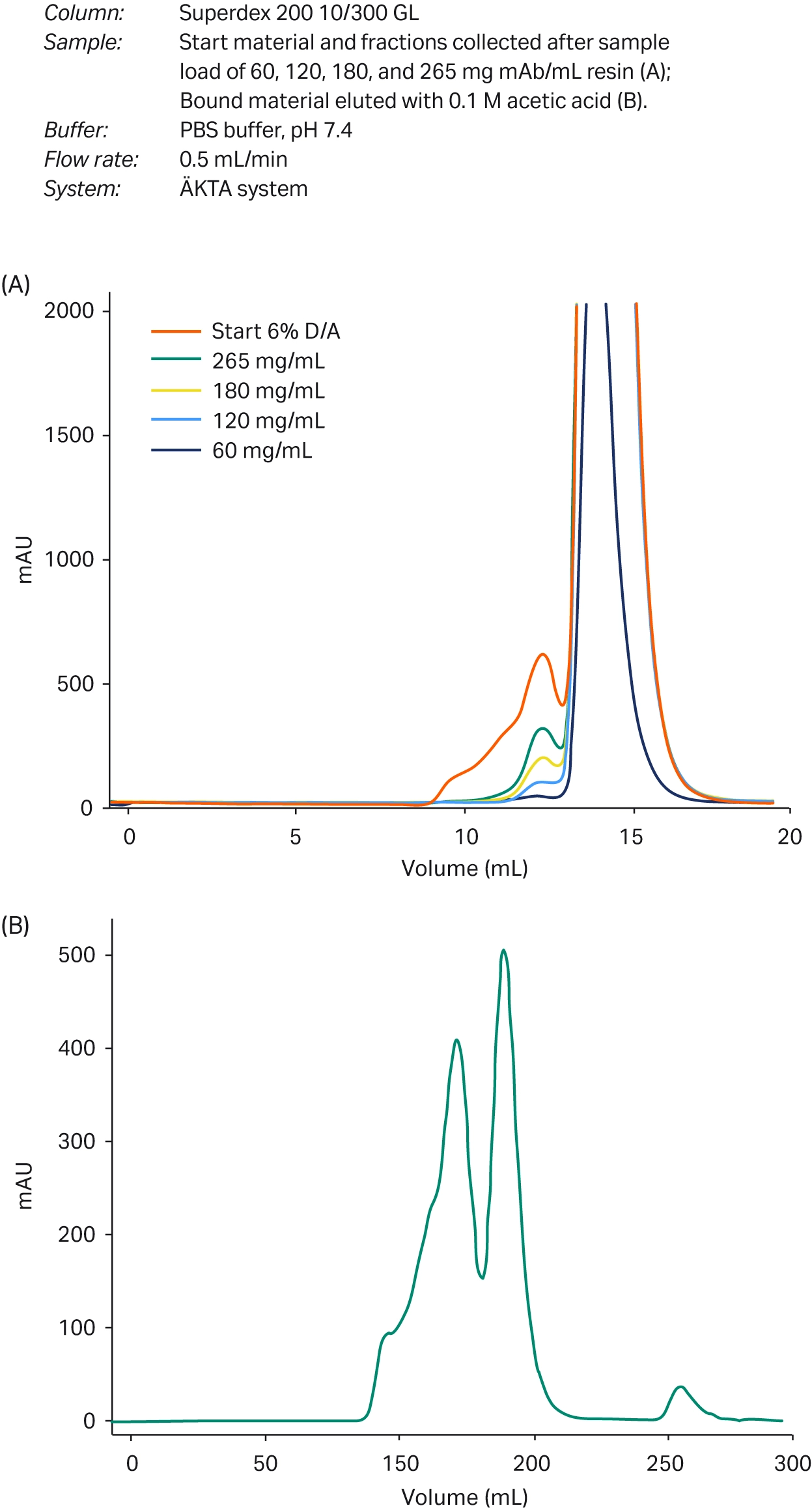
Fig 7. Size exclusion chromatography on Superdex 200 10/300 GL. A) Start material and fractions collected after sample load of 60, 120, 180, and 265 mg mAb/mL resin. B) Bound material eluted with 0.1 M acetic acid, pH 3.
Good reduction of dimers and aggregates is obtained, even at loads up to 265 mg mAb/mLresin. The levels are reduced from 6% to 0.6% (10-fold reduction) with a sample load up to 120 mg/mL. A high load (outside the design; Table 1) results in high yield at the expense of reduced aggregate clearance, as predicted by the model (Fig 4).
Bound material eluted at pH 3 contains approximately 60% dimers and aggregates, confirming that they are adsorbed to Capto adhere during sample load while most of the monomers pass through the column. The total yield of monomer after sample application of 265 mg/mL is 94% and the dimer and aggregate content is reduced from 6% to 1.3% (4.8 times reduction). Chromatograms from the size exclusion chromatography on Superdex 200 are shown in Figure 7.
Conclusions
This study describes the optimization of the loading conditions using DoE, and the application of optimal conditions for the selective removal of dimers and aggregates from monoclonal antibodies purified by capture on a MabSelect resin. At a sample load of 120 mg/mL, the dimers and aggregates content is reduced from 6% to 0.6%, giving a 10-fold reduction. Approximately 80% of the aggregates are adsorbed to the resin at a sample load of 265 mg IgG1. The total yield of monomer is 94%. The results show that Capto adhere has a high potential to selectively remove dimers and aggregates from mAb preparations.
Acknowledgements
Filtered NS0 cell line feedstock was supplied by BioInvent International AB, Lund, Sweden.
Additional resources
- Controlling mAb aggregates in chromatography process development
- Polishing chromatography in process development: a complete guide
- Quick guide: setting up downstream processes for mAbs and antibody variants
- Developing a HIC polishing step for removal of mAb aggregates
- How to optimize a HIC step with HTPD and DoE
- Optimization of an antibody polishing step with mechanistic modeling
- DoE resource center
- Mechanistic modeling resource center