- Use our filter selector tool to find the optimal filter for your needs.
- See the advantages of a Whatman™ GD/X filter vs. a standard syringe filter
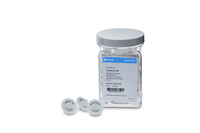
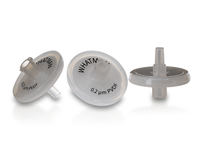
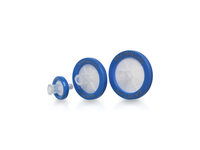
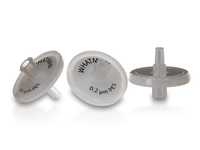
Whatman™ GD/X non-sterile nylon syringe filters
High-viscosity filters suitable for challenging samples, such as environmental or food analysis. Biobased plastic options available in the 25 mm size.
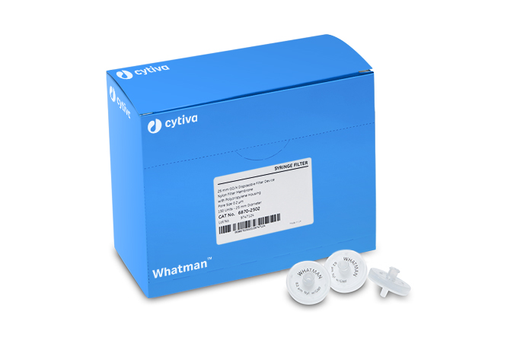


Whatman™ GD/X non-sterile nylon syringe filters
High-viscosity filters suitable for challenging samples, such as environmental or food analysis. Biobased plastic options available in the 25 mm size.
Choose your product
1. Pore size
2. Diameter
3. Biobased
4. Pack size
Whatman GD/X™ non-sterile nylon syringe filter, 13 mm, 0.45 µm (150/Pk)
6870-1304
Selling fast–1 available
Price includes standard shipping and handling
Overview
The Whatman™ GD/X non-sterile, nylon membrane syringe filters are designed to enable the filtration of viscous, hard-to-filter samples greater than 10 mL. They combine a polypropylene housing, high-efficiency Whatman™ GMF 150 and GF/F pre-filter media, and a nylon membrane.
- Reduces need for multiple syringe filters by processing three to seven times more sample volume than syringe filters without prefilters
- Female luer lock for leak-free connections
- High-efficiency Whatman GMF 150 and GF/F pre-filter media
- Eliminates or greatly reduces the need to carry out separate prefiltration step for difficult-to-filter samples
High viscosity filter enables filtration of “difficult-to-filter” samples
The prefilter contains a high-efficiency borosilicate glass filtration stack that will retain fine particles down to 0.7 μm, allowing difficult sample filtration with less hand force. It reduces the need for multiple syringe filters by processing three to seven times more sample volume than syringe filters without prefilters. The filters can be autoclaved.
ISCC+ certified Biobased polypropylene housing (25mm devices):
- 90% Biobased plastic resin.
- Biobased plastic resin is ISCC Plus certified using Mass Balance approach.
- The polypropylene accounts for 95% of the weight/composition of the syringe filters.
Read more on the topic here.
About nylon membranes
Nylon membrane is hydrophilic and can be used for aqueous and aqueous-organic samples. The membrane offers chemical resistance to most common HPLC solvents. However, it has limited resistance to acids, bases, halogenated hydrocarbons, aldehydes, and strong oxidizing agents. The most common application is HPLC sample filtration.
Product specifications
Showing 12 products
Whatman GD/X™ non-sterile nylon syringe filter, 25mm, 0.2 µm (150/Pk)
6870-2502
In stock19 available
Whatman GD/X™ non-sterile nylon syringe filter, 25mm, 0.45 µm (150/Pk)
6870-2504
In stock29 available
Whatman GD/X™ non-sterile nylon syringe filter, 25mm, 5 µm (150/Pk)
6870-2550
In stock7 available
Whatman GD/X™ non-sterile nylon syringe filter, 25mm, 0.45 µm (1500/Pk)
6871-2504
In stock22 available
Whatman GD/X™ non-sterile nylon syringe filter, 13 mm, 0.2 µm (150/Pk)
6870-1302
Selling fast2 available
Whatman GD/X™ non-sterile nylon syringe filter, 13 mm, 0.45 µm (150/Pk)
6870-1304
Selling fast1 available
Whatman GD/X™ non-sterile nylon syringe filter, 13 mm, 0.45 µm (1500/Pk)
6871-1304
Selling fast3 available
Whatman GD/X™ non-sterile nylon syringe filter, 25mm, 0.2 µm (1500/Pk)
6871-2502
Selling fast3 available
Whatman™ GD/X nylon high charge (positive) syringe filter, non-sterile, 0.2 µm, 25 mm (150 pcs)
6869-2502
Discontinued
Whatman™ GD/X nylong high charge (positive) syringe filter, non-sterile, 0.45 µm 25 mm (150 pcs)
6869-2504
Discontinued
Whatman GD/X™ non-sterile nylon syringe filter, 13 mm, 0.2 µm (1500/Pk)
6871-1302
Discontinued
Whatman GD/X™ non-sterile nylon syringe filter, 25mm, 5 µm (1500/Pk)
6871-2550
Stock on request
Product availability is not guaranteed and subject to change.