Considerations for membrane selection
When selecting a membrane, consider how the various membrane materials and their properties will interact with your reagents and sample to meet your test goals for sensitivity, specificity and test duration.


In recent years, point-of-care (POC) testing has revolutionized healthcare. By bringing “the lab” to the patient, these tests provide inexpensive, simple-to-perform diagnostics that can deliver a rapid turnaround of results at the site of care delivery. Some of the most frequently used POC immunoassays are lateral-flow tests (LFTs), flow-through immunoassays, and dipstick colorimetric assays. Each uses a different approach for its antibody-antigen detection, requiring a specialized set of membranes and pads.
When selecting a membrane, consider how the various membrane materials and their properties will interact with your reagents and sample to meet your test goals for sensitivity, specificity and test duration.
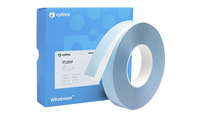
Find the membrane best suited to your application by sample type and by product family.
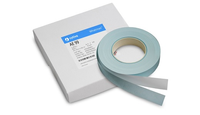
With unbacked membranes, assay developers can take advantage of membrane manufacturing density characteristics.

A lateral-flow immunoassay, or immunochromatographic assay, is a rapid, convenient test that uses antibodies (or sometimes antigens) to detect specific macromolecules, such as antigens, drug substances, or other proteins. The sample flows through the device and comes into contact with dried reagents, usually a tagged secondary antibody. The antibody and analyte migrate to a capture zone of membrane-immobilized antibody, drawn across by the wicking properties of the absorbent pad. Any unreacted tagged antibody flows past the capture zone.
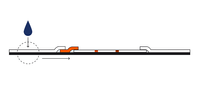
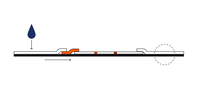
A sample pad is typically made of a wettable material that accepts a sample and transports it in a homogeneous and consistent manner to the conjugate release area.
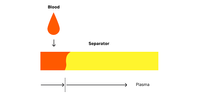
In addition to efficiently removing blood cells, blood seperators must yield a high recovery of plasma, not act hemolytic and should not interact with the analyte in question.

Conjugate release pads are critical to lateral-flow immunoassays. The conjugate must dry without damage and release rapidly when the sample comes into contact with it.

In a flow-through immunoassay, the sample is applied directly to the membrane surface and is allowed to wick through the membrane into an absorbent paper below. While technically close to ELISA assays and requiring few materials, the sample preparation process can be complex. It requires several pipetting steps in defined order. This can lead to a higher failure risk due to pipetting errors, making home use impractical as a lab and trained medical staff are required.
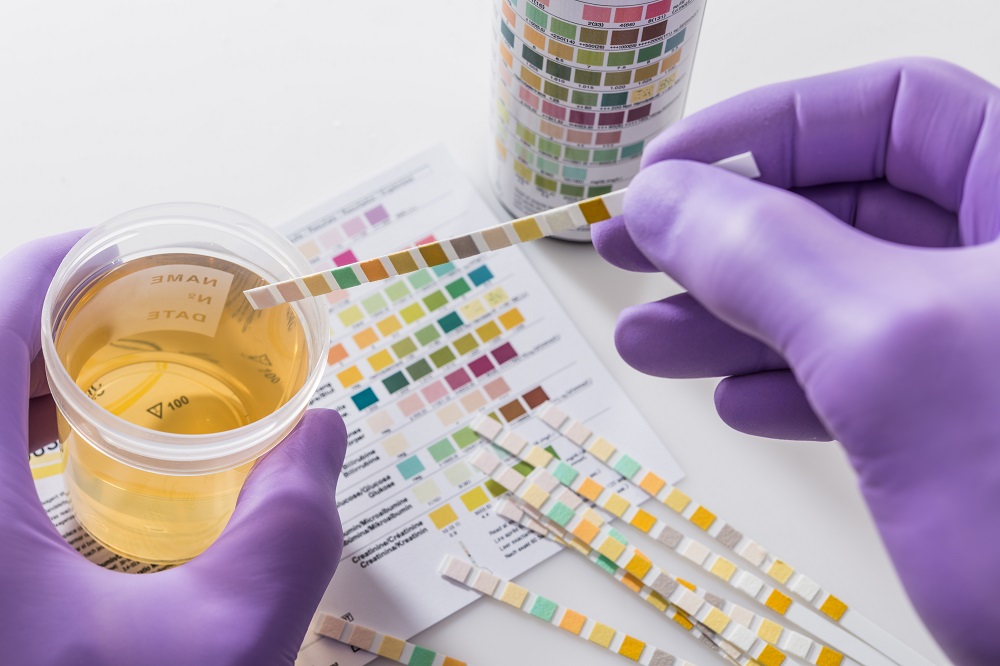
Dipstick colorimetric assays, in which a cellulose pad is impregnated with a color reagent, are widely used in everything from urine testing to environmental assays. The base cellulose is a key part of the system, and the correct choice of absorbency, wicking rate, and wet strength are critical to producing a working assay. The Whatman™ range of cellulose materials for dipstick colorimetric assays offers highly consistent and inert substrates for absorption of the active chemicals required for development of dipstick tests. The purity of the cellulose base material coupled with our quality manufacturing practices make these papers an excellent choice for large-scale manufacturing.

The development of rapid, low-cost, and convenient diagnostic devices suitable for both clinical and remote settings has empowered healthcare professionals to make timely clinical decisions, improving patient outcomes and increasing the efficiency of healthcare systems. In this whitepaper, discover how membranes optimized the sensitivity of COVID-19 lateral-flow tests. Also read how membranes are reshaping the future of POC testing across an increasing range of tests and applications.